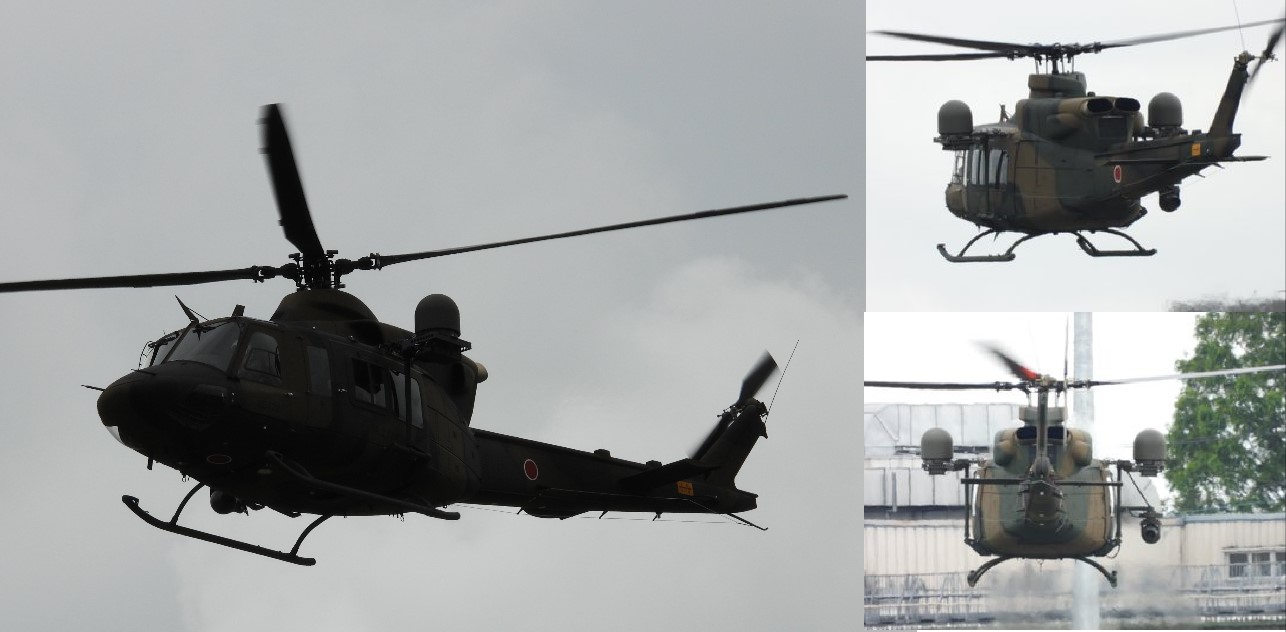
TOKYO — A Japan Ground Self-Defense Force (JGSDF) UH-2 utility helicopter has been photographed in flight with a previously unseen roof-mounted antenna configuration, drawing attention from military aviation observers and open-source analysts.
The images, shared on the social media platform X by aviation photographer nobita0114, show the helicopter fitted with two large dome-shaped antennas mounted on top of the cabin. The configuration has not previously been seen on publicly photographed UH-2 flights, leading to discussion over the possible purpose of the modification.
The exact role of the antenna system has not been confirmed. Aviation observers have suggested two possible explanations based on the aircraft's external appearance, but no official information has been released by Japanese authorities.
One assessment is that the paired dome antennas could support a signals intelligence (SIGINT) role. Similar twin-antenna arrangements are used on some military aircraft to detect, locate and triangulate radar or radio transmissions by comparing signals received through antennas mounted at separate positions.
Another view, shared within the Japanese aviation community, is that the modification is more likely intended for satellite communications or high-speed data relay rather than intelligence collection.
Users posting under the X handles asura0998822 and chageimgur provided additional context after examining the photographs on July 4 and 5, 2026. According to asura0998822, the same UH-2 airframe had been photographed on the ground with the antenna installation in January 2026. The approximately six-month period between the initial ground sighting and the recent flight photographs suggests the equipment underwent an extended testing and certification process before airborne evaluation.
chageimgur suggested the antenna domes could be part of a satellite communications and data relay system referred to as HeliSAT. According to the analysis, such a system could improve the transmission of aerial information collected during disaster response operations.
The JGSDF currently operates a system known as HeliTele, which uses a stabilized sensor turret mounted beneath helicopters to capture live video over disaster areas. The footage can be transmitted to military commanders and, during major national emergencies, shared with civilian television broadcasters. If the newly observed antenna system is related to satellite communications, it could improve the range and reliability of those data links, although this has not been officially confirmed.
The same analysis also noted that as unmanned aerial systems continue to mature, drones could increasingly perform aerial observation missions, allowing helicopters such as the UH-2 and UH-60JA to focus on transport, rescue and other missions requiring crewed aircraft. This remains an opinion expressed by the analyst and has not been announced as JGSDF policy.
The UH-2 is the JGSDF's newest utility helicopter and is a military version of the Subaru Bell 412EPX, developed jointly by Subaru Corporation and Bell Textron. The aircraft is intended to replace Japan's aging fleet of UH-1J helicopters, which had an average service age of about 22 years when UH-2 deliveries began in 2022.
Compared with the older UH-1J, the UH-2 features a four-blade composite main rotor instead of a two-blade rotor and is powered by twin Pratt & Whitney Canada PT6T-9 engines, providing improved payload capacity and flight performance. The helicopter is designed for utility transport, disaster relief and operations across Japan's mountainous terrain and remote islands.
As of now, Japan's Ministry of Defense, the Japan Ground Self-Defense Force, and Subaru Corporation have not issued any official statement explaining the purpose of the newly installed antenna system. Because externally similar antenna housings can support different types of equipment, the function of the modification cannot be confirmed from photographs alone.
The helicopter remains under observation by aviation analysts, and the purpose of the new antenna installation is expected to become clearer only if official information is released or additional details emerge during future testing.
Source: defence-blog
——— End of Article ———