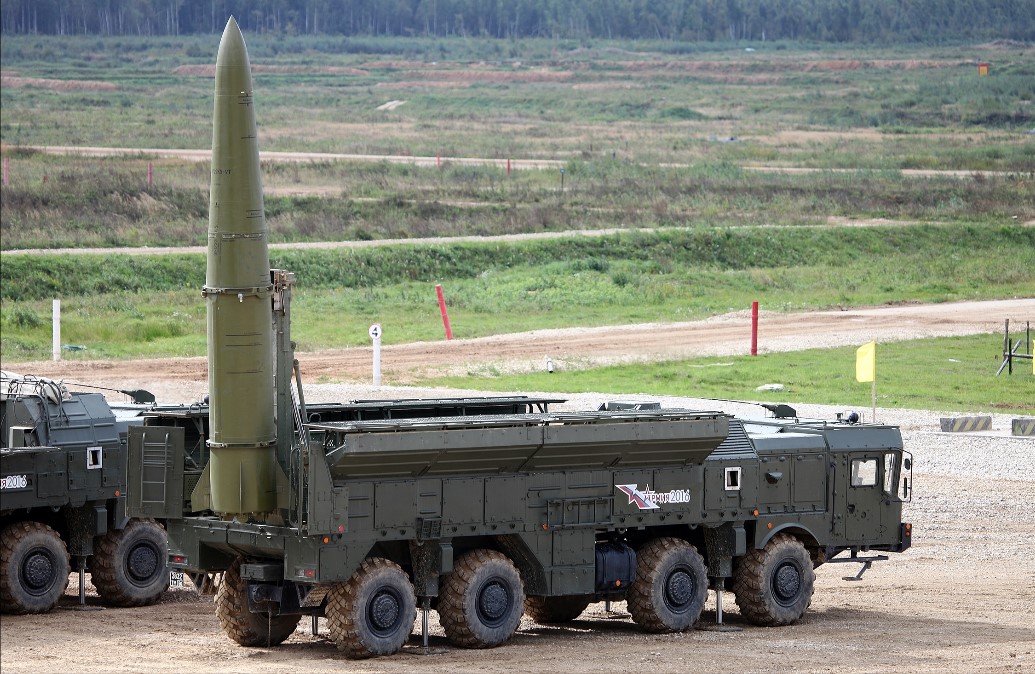
Moscow — Russia has equipped the 9M723 short-range ballistic missile used by the Iskander-M missile system with a new autonomous guidance system known as Kometa-M12R-VT, according to the Russian military monitoring Telegram channel "Colonel of the General Staff."
The main upgrade is a 12-element multi-channel digital Controlled Reception Pattern Antenna (CRPA) installed in the missile's nose section. According to the report, the antenna receives satellite navigation data during the initial and mid-course stages of flight, improving navigation accuracy and increasing resistance to electronic warfare (EW) interference.
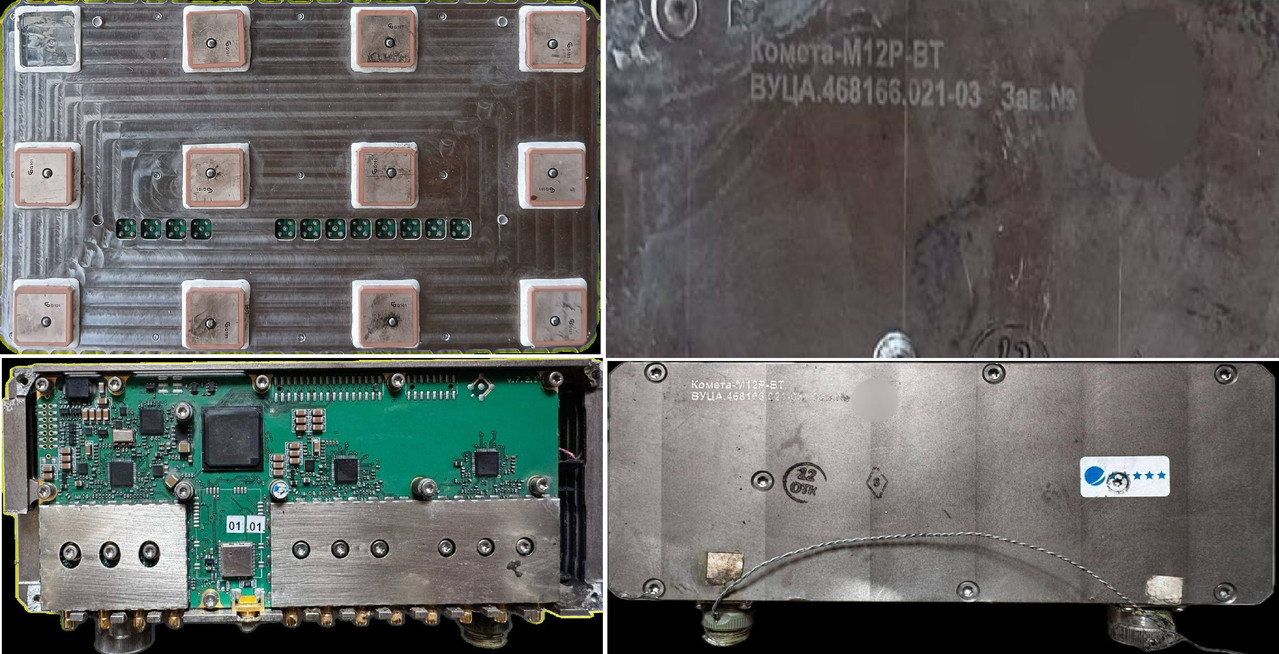
Components of the Kometa-M12R-VT 12-element antenna system used on the 9M723 Iskander-M ballistic missile. Photo: Telegram/"Colonel of the General Staff".
During the terminal phase of flight, the missile switches to the Kometa-R8 tail guidance system. This unit is fitted with two four-element heat-resistant ARP-4T antenna arrays designed to operate under the high-temperature conditions encountered during the final stage of the missile's flight.
The report states that the previous version of the guidance system was designated Kometa-MP12, where "M" stands for "modernized" and "P" refers to "rocket." According to the author of the Telegram post, the new "VT" designation likely indicates a high-temperature or heat-resistant modification.
The author also states that effectivealy suppressing the 12-element antenna system within its operating frequency range could require the simultaneous operation of more than 11 high-power electronic warfare systems, although this assessment has not been independently verified.
Kometa Guidance Technology Used Across Multiple Weapons
The Kometa guidance system is also used on several other Russian precision-guided weapons.
In April 2024, reports indicated that Russia began upgrading Unified Planning and Correction Modules (UMPK) used on aerial glide bombs by fitting them with 12-channel Kometa CRPA antennas to improve resistance to Ukrainian electronic warfare.
By March 2025, Russia had reportedly equipped domestically assembled Shahed-type kamikaze drones with larger 16-element CRPA antennas.
The report also notes that Russian forces had previously used Chinese-made eight-element round CRPA antennas, which were identified in January 2025, as part of efforts to improve navigation performance in electronically contested environments.
Ukraine Targets Kometa Production Facilities
According to the report, Ukrainian Defense Forces have sought to counter these guidance systems not only by improving their own electronic warfare capabilities but also by targeting facilities involved in their production.
One of those facilities is VNIIR-Progress in Cheboksary, located in Russia's Chuvash Republic. The plant manufactures GNSS receivers and antennas that support GLONASS, GPS and Galileo satellite navigation systems used by the Russian military.
The report states that on June 10, 2026, Ukrainian forces launched an attack on the facility using FP-5 Flamingo cruise missiles.
The continued introduction of Kometa guidance systems on ballistic missiles, glide bombs and drones reflects Russia's ongoing efforts to improve the resistance of its precision-guided weapons to electronic warfare, while Ukraine continues targeting the industrial facilities involved in producing these navigation components.
——— End of Article ———