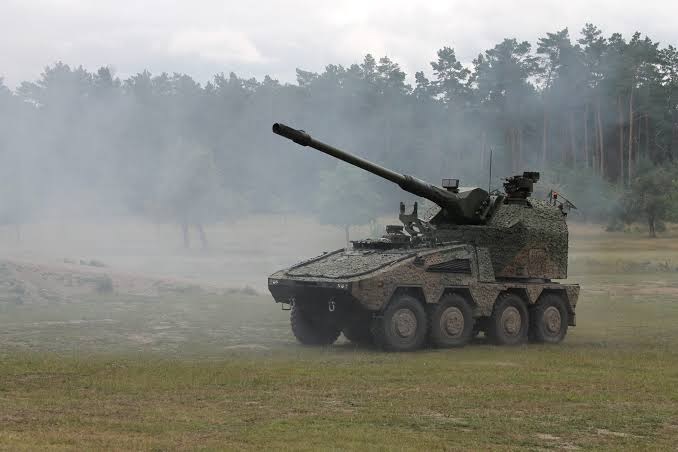
Berlin — The German-made RCH 155 self-propelled artillery system has officially achieved "combat proven" status following its operational use in Ukraine, according to Nicholas Drummond, an advisor to defense manufacturer KNDS. Drummond announced the milestone on the social media platform X, confirming that the system has successfully completed combat testing.
I’m pleased to announce that two new words can now be used to describe the Boxer RCH155: “combat proven.” pic.twitter.com/isCWBlMjOk
— Nicholas Drummond (@nicholadrummond) July 5, 2026
Although Drummond did not disclose where the testing took place, Ukraine is currently the only country operating the RCH 155 in an active conflict. Other customers, including Germany, the United Kingdom, Switzerland and Qatar, have placed orders for the system but are still awaiting deliveries.
Ukraine first announced plans to acquire the RCH 155 in September 2022 with an initial order for 18 systems. The order was later expanded to 54 units, and production began in January 2023. While deliveries took longer than originally expected, KNDS used the additional time to introduce improvements based on operational feedback from Ukrainian forces using other Western artillery systems on the battlefield.
Following these refinements, Germany officially handed over the first RCH 155 to Ukraine in January 2025, making Ukraine the launch operator of the system.
The RCH 155 combines the GTK Boxer 8×8 wheeled armored vehicle with the fully automated Artillery Gun Module (AGM), which uses the same 155mm/L52 gun technology as the German PzH 2000 self-propelled howitzer. The unmanned turret significantly reduces crew requirements, allowing the system to operate with just two personnel—a commander and a driver/operator. The automated module carries 30 fused artillery rounds and 144 modular propellant charges.
One of the RCH 155's key features is its ability to fire while moving. According to KNDS, it is the only artillery system currently capable of engaging targets without stopping, allowing crews to conduct rapid "shoot-and-scoot" operations and quickly change position to reduce the risk of counter-battery fire.
The vehicle weighs just under 40 tonnes, including the 12.5-ton AGM module, and is powered by an 815-horsepower MTU diesel engine. It can exceed road speeds of 100 km/h, providing high operational mobility.
The system can fire up to nine rounds per minute with a standard firing range of around 40 kilometers. Using Very Long Range Artillery Projectiles (V-LAP), its maximum range extends to approximately 54 kilometers. The RCH 155 is also compatible with precision-guided munitions such as VULCANO and EXCALIBUR, enabling more accurate engagement of long-range targets.
The howitzer also supports Multiple Round Simultaneous Impact (MRSI), allowing up to five projectiles fired along different trajectories to strike the target at nearly the same time. This capability increases effectiveness against fortified positions and time-sensitive targets.
The system's operational experience in Ukraine comes as several European countries move forward with large procurement programs. In late 2025, the German parliament approved a framework agreement for up to 500 RCH 155 systems, including a firm order for 80 units. In May 2026, the United Kingdom signed a contract worth nearly £1 billion to acquire 72 RCH 155 systems to replace older artillery platforms and strengthen the British Army's long-range fire support capabilities.
The combat experience gained in Ukraine is expected to provide valuable operational data for KNDS as production continues for international customers. The company has stated that lessons learned from battlefield use have already been incorporated into the system's design, supporting further improvements before additional deliveries begin.
Source: X
——— End of Article ———