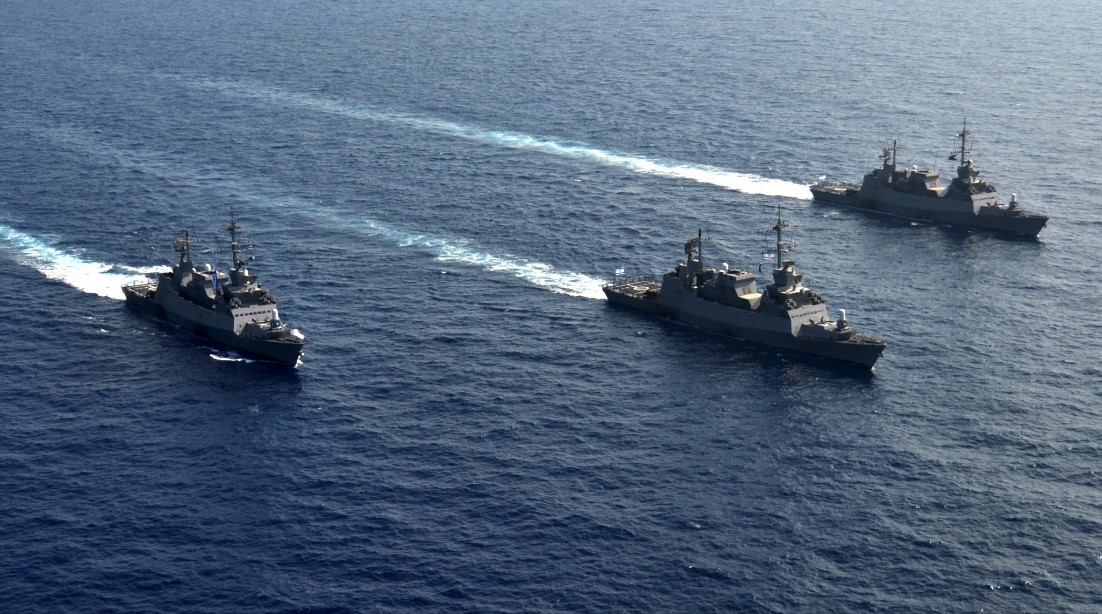
As tensions in the Middle East escalate, India's latest naval deployment to Iran has garnered attention. Three Indian naval ships—INS Shardul, INS Tir, and ICGS Veera—recently docked at Bandar Abbas, Iran, as part of a routine training mission. While officially framed as an exercise in fostering maritime cooperation, this event occurs against the backdrop of a volatile Middle-Eastern environment, raising questions about its broader strategic significance.
The Indian Navy's engagement in the Persian Gulf underscores its intent to solidify partnerships and safeguard maritime security. Upon arrival, the Indian ships were welcomed by the Iranian Navy vessel Zereh, marking a moment of growing naval collaboration. Official statements stress that the visit's primary goal is enhancing mutual understanding and maritime interoperability, essential for regional stability.
India's Strategic Maritime Diplomacy
India has long maintained an interest in the Persian Gulf, primarily due to its energy needs and geopolitical positioning. In recent years, the Indian Navy has been increasingly active in ensuring the safety of maritime routes in the Gulf, which is vital to global energy supply chains. Approximately 55% of India’s energy imports come from the Gulf, making it a critical region for India's energy security.
This latest docking in Iran is not an isolated event. Earlier this year, Iran's warship Dena participated in India's Milan-24 naval exercises, signaling a continuous effort to strengthen military ties. The presence of Iranian training ships in Mumbai also reflects a reciprocal commitment to maritime cooperation between the two nations.
However, India's involvement goes beyond joint naval drills. The docking of warships in Iran during heightened tensions between Israel and Iran, following missile attacks, positions India delicately between its defense ties with Israel and its need for stable energy relations with Iran. Indian Prime Minister Narendra Modi recently urged Israeli Prime Minister Benjamin Netanyahu for restraint and diplomacy, highlighting India's complex role as a balancing force in regional conflicts.
Geopolitical Complexity: Navigating Between Iran and Israel
India's diplomatic balancing act is further complicated by its close relationship with Israel, a country that has shared strong defense and technological partnerships with New Delhi. As Iran-Israel tensions increase, India is in a precarious position, navigating between its commitments to Israel and its strategic energy interests with Iran. Maintaining naval diplomacy with both nations allows India to assert its role in the region while securing its energy supplies.
The Strait of Hormuz, a narrow chokepoint through which 30% of global oil shipments pass, remains a significant concern. Any disruption to this region would have severe economic consequences for India, leading to potential spikes in energy prices and inflation. The 2019 Gulf of Oman tanker attacks already demonstrated how vulnerable these shipping lanes are to regional unrest.
India has preemptively taken steps to ensure the security of its energy supplies, notably deploying warships like **INS Chennai** to the region to protect oil tankers. Furthermore, India’s **Information Fusion Centre – Indian Ocean Region (IFC-IOR)** monitors maritime traffic, enhancing India's ability to respond to potential threats.
Economic Implications of a Potential Conflict
If tensions escalate into a broader conflict between Israel and Iran, it could severely impact India's economy. Any disruption in the Strait of Hormuz would disrupt oil supplies, and as India imports 44.6% of its crude oil from the Middle East, a full-scale conflict would have direct economic repercussions.
Recent data indicates a marginal decrease in India's oil imports due to falling global crude prices, with Brent crude averaging $80.9 per barrel in August 2024. However, an escalation in regional conflict could reverse this trend, driving up global oil prices and creating inflationary pressures within India. Reports suggest that a $10 per barrel increase in crude oil prices could widen India’s current account deficit, making the country's economy even more vulnerable.
The Broader Implications of India’s Naval Presence in Iran
India's decision to maintain a naval presence in Iran, especially in the face of escalating conflicts, highlights the importance of its strategic autonomy in foreign policy. India's dual partnerships with Israel and Iran reflect its broader geopolitical ambition of being a stabilizing force in global politics.
By sending warships to Iran, India signals that it is not merely a passive observer in the Middle East. Instead, it is an active participant in ensuring maritime security and protecting global energy routes. The Indian Navy's training exercises with Iran show India’s commitment to fostering peaceful and stable relations, even amid growing uncertainties in the region.
In conclusion, as the Middle East witnesses increasing strife, India's naval presence in Iran exemplifies its proactive approach to securing its strategic interests, particularly its energy security. While the world watches how Israel and Iran respond to ongoing hostilities, India continues to strengthen its maritime partnerships and navigate a complex web of alliances—carefully balancing between diplomacy, defense, and economic imperatives.
——— End of Article ———