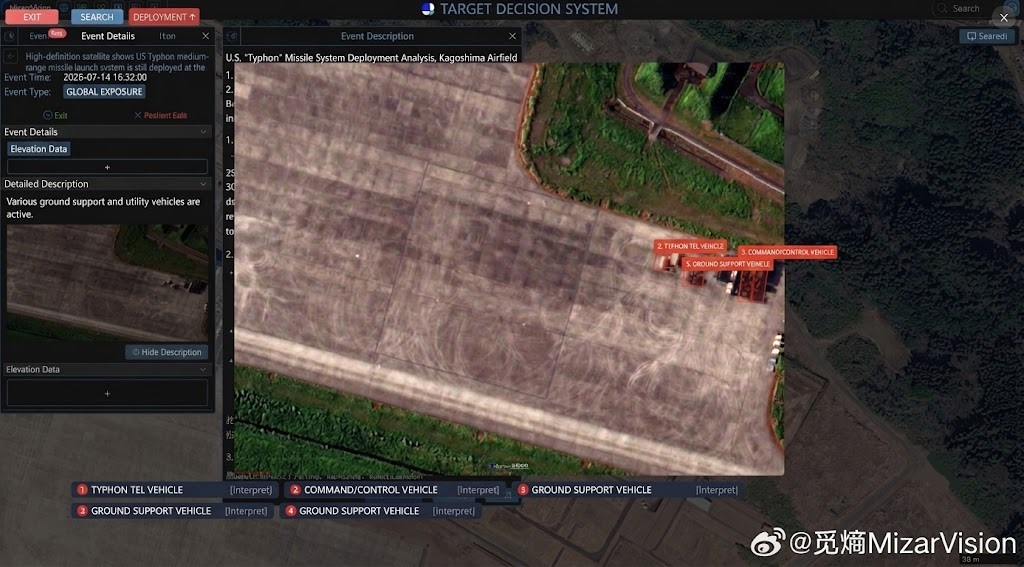
TOKYO — Newly published satellite imagery has confirmed the deployment of elements of the U.S. Army's Typhon Mid-Range Capability missile system to Kanoya Air Base in Japan, providing visual confirmation of a deployment that had been announced earlier by U.S. and Japanese authorities.
The images, released by Chinese satellite analysis firm MizarVision, show equipment consistent with the Typhon missile battery at the Japan Maritime Self-Defense Force's Kanoya Air Base in Kagoshima Prefecture on the southern island of Kyushu. The deployment is part of a temporary U.S.-Japan military cooperation program focused on joint training and interoperability.
Satellite Imagery Confirms Deployment
According to MizarVision's analysis, the satellite images identify several components associated with the Typhon system, including truck-mounted launchers, a battery operations center, and supporting equipment. While the deployment itself had already been publicly announced, the newly released imagery provides visual confirmation that the system has arrived at the base.
The Typhon system was transported to Japan by the U.S. Army's 3rd Multi-Domain Task Force, based at Fort Shafter, Hawaii, under plans announced by Japan's Ministry of Defense in May 2026.
Typhon Missile System Capabilities
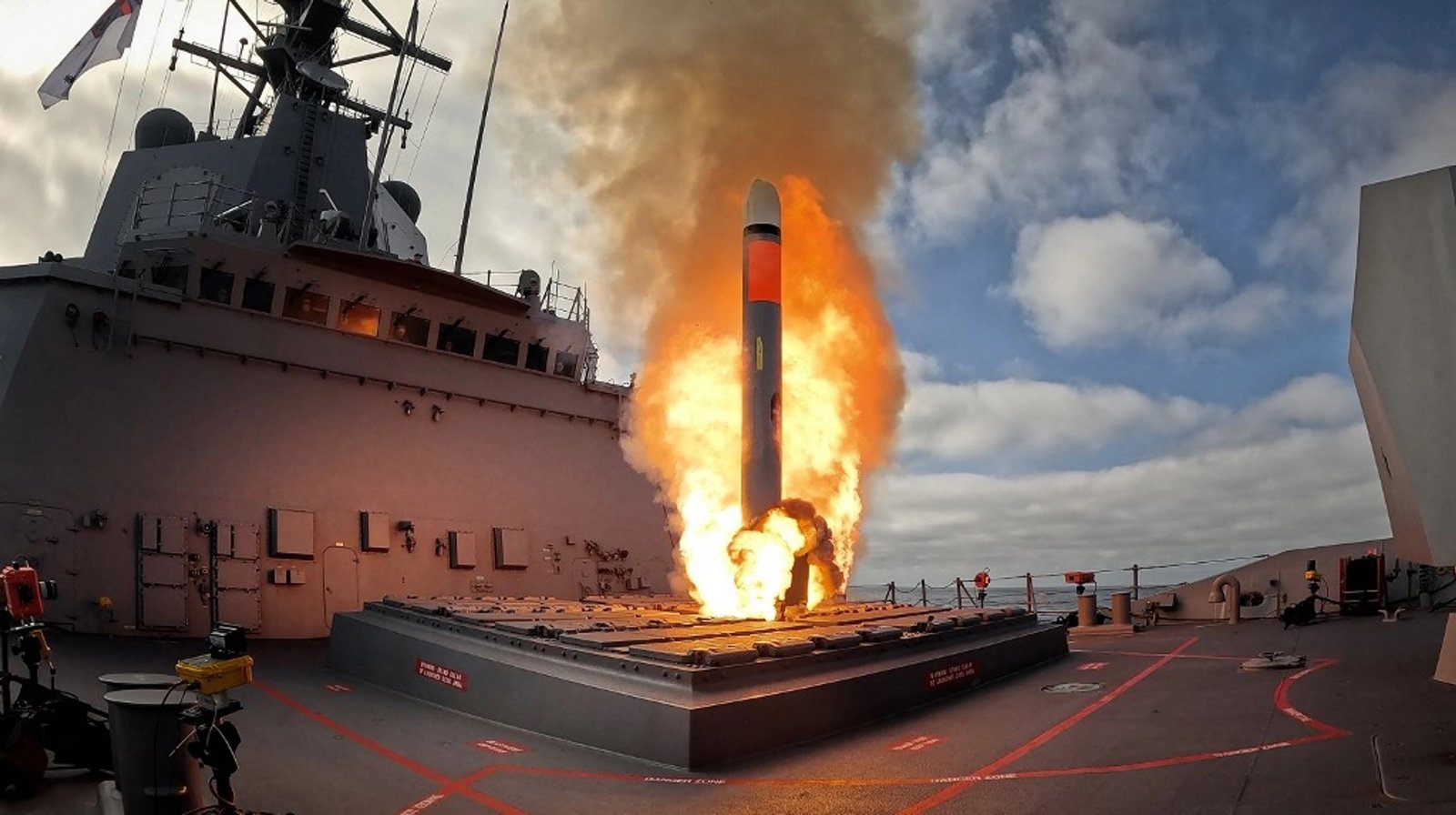
The Typhon Mid-Range Capability is a mobile, ground-based missile system designed to launch both Tomahawk land-attack cruise missiles and SM-6 multipurpose missiles.
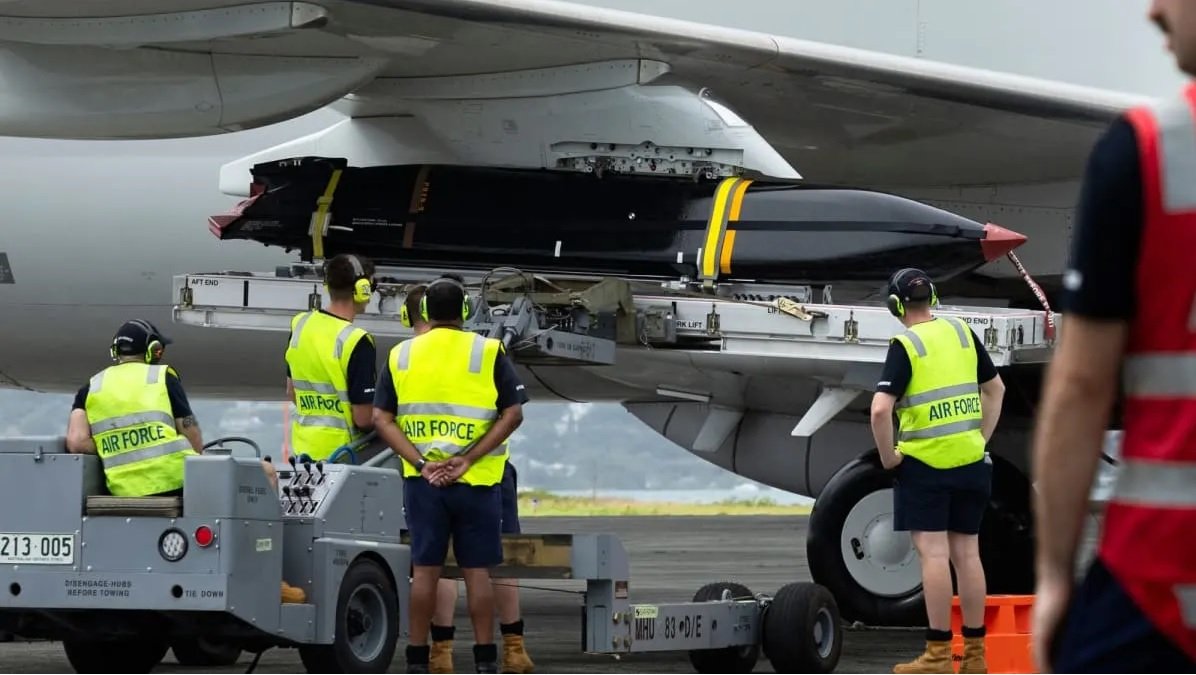
The Tomahawk cruise missile has an operational range of approximately 1,600 kilometers (994 miles), enabling long-range precision strikes against land targets. The SM-6 missile is designed for multiple missions, including intercepting aircraft, incoming missiles, while also being capable of engaging maritime and ground targets.
Military analysts note that the Typhon system was developed to provide the U.S. Army with long-range precision strike capabilities after the United States withdrew from the Intermediate-Range Nuclear Forces (INF) Treaty in 2019, allowing the development and deployment of ground-launched missiles previously restricted under the agreement.
Joint Exercises in Japan
The Typhon deployment supports a series of U.S.-Japan military exercises aimed at improving operational coordination in the Western Pacific and East China Sea.
The system participated in Valiant Shield 2026, a biennial multinational exercise conducted from June 22 to July 1 across Japan, Hawaii, Guam, and surrounding waters. Following that exercise, the Typhon battery is expected to remain in Japan for Orient Shield, the annual U.S.-Japan ground forces exercise scheduled for September.
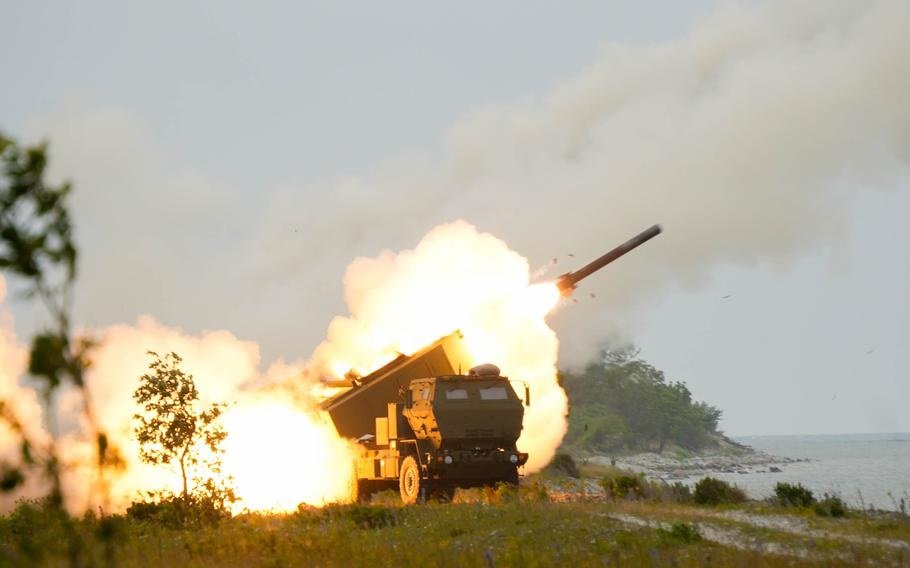
Japanese officials have stated that no live firing of either the Typhon system or the High Mobility Artillery Rocket Systems (HIMARS) will take place while they are stationed at Kanoya Air Base.
After the training activities conclude, the Typhon system is scheduled to be moved to a U.S. military facility in Japan for storage by mid-October.
This marks the system's second temporary deployment to Japan. During its first visit in September 2025, the Typhon battery was stationed at Marine Corps Air Station Iwakuni for the Resolute Dragon exercise before being withdrawn from the country several months later.
Strategic Significance
The deployment has drawn attention because of the Typhon system's long-range strike capability.
According to Chinese military analyst Fu Qianshao, speaking to the South China Morning Post, the Tomahawk missile's approximately 1,600-kilometer range means that, if launched from Kyushu, it could theoretically reach major Chinese coastal areas, including Shanghai and parts of Fujian and Zhejiang provinces.
Although the deployment is temporary and intended for military exercises, it reflects broader efforts by the United States and Japan to strengthen joint operational capabilities and deterrence in the Indo-Pacific region.
Regional Response
China and Russia have repeatedly criticized the deployment of U.S. land-based missile systems in the Indo-Pacific.
Following the announcement of the Typhon deployment, China's Foreign Ministry described the system as a "strategic offensive weapon," arguing that its presence could affect regional security and increase the risk of an arms race.
The deployment comes as the United States continues expanding the operational use of the Typhon system in the region. Earlier this year, the U.S. Army used the system to launch a Tomahawk missile during the Balikatan military exercises in the Philippines.
Japan is also preparing to receive its own Tomahawk cruise missiles later this year as part of its plans to strengthen long-range strike capabilities under its updated national defense strategy.
The temporary deployment of the Typhon missile system to Kanoya Air Base highlights the continuing expansion of U.S.-Japan defense cooperation, with both countries emphasizing improved interoperability and preparedness through joint training while confirming that no live missile launches are planned during the current deployment.
Source : MizarVision
——— End of Article ———