PARIS, — The French Defence Innovation Agency (AID) and the French Navy have selected three industrial teams for the second phase of the DANAE armed autonomous surface vehicle (USV) programme.
DANAE, short for Drone de surface Autonome Naval avec capacité d’Armement Embarqué, was launched in January 2026 under the direction of the French Directorate General of Armaments (DGA). The programme aims to develop armed autonomous surface vessels for the protection of civilian and military port infrastructure and for escorting high-value naval units and warships.
The programme is supported technically by DGA Techniques Navales.
Seven existing USV solutions were evaluated during sea trials held from January 19 to 23, 2026, off Saint-Mandrier near Toulon. The trials assessed navigation, endurance and autonomous decision-making, including the detection and management of threats. Threat neutralisation was not part of the assessment. The seven participants were Exail, Keys4sea, Marine Tech, SeaOwl, Thales, SIREHNA and the ORCAS group led by SEAir.
The three teams selected for the next phase are:
-
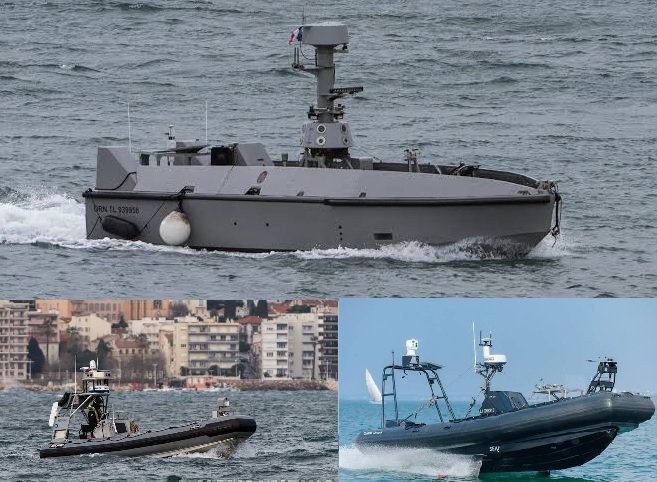
SeaOwl — NEMEZIS: A dual-mode system based on the EDO 4G MN boat, capable of crewed or autonomous operation. It includes an advanced sensor suite and a non-lethal dissuasion turret and is designed for continuous patrol, surveillance and escort missions. Its high level of autonomous decision-making and payload integration allows a single operator to manage the system.
-
ORCAS Group — SEAir, ÆGIR, MBDA and Diades Marine: The group is developing a multi-mission “Flying USV” using hydrofoils. The design is intended to provide higher speed, lower energy use, longer endurance, improved stealth and better stability for sensors and weapons in rough seas. Its compact size allows deployment from frigates, with roles including offensive and defensive missions and protection of ports and maritime sites.
-
SIREHNA, Couach and Naval Group — Seaquest S: A modular 9-metre-class USV designed from the outset as an unmanned vessel. It is intended to integrate with existing naval combat systems, operate in degraded sea conditions and be deployed independently or in cooperative groups.
The second phase began in September 2026 and will continue until the end of 2027. The three teams will develop larger and more capable prototypes over the next 12 months, followed by longer sea trials conducted by the AID, French Navy and DGA Techniques Navales.
The programme focuses on autonomous navigation, energy management for extended missions, autonomous threat classification and decision-making. However, the final authority to use weapons and make firing decisions will remain with a human operator.
Jean-François Thomas, AID innovation acceleration manager and DANAE project lead, said the three teams were selected because they demonstrated the most mature solutions and best matched the French Navy's requirements.
A final solution is expected to be selected toward the end of 2027 or early 2028, after which production would proceed under DGA acquisition. The programme's stated goal is to achieve first deliveries from 2028, although the number of USVs to be ordered has not yet been announced.
DANAE is part of France's wider effort to develop autonomous maritime systems and move towards a hybrid navy combining manned ships with unmanned platforms. It runs alongside other DGA initiatives, including long-endurance surface drones for intelligence, surveillance and reconnaissance missions.
——— End of Article ———