KYIV, — Ukrainian President Volodymyr Zelenskyy said on Tuesday that Ukraine received no advance warning from Western partners before a Russian ballistic missile attack struck Kyiv overnight, raising concerns about intelligence sharing amid reported U.S. pressure on Ukraine to stop attacking Russian oil refineries.
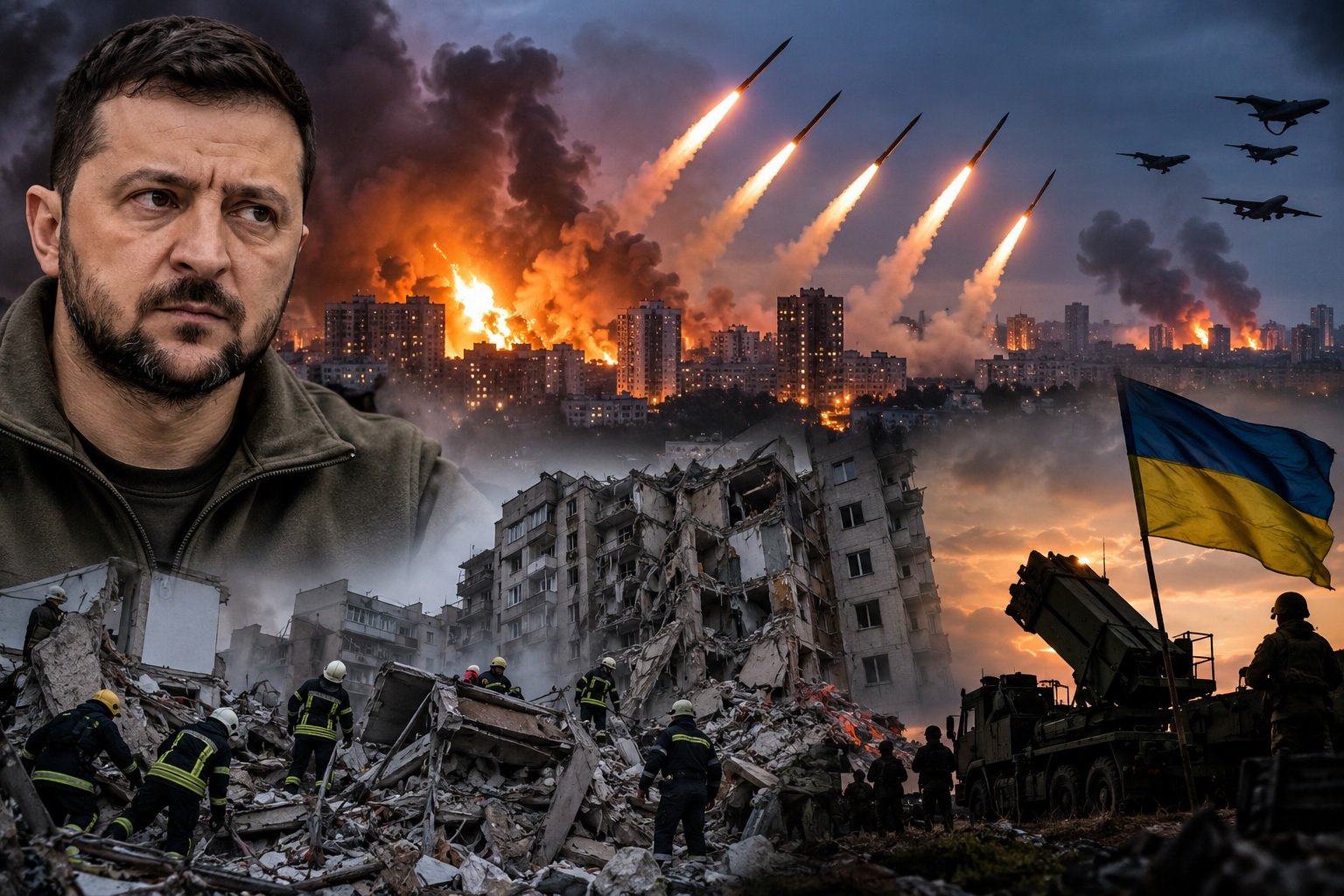
Zelenskyy said five ballistic missiles struck civilian infrastructure before air raid alerts sounded. In a post on X, he described the attack as particularly vile and stressed that early warnings about ballistic missile launches help save lives.
Preliminary reports indicated that Russia fired five or possibly six ballistic missiles, identified in some accounts as Iskander-M or S-400 types, reportedly from the Bryansk region. The Ukrainian Air Force said it had not received advance surveillance information about the launches and detected the targets during the attack. The cause of the missed warning remains under investigation.
Ukrainian Foreign Minister Andrii Sybiha said at the Warsaw Security Forum that military intelligence sharing with the United States remained intact, attributing the delayed warning to the specific weapons used. Air Force spokesperson Yurii Ihnat has acknowledged that intelligence from partners does not always arrive and that technical problems have occurred previously.
Russian Attacks Cause Civilian Casualties
The wider Russian assault involved more than 100 weapons, including jet-powered drones, loitering munitions and ballistic missiles. In Kharkiv, a strike destroyed a residential apartment building, killing four people and injuring 41, according to Zelenskyy.
In the Kyiv region, one person was killed and others injured in the Fastiv district, while a woman was wounded in Kyiv's Darnytskyi district. A drone strike on an educational institution in Rivne injured 14 people, and a residential building near Lviv was also hit, causing injuries.
The Russian Defence Ministry said its forces targeted Ukrainian military-industrial facilities, logistics centres, railway and port infrastructure, and vessels allegedly carrying military cargo. Ukrainian authorities continued assessing damage and responding to the attacks.
U.S. Pressure and the Proposed Energy Ceasefire
The incident comes amid reports that Washington has threatened to restrict intelligence sharing and weapons support unless Ukraine stops attacking Russian energy infrastructure. Ukraine relies significantly on U.S. missile-launch detection capabilities, including the Space-Based Infrared System (SBIRS). Missile expert Fabian Hoffmann has noted that European allies have limited ability to replace these capabilities.
However, Ukraine has not established that a U.S. decision caused the missing warning, and Sybiha said intelligence sharing continued.
On Sunday, U.S. President Donald Trump announced an proposed energy ceasefire under which Russia and Ukraine would stop attacking each other's energy infrastructure. Zelenskyy initially said the announcement was news to him but confirmed on Tuesday that Ukraine had not struck Russian oil refineries or energy sites during the two days following the announcement.
Ukraine reported that Russia struck six Ukrainian energy facilities on Monday but did not target energy infrastructure during the overnight period leading into Tuesday. The latest attacks instead focused on transport and logistics.
The Kremlin has not officially confirmed the agreement. Spokesman Dmitry Peskov said contacts on the matter were continuing, while Russia's Defence Ministry denied Ukrainian allegations of attacks on energy facilities in recent strikes.
Trump has blamed Ukrainian refinery attacks for contributing to rising U.S. fuel prices, although market analysts have identified the U.S.-led war in Iran as a major factor. Reports have also described an arrangement involving Russian diesel imports to the United States following Trump's discussions with Russian President Vladimir Putin on Friday; its precise terms and status remain unclear.
Zelenskyy called for reciprocal de-escalation and urged Ukraine's partners to pressure Russia to stop attacks on Ukrainian infrastructure.
Ukraine Continues Drone Attacks on Russia
Although Ukraine has paused attacks on Russian energy facilities, it continues targeting other sites inside Russia with long-range drones.
Russia's Defence Ministry reported shooting down 604 Ukrainian drones over Russian regions and the Sea of Azov overnight. Moscow Mayor Sergei Sobyanin said 417 drones targeted the Moscow region, with 65 intercepted near the capital. In the Kaluga region, attacks damaged a school, two houses and a vehicle.
Sybiha argued that Washington's reported request to halt Ukrainian refinery attacks demonstrated Kyiv's increased leverage. Referring to an Oval Office meeting last year when Trump told Zelenskyy that he did not have the cards, Sybiha said: “In less than two years, we have gone from ‘having no cards’ to ‘not playing your cards’.”
Ukraine's investigation into the missed missile warning continues as questions remain over the proposed energy ceasefire, Russia's attacks on Ukrainian infrastructure and the reliability of advance intelligence for future missile strikes.
——— End of Article ———