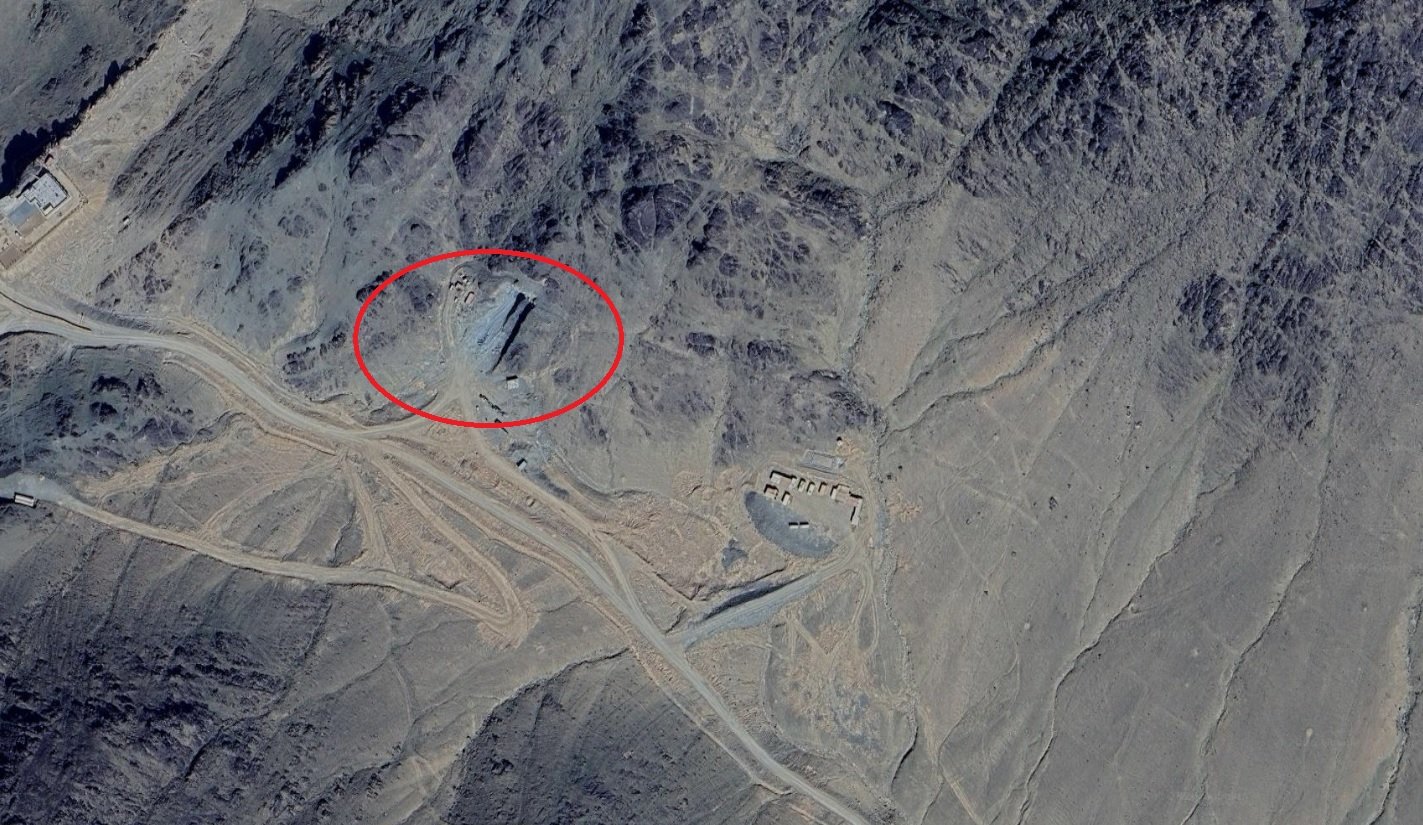
KANDAHAR, AFGHANISTAN, — The Taliban have completed an underground facility near Aino Mina township in Kandahar, according to reports based on satellite imagery and local sources. Construction reportedly began in 2025 following Pakistani attacks, with the tunnels believed to be intended as shelters for Taliban forces in the event of further clashes with Pakistan.
The Pamir Watch project released a satellite image of one of the tunnels in October 2026. The facility is located near a guest residence associated with Taliban supreme leader Hibatullah Akhundzada, who has largely directed Afghanistan’s affairs from Kandahar since the group returned to power in 2021.
According to a representative of Taliban security forces, civilian access to the area has been completely restricted, and local Taliban police have also been barred from approaching the site. The Taliban administration has not officially disclosed the facility’s purpose.
Secret Tunnels and Military Facilities
In August 2025, Amu TV reported secret excavation work in the mountainous areas of District 11 in Kandahar. Local sources said Taliban intelligence units and special operatives were leading the construction. Two sources familiar with the project believed the tunnels were intended to store weapons, ammunition and large sums of cash. The excavation was taking place near an area where a powerful explosion had been reported in April 2025, and Taliban police were reportedly not permitted to monitor the sites.
Separate reporting from August 2025 said Akhundzada had ordered the construction of a specialized military base in the same mountainous district. The planned facility was described as serving strategic and security purposes, with accommodation for senior commanders and specialized military equipment.
Reports from mid-2026 also indicated that heavy military equipment had been moved into the Aino Mina tunnel complex daily over the preceding year. Loud, blast-like sounds were frequently heard, reportedly indicating continued excavation and expansion. One reported site was located at approximately 31.67311° N, 65.74017° E.
Kandahar has become the Taliban’s principal power center, with many important decisions originating there rather than in Kabul. Akhundzada is rarely seen in public and is believed to reside in the city. Open-source investigations have identified several fortified compounds around Kandahar, including locations in Aino Mina associated with the Taliban leadership network.
The use of tunnels is not new in Afghanistan. During the earlier conflict involving U.S. forces, the Taliban and other armed groups used underground networks for protection against airstrikes, fighter movement and weapons storage. Sources describe the current construction around Kandahar as larger in scale and more directly connected to the Taliban leadership.
Tunnel Construction Along Pakistan’s Border
Separate reports from October 2026 said the Taliban had also begun constructing tunnels in border areas of Spin Boldak in Kandahar, as well as in Paktia, Paktika, Zabul and Helmand provinces. Sources said these facilities were intended to shelter Taliban forces during possible clashes with Pakistan. Unemployed workers were reportedly moved to the areas to carry out the work.
The reported expansion highlights the administration’s focus on military preparedness and leadership security amid tensions with Pakistan. However, the Taliban have not officially confirmed the purpose, cost or operational details of the Aino Mina facility or the related tunnel projects.
Questions Over Public Investment
The construction has also raised questions about the Taliban administration’s spending priorities as ordinary Afghans continue to face economic stagnation, limited employment opportunities, aging infrastructure and recurring drought. Weak agricultural productivity and difficulties in maintaining essential public services remain significant challenges, while healthcare and broader economic development require sustained investment.
Although the reported underground facilities are intended to address security concerns, the available information does not establish their construction costs or how their funding compares with public spending on healthcare, jobs and infrastructure.
The completion of the Aino Mina facility therefore highlights a contrast between the reported expansion of secure military infrastructure and the continuing economic and public-service difficulties faced by Afghanistan’s population.
——— End of Article ———