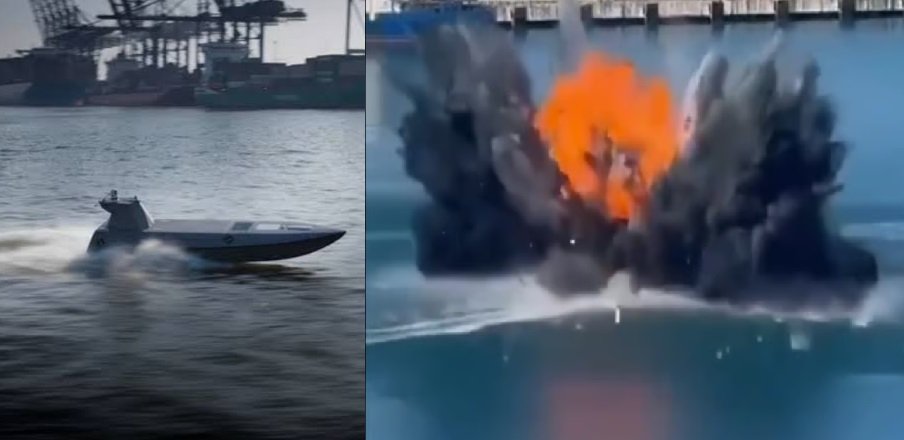
Ukrainian forces used British-made K3 Scout unmanned surface vessels (USVs) in an attack on the Russian port of Sochi on September 3, 2026, targeting the Russian multipurpose support vessel Nefrit. The incident was reported by The Times, citing defence industry sources, and highlights the deployment of British-developed maritime drones in the Black Sea conflict.
Attack on Nefrit
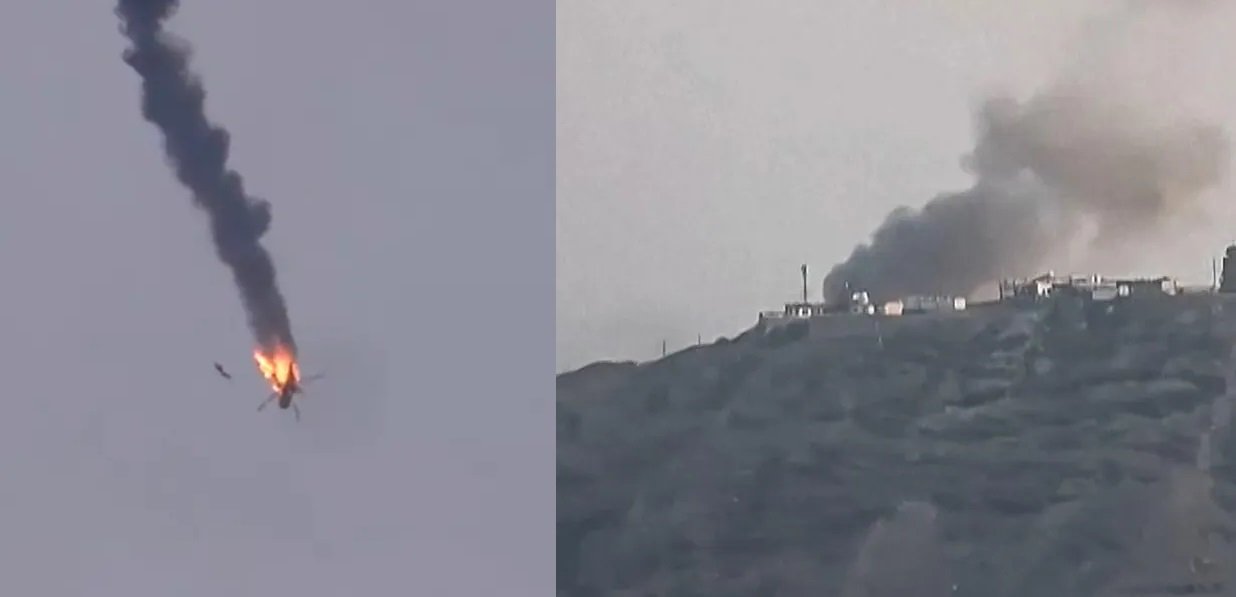
At least two unmanned vessels entered Sochi port during the attack. One reached the Nefrit and damaged its port side, while the second exploded before reaching its target. Video footage of the incident circulated on Russian social media, showing explosions and smoke near the vessel.
The Ukrainian Navy confirmed the strike on the same day, describing the Nefrit as part of Russia’s maritime and energy infrastructure. The Russian-flagged vessel supports oil and gas operations, services offshore facilities, transports cargo and personnel, and conducts underwater technical work. The Navy said these activities support Russia’s war economy.
The vessel had operated around Novorossiysk and elsewhere in the Black Sea. Reports placed the attack near a pier in Sochi port. Additional explosions were reported in the area, and a Russian Pantsir air-defence system was observed near one of the locations. Defence industry sources later confirmed to The Times that Kraken Technology Group had supplied K3 Scout vessels for at least one combat strike against a Russian vessel.
K3 Scout Specifications and Capabilities
Developed by UK-based Kraken Technology Group in Fareham, Hampshire, the K3 Scout is a modular, low-signature unmanned surface vessel designed for long-range maritime operations.
The platform measures approximately 8.4 metres (28 feet) long, with a beam of 1.93 metres and a draft of 0.8 metres. Its maximum displacement is 2,500 kg. It uses a composite structure and an inboard diesel engine with stern-drive propulsion.
The K3 Scout reaches speeds of up to 55 knots (102 km/h) and has a reported range of approximately 650 nautical miles (1,204 km) at 25 knots. Its endurance can reach 30 days, depending on the mission. The vessel uses the Auterion operating system and supports autonomous navigation with human-on-the-loop supervision.
It can carry a payload of up to 600 kg (1,323 lb), with a modular design allowing different mission configurations, including one-way strike payloads, smaller first-person-view (FPV) strike drones and compact air-defence systems. Its reported unit cost is approximately £250,000.
Air Deployment and International Production
The K3 Scout has undergone parachute-deployment trials from transport aircraft, including the Airbus A400M, enabling delivery to remote maritime areas without relying entirely on coastal launch sites.
Kraken Technology Group has partnered with German defence contractor Rheinmetall, which is providing manufacturing capacity for reported annual production of 200 to 1,000 units in Germany. Serial production has begun, and the platform is also reported to be in service with the UK Royal Navy under a separate order.
US defence technology company Anduril Industries has partnered to build the K3 Scout and the larger K7 variant for the United States Navy.
The Sochi attack represents a notable reported use of British-made unmanned surface vessels in Ukraine’s maritime campaign against Russian targets in the Black Sea. However, the full extent of the damage to the Nefrit and its subsequent operational status have not been established in the available reports.
——— End of Article ———