Chinese scientists have successfully demonstrated a quantum engine powered by entanglement, marking a significant step toward more efficient quantum computing.
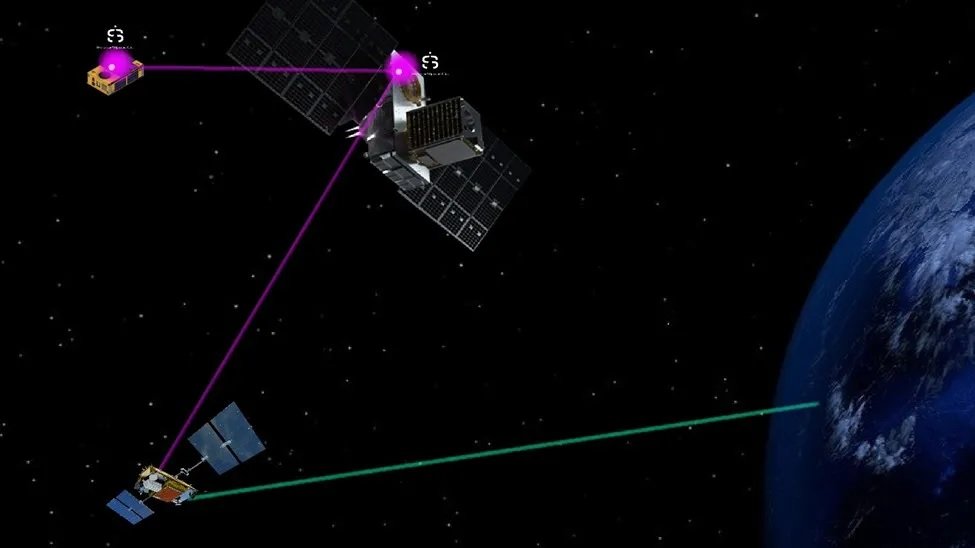
Researchers from the Chinese Academy of Sciences have made a groundbreaking advancement in quantum physics, showcasing the potential of quantum engines powered by entanglement. This phenomenon allows two photons to remain connected, regardless of the distance between them, as if they communicate faster than light.
The team, led by Zhou Fei and Feng Mang, published their findings in the journal *Physical Review Letters* on April 30. Their study is the first to experimentally realize a quantum engine utilizing entanglement as a form of fuel.
Traditional engines rely on thermal combustion, but a quantum engine uses lasers to move particles between quantum states, converting light into kinetic energy. Zhou and Feng's team demonstrated that entanglement significantly enhances the output efficiency of these engines.
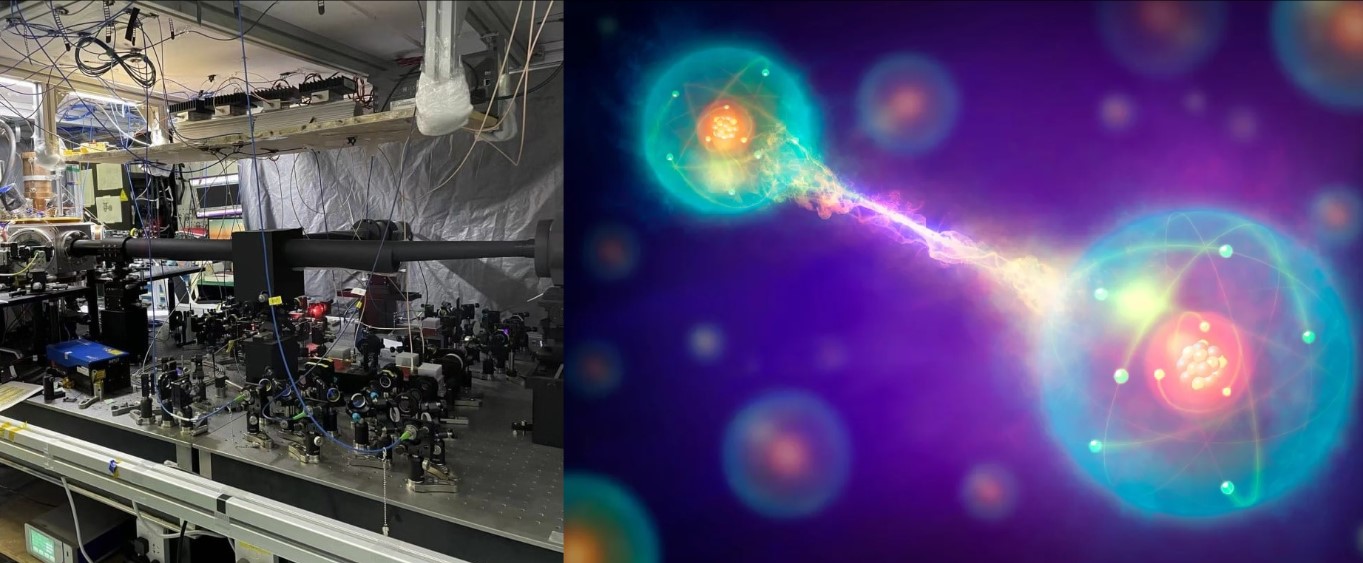
In their experiments, the researchers used ultra-cold calcium ions (40Ca+) confined in an ion trap. They designed a thermodynamic cycle that converts external laser energy into vibrational energy of the ions. By precisely adjusting the laser's frequency, amplitude, and duration, the ions transitioned from their initial pure states to highly entangled states.
The team measured the engine's performance by examining two metrics: conversion efficiency, which measures how many vibrations (phonons) are produced per unit of light (photons), and mechanical efficiency, which assesses the usable energy compared to the total energy output. The results showed that higher levels of ion entanglement led to greater mechanical efficiency, though conversion efficiency remained largely unaffected.
This discovery suggests that entanglement can act as a "fuel" in quantum engines, despite its complex nature. Quantum engines have the potential to exceed the efficiency limits of classical thermodynamics, potentially achieving energy conversion efficiencies of more than 25%. This efficiency could power large-scale quantum computers and circuits, advancing the development of quantum technology.
Moreover, the study indicates that entangled states can enhance the maximum extractable energy in micro-energy devices like quantum motors and batteries. Although quantum batteries may not store as much energy as those in electric vehicles, their true advantage lies in powering large-scale quantum computing systems.
Future research will focus on increasing the number of working materials without compromising the fidelity of the entangled states, thereby enhancing the output of quantum engines. This promising development opens new avenues for more efficient and powerful quantum technologies.
By leveraging the unique properties of quantum entanglement, researchers are paving the way for next-generation computing and energy devices that could revolutionize various technological fields.
——— End of Article ———