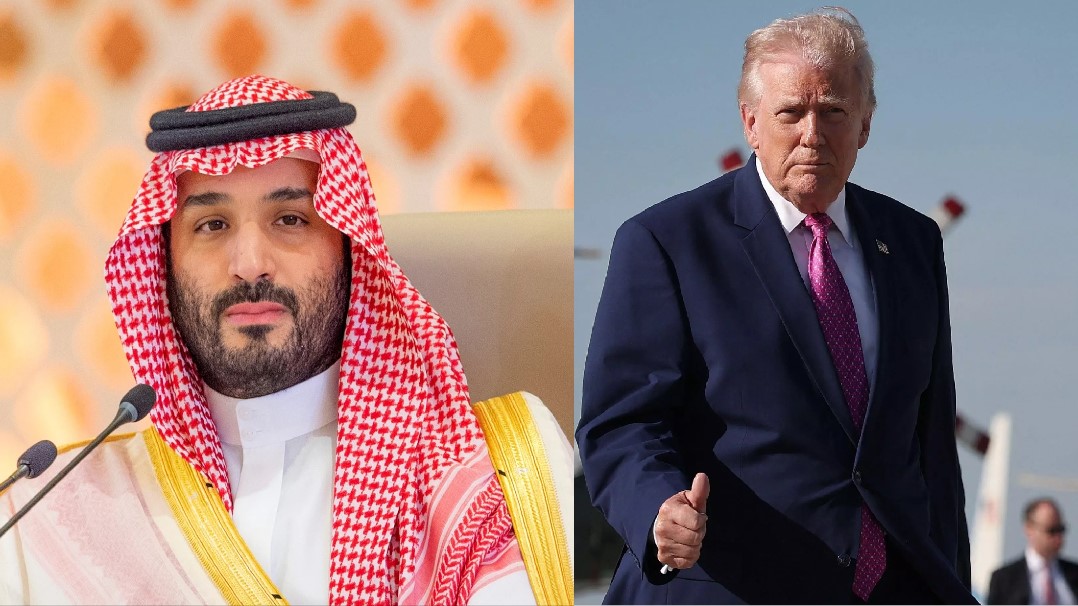
RIYADH / JERUSALEM — April 13, 2026 : A senior source within the Saudi royal family has called for a United States-led ground invasion of Iran aimed at regime change, stating that current military operations have failed to achieve their strategic objectives. The remarks, reported by Israeli media on April 13, 2026, reflect Riyadh’s internal assessment of the ongoing regional conflict and its view of potential outcomes.
Call for Expanded U.S. Military Strategy
According to the Saudi source, the ongoing campaign of aerial and naval strikes against Iran over the past two months has not produced the intended results. Instead of weakening Tehran’s posture, the official assessed that Iran has become more assertive toward the United States, Israel, and regional actors including Saudi Arabia.
The source argued that a decisive shift in strategy is required, advocating for a ground invasion modeled on the 2003 U.S.-led operation in Iraq that resulted in the removal of Saddam Hussein’s government. The official stated that regime change in Iran cannot be achieved through limited strikes alone and requires a sustained military presence on the ground.
The remarks also emphasized that Iran continues to advance its nuclear program, including uranium enrichment activities, despite ongoing military pressure. The source described the current Iranian leadership under Ayatollah Ali Khamenei as posing a greater long-term strategic challenge than Iraq under Saddam Hussein, citing the continued development of nuclear capabilities.
Conditions for Post-Regime Leadership
The Saudi source outlined specific criteria for any future government in Iran following a potential regime change. According to the assessment, a successor leadership must be secular in nature, capable of governing effectively, and broadly acceptable to the Iranian population across key urban centers such as Tehran, Isfahan, and Mashhad.
The official explicitly advised against supporting exiled opposition figure Reza Pahlavi as a potential leader. While acknowledging his visibility and role in recent political developments, the source suggested that an alternative figure with wider domestic acceptance and stronger regional relationships would be more suitable for leading a transition.
In January 2026, Pahlavi called for mass demonstrations from exile in the United States. The appeal contributed to widespread protests across all 31 Iranian provinces, followed by extensive government crackdowns and communication restrictions. Despite his prominence among some opposition groups, the Saudi assessment indicates reservations about his ability to unify the country.
Saudi Arabia’s Position on the Conflict
The Saudi source clarified that Riyadh does not consider itself a direct participant in the ongoing conflict between Iran, the United States, and Israel. The official stated that Saudi Arabia neither initiated nor actively supported the current military campaign.
However, the Kingdom has been affected by developments linked to the conflict. In late February 2026, Iranian drone strikes targeted Saudi Aramco’s Ras Tanura refinery in what was described as a retaliatory action connected to U.S. and Israeli operations.
The source reiterated that Saudi Arabia’s approach remains focused on containment and response to direct threats. Each incident involving Iranian actions would be addressed individually, but no decision has been taken to formally enter the war.
Background: Escalation and Ceasefire
The comments come during a temporary ceasefire that began on April 8, 2026, following a period of sustained escalation across the region.
The conflict traces back to January 2026, when widespread civilian protests in Iran and subsequent state crackdowns contributed to heightened tensions. The United States responded by increasing its military presence in the region.
By late February 2026, the situation escalated into direct confrontation, with U.S. and Israeli forces conducting strikes on Iranian military infrastructure and leadership targets. Iran responded with large-scale missile and drone attacks against U.S. and allied positions across the Middle East, including sites in Kuwait, the United Arab Emirates, and Saudi Arabia.
Regional and Strategic Context
The Saudi source’s remarks align with broader concerns among Gulf states that limited military measures may not be sufficient to alter Iran’s strategic behavior or regional influence. Officials in the region have indicated that without significant changes to Iran’s political or military posture, long-term stability is unlikely.
Saudi Arabia and Iran have maintained a prolonged geopolitical rivalry. During the 1980s Iran-Iraq War, Saudi Arabia provided financial support to Iraq. Following the 2003 removal of Saddam Hussein, Iran expanded its influence across Iraq, Syria, Lebanon, Yemen, and Palestinian territories through allied governments and non-state actors.
Despite a China-brokered diplomatic agreement in 2023 aimed at reducing tensions between Riyadh and Tehran, underlying disputes related to Iran’s nuclear program, regional proxy networks, and security concerns have persisted.
The current conflict has included strikes on Iranian nuclear infrastructure, retaliatory missile launches, and ongoing discussions regarding potential ceasefire arrangements and maritime security measures in the Strait of Hormuz.
The Saudi source indicated that ending military operations without substantive changes to Iran’s leadership or policies would not address the underlying security concerns of regional states. The remarks were delivered anonymously, and no official confirmation has been issued by the Saudi government.
——— End of Article ———