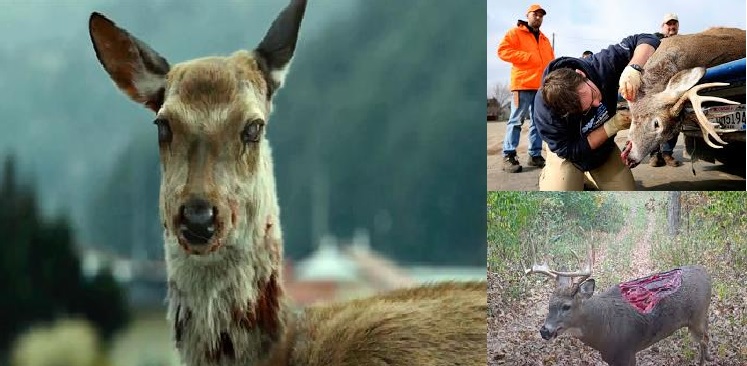
Mystery News ,World :- Chronic Wasting Disease (CWD), commonly known as zombie deer disease, is a prion ailment impacting deer, elk, reindeer, sika deer, and moose, as identified by the US Centers for Disease Control and Prevention (CDC). Its presence has been noted in various regions of North America, including Canada and the United States, as well as in Norway and South Korea.
Media reports from Wyoming reveal the disease in 800 samples of deer, elk, and moose, prompting concerns among experts about the possibility of it evolving into a slow-moving disaster with the potential to affect humans. Currently, CWD is fatal, lacking known treatments or vaccines, drawing parallels with diseases like mad cow disease or Bovine Spongiform Encephalopathy (BSE).
Dr. Cory Anderson, speaking to The Guardian, points to the BSE outbreak in Britain as an example of how spillover events from animals to humans can lead to unforeseen consequences. While it's not asserted that CWD will definitely cross over to humans, experts emphasize the need for preparedness.
According to the CDC, prion diseases have long incubation periods and affect both humans and animals. The chronic wasting disease may take over a year before symptoms manifest in an infected animal, with signs including drastic weight loss, stumbling, and other neurological symptoms. Infected animals may also exhibit listlessness, drooling, excessive thirst or urination, drooping ears, and a lack of fear of people.
The World Health Organization has been advising since 1997 to prevent the agents of known prion diseases from entering the human food chain. The CDC warns of potential risks to non-human primates, like monkeys, based on animal studies suggesting transmission through contact with infected deer or elk fluids.
CWD is challenging to eradicate once established in the environment, with the ability to persist for years in dirt or on surfaces. The disease is reported to be resistant to disinfectants, formaldehyde, radiation, and incineration at high temperatures.
First discovered in Colorado in 1967, there have been no reports of humans being affected by zombie deer disease to date. However, studies indicate a potential risk of transmission to humans. To curb its spread, the CDC recommends refraining from shooting, handling, or consuming meat from visibly sick or odd-acting deer and elk, including those found dead. Precautions such as wearing latex or rubber gloves during dressing and minimizing handling of organs, especially brain or spinal cord tissues, are also advised.
Highlighting the broader context of zoonotic diseases, the article emphasizes the significant public health risks posed by diseases transmitted from animals to humans. Examples such as Influenza, SARS, MERS, Rabies, Lyme disease, and the recent zoonotic transmission of SARS-CoV-2 underscore the importance of monitoring and understanding the interfaces between humans and animals to prevent future outbreaks and ensure global health security.
——— End of Article ———