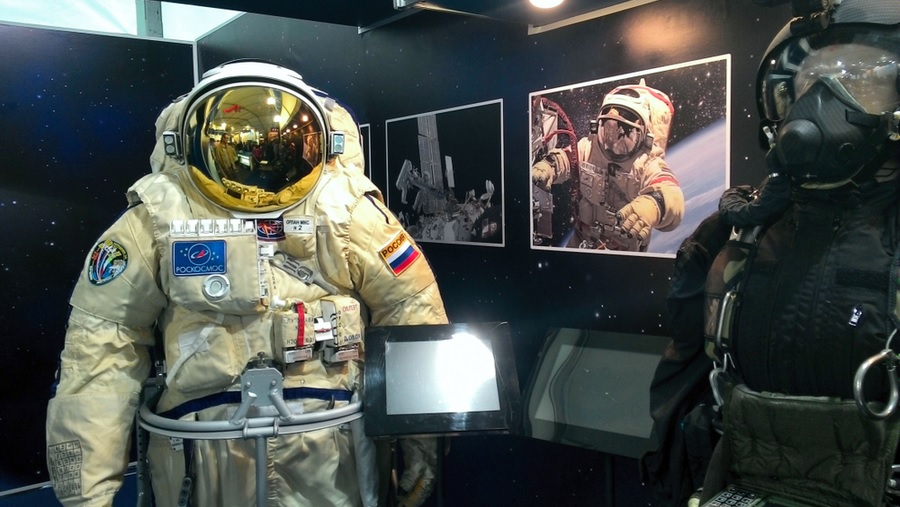
Space News ,India :- The Indian Space Research Organisation (ISRO) is contemplating the use of Russian-made spacesuits for its upcoming Gaganyaan mission, as revealed by a document examined by Hindustan Times. Although locally produced suits by Vikram Sarabhai Space are near completion, recent mission planning suggests a preference for Russian spacesuits due to programmatic requirements and an added layer of crew safety.
Originally, the plan involved Indian astronauts wearing domestically produced Intra-Vehicular Activity (IVA) suits. However, the latest developments indicate a shift towards Russian spacesuits to ensure program requirements and enhance crew safety. According to an official document, the decision is made to "doubly ensure crew safety" for the Gaganyaan mission.
In 2024, dubbed 'The Year of Gaganyaan' by ISRO chief S Somanath, the space agency is gearing up for crucial mission-related tests and demonstrations throughout the year. The Gaganyaan mission aims to demonstrate India's capability to execute its inaugural human spaceflight program, with a focus on safely returning a three-person crew from an orbit at 400 kilometers for a three-day stay.
ISRO's comprehensive preparations include the development of a human-rated launch vehicle, crucial technology advancements, and the construction of a life-support system for a comfortable space environment. Additionally, ISRO is working on a comprehensive framework for crew management, addressing aspects such as training, recuperation, and rehabilitation.
Before the Gaganyaan spacecraft is launched, ISRO plans essential preparatory missions, including Test Vehicle (TV) flights, Pad Abort Test (PAT), and Integrated Air Drop Test (IADT). These tests are vital for evaluating and enhancing various systems for safety and reliability in space.
The article also highlights the Sokol spacesuit, a Russian counterpart with a long history in space missions. Unlike suits for spacewalks, the Sokol serves as a rescue suit, ensuring astronaut survival in the event of unexpected spaceship depressurization. The Sokol's design improvements over the years focus on user-friendliness, customization for each crew member, and flexibility in emergency scenarios.
Beyond the Gaganyaan mission, ISRO is involved in the joint NASA-ISRO SAR (NISAR) Mission, aimed at mapping the entire planet every 12 days using dual-band Synthetic Aperture Radar (SAR) technology. The NISAR mission focuses on diverse disciplines, including ecosystems, deformation studies, and cryosphere sciences.
Scheduled for launch in the first quarter of 2024, NISAR represents a significant collaboration between NASA and ISRO, contributing valuable data to track global changes and natural hazards. The article concludes by acknowledging ISRO's meticulous testing, technological advancements, and extensive preparations, showcasing the organization's commitment to the success of the Gaganyaan mission and other groundbreaking space initiatives.
——— End of Article ———