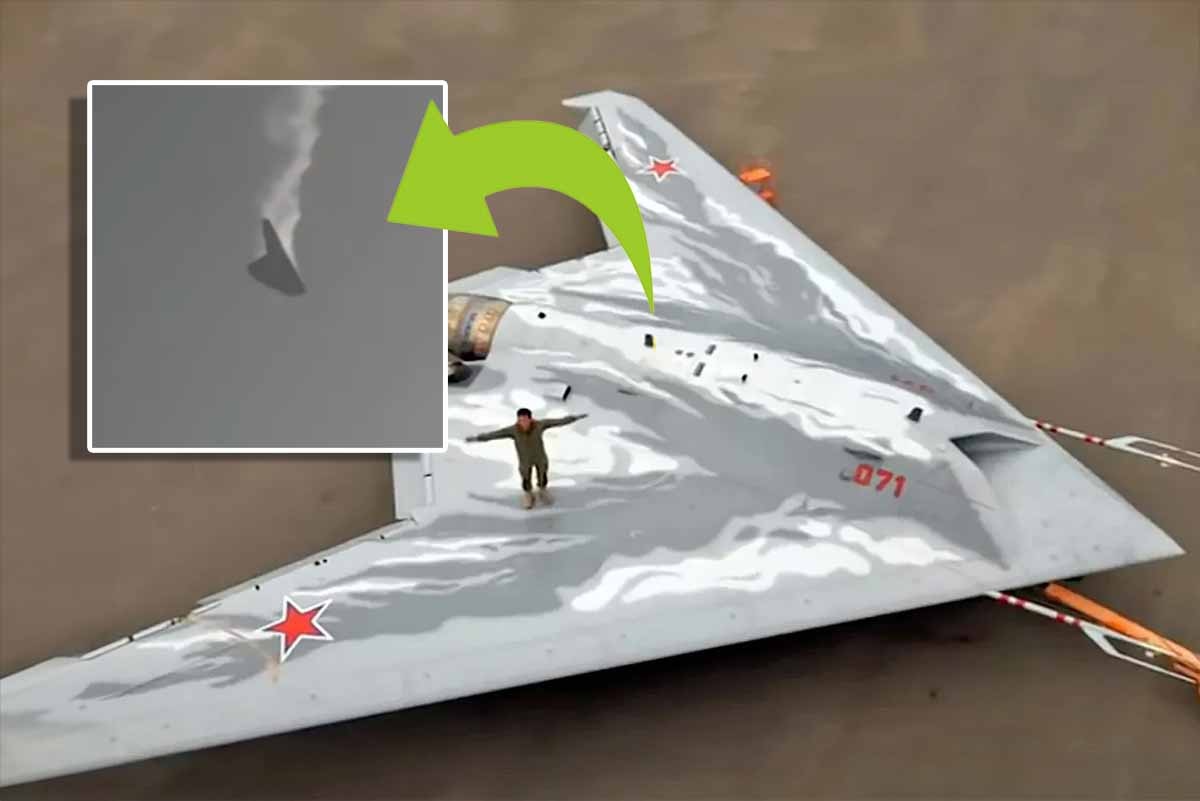
In a significant and sobering development, an investigation into the remains of a Russian S-70 “Okhotnik” unmanned combat air vehicle (UCAV) has revealed the use of Western technology, despite the international sanctions intended to curtail Russia's access to advanced components. This discovery, made after the drone was downed on October 5, 2024, near Kostyantynivka in Ukraine's Donetsk region, underscores the complex global challenge of effectively enforcing sanctions and stopping the flow of sensitive tech to adversarial militaries.
The S-70 Okhotnik: Russia’s Advanced Stealth Combat Drone
The S-70 Okhotnik, also known as the "Hunter," is one of the most sophisticated UAVs in the Russian arsenal. Modeled after the design principles of the Su-57 stealth fighter jet, this heavy, flying-wing UCAV was created to operate autonomously or in concert with manned aircraft, providing support in high-stakes reconnaissance and strike operations. Equipped to carry an array of weaponry and engineered with stealth capabilities, the Okhotnik represents a key element in Russia’s military ambitions to extend its reach and modernize its air combat strategies.
Despite only a few prototypes of the S-70 existing, this model’s deployment in contested airspace over Ukraine highlights its intended role as a high-impact combat asset in Russian military strategy. The October 5 incident, where Russian forces allegedly mistook their own advanced drone for an enemy aircraft and shot it down, underscores the operational complexities and perhaps even the internal communication challenges within the Russian forces. The loss of one of these few prototypes thus bears substantial implications for Russian defense planners.
Western Tech Inside: A Deeper Look at Sanction Evasion
In the examination of the downed Okhotnik, Western-origin components were identified in critical parts of the drone’s microelectronics system. The microchips and processors in question came from major manufacturers in the United States and Europe, including Analog Devices, Texas Instruments, and Xilinx-AMD from the United States, Infineon Technologies from Germany, and STMicroelectronics from Switzerland.
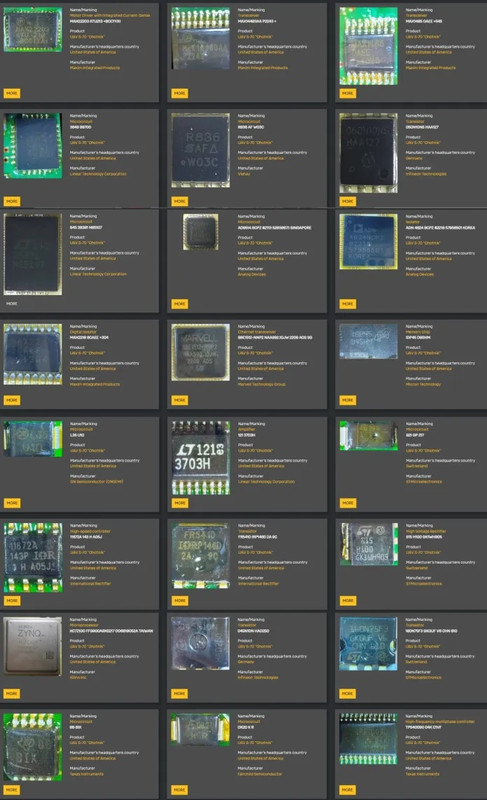
These findings, documented by the monitoring platform “War & Sanctions,” show that components from these well-known manufacturers were adapted within Russia’s military supply chain to power the core functionalities of the Okhotnik. These components typically include specialized microcontrollers, signal processors, and power management chips—hardware essential for managing complex UAV operations, navigation, and possibly even secure communications.
Such electronics are not only foundational to the Okhotnik’s autonomous and semi-autonomous capabilities but are also integral in making the drone a formidable reconnaissance and strike platform. While Russia’s domestic electronics industry has capabilities, it lacks the capacity to produce these advanced, high-performance components, which leads to reliance on foreign technology—even amid ongoing sanctions.
Implications for Global Sanctions and Supply Chain Oversight
This incident casts a sharp light on the ongoing difficulties in enforcing sanctions and restricting access to sensitive technologies. Analysts have noted that while sanctions theoretically restrict the sale of dual-use components to countries like Russia, practical enforcement often falls short due to the global nature of supply chains, re-export loopholes, and unauthorized third-party transfers. In the case of the S-70, it's likely that these Western parts arrived in Russia through indirect channels or third-party countries that either overlooked or facilitated the transfer of restricted goods.
The continued appearance of Western technology in Russian weaponry reveals gaps not just in sanctions enforcement but also in tracking the end-use of dual-use technology (products with both civilian and military applications). Countries exporting these components may not always have full control over where they end up, especially when they pass through multiple distributors or intermediaries. The findings suggest that strengthening these supply chains and enforcing compliance will be a critical ongoing challenge.
The Strategic and Tactical Loss of the S-70 for Russia
The loss of an S-70 prototype not only marks a tactical failure but also presents a strategic setback. For the Russian military, each Okhotnik drone represents years of development and substantial investment. The S-70 is also part of a broader ambition to develop advanced UCAVs capable of complementing Russia’s manned fighter fleet, embodying a leap forward in Russia’s aerial combat capabilities. Losing one of these prototypes, especially under circumstances suggesting a potential mishap with friendly forces, raises questions about the efficiency and coordination within the Russian military and the sustainability of its advanced UAV program.
The Bigger Picture: Global Security and Technology Regulation
The S-70 Okhotnik incident raises broader questions about global security, technological proliferation, and the ability of nations to contain advanced military technology. The presence of Western-made parts in such a high-stakes platform speaks to the pervasive challenge of regulating tech flow in a world where supply chains are deeply interconnected. As drones and other autonomous systems become central to modern warfare, the importance of maintaining control over critical tech components is only set to increase.
The discovery of Western tech within this sophisticated Russian UCAV adds a new layer to ongoing discussions on arms control and technological oversight, underscoring the need for more robust mechanisms to prevent sanctioned states from obtaining critical technologies. For policymakers and industry leaders, the situation highlights the importance of stringent end-use checks and international cooperation to monitor the flow of potentially sensitive technology.
——— End of Article ———