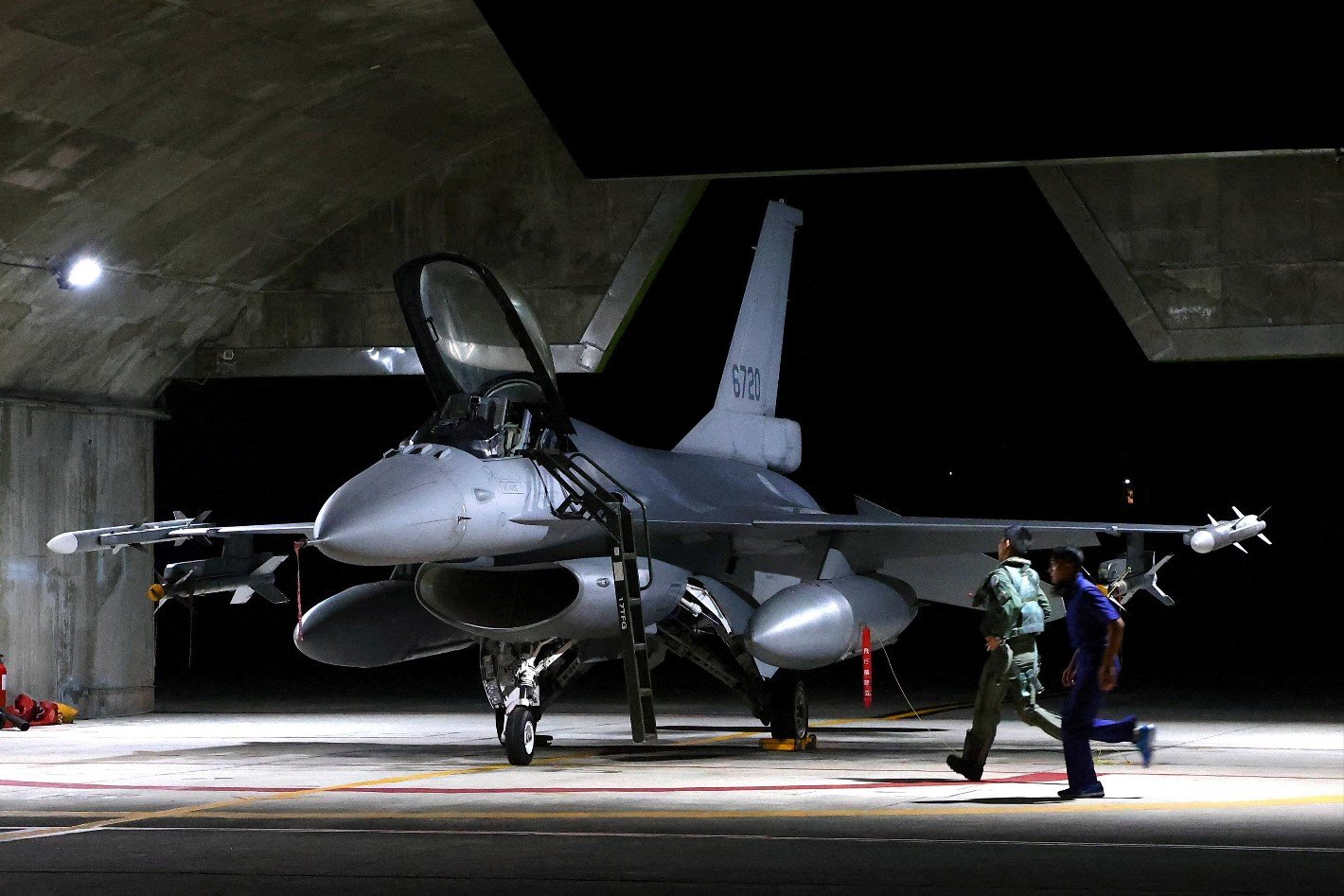
TAIPEI — Taiwan's Ministry of National Defence has confirmed it is seeking compensation from the United States and Lockheed Martin over repeated delays in the delivery of 66 F-16 Block 70 fighter aircraft ordered for the Republic of China Air Force. Rather than pursuing direct financial compensation, the ministry is prioritizing practical support that will improve the long-term readiness and sustainment of the future fleet.
The aircraft were ordered under an $8.2 billion agreement signed in 2019 through the U.S. Foreign Military Sales (FMS) program. The original contract called for all 66 fighters to be delivered by the end of 2026. However, the program has faced repeated delays due to global supply chain disruptions and labor shortages following the COVID-19 pandemic and the Russia-Ukraine war.
According to Taiwanese officials, only two aircraft have been completed so far, and both remain in the United States.
First Delivery Now Expected in September 2026
Speaking before the Legislative Yuan's Foreign Affairs and National Defense Committee, Lieutenant General Lee Ching-ran, Chief of Staff of the Air Force Command, said the first F-16 Block 70 is now expected to arrive at Republic of China Air Force facilities in September 2026, instead of the original schedule.
Lee told lawmakers that Taiwan has repeatedly raised the issue with U.S. authorities and has requested the U.S. government to assist in seeking compensation from Lockheed Martin.
"There are many ways to seek compensation," Lee said during the hearing.
He emphasized that the ministry's priority is not cash reimbursement but support that strengthens long-term operational readiness.
Focus on Operational Support
Taiwanese officials said practical compensation could include:
- Additional spare parts inventories
- Engineering and maintenance support
- Software upgrades
- Extended warranty coverage
According to defense officials, these forms of compensation can help reduce long-term maintenance costs, improve aircraft availability, and strengthen fleet readiness more effectively than direct financial payments.
Lockheed Martin has reportedly increased its workforce and introduced a two-shift production schedule at its Greenville, South Carolina, production facility in an effort to accelerate aircraft assembly. Despite these measures, military officials acknowledged that the original delivery timeline cannot be met.
Taiwan has already paid more than $4.87 billion toward the procurement but is still awaiting the arrival of its first aircraft.
FMS Process Limits Legal Options
The compensation process is also influenced by the structure of the procurement.
The F-16 acquisition was conducted through the U.S. Foreign Military Sales (FMS) program rather than a Direct Commercial Sale (DCS). As a result, Taiwan has limited legal avenues to pursue direct claims against Lockheed Martin.
In late 2025, Premier Cho Jung-tai said the government had not ruled out legal action against the manufacturer. However, he noted that the FMS framework limits the ability to seek direct compensation in the same manner as commercial defense contracts. Instead, Taiwan plans to continue requesting remedial support to offset the operational impact of the delayed deliveries.
Delays Add to Broader U.S. Arms Backlog
The delayed F-16 deliveries are part of a wider backlog affecting U.S. defense equipment ordered by Taiwan.
By the end of 2025, the value of undelivered U.S. military equipment ordered by the Republic of China Armed Forces had exceeded $21 billion, reflecting broader delays across multiple procurement programs.
Modernizing Taiwan's F-16 Fleet
Taiwan's current procurement follows its 1992 purchase of 140 F-16A/B Block 20 fighters, many of which have since been upgraded to the F-16V standard.
The new F-16 Block 70 aircraft are intended to further modernize the Republic of China Air Force as security concerns across the Taiwan Strait continue.
The first production F-16 Block 70 for Taiwan was rolled out and underwent acceptance testing in the United States during 2025 and early 2026. A Ministry of National Defence delegation also visited the production facility in March 2026 to inspect the aircraft.
Although production is reported to be operating at full capacity, the first aircraft is still scheduled to arrive in Taiwan in September 2026.
Taiwan Continues to Seek Practical Compensation
Taiwanese officials said they will continue working with the U.S. government and Lockheed Martin to accelerate deliveries while pursuing practical forms of compensation that improve the long-term readiness, maintenance, and operational support of the incoming F-16 Block 70 fleet.
——— End of Article ———