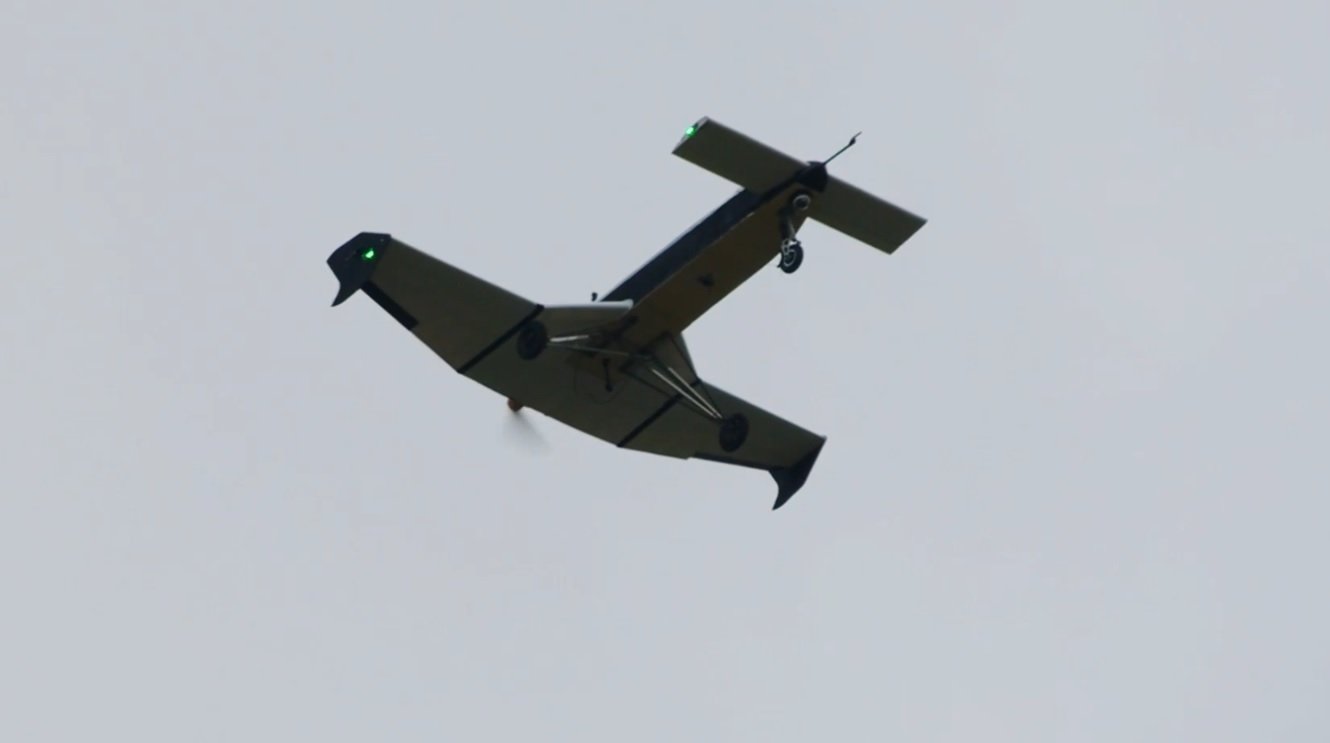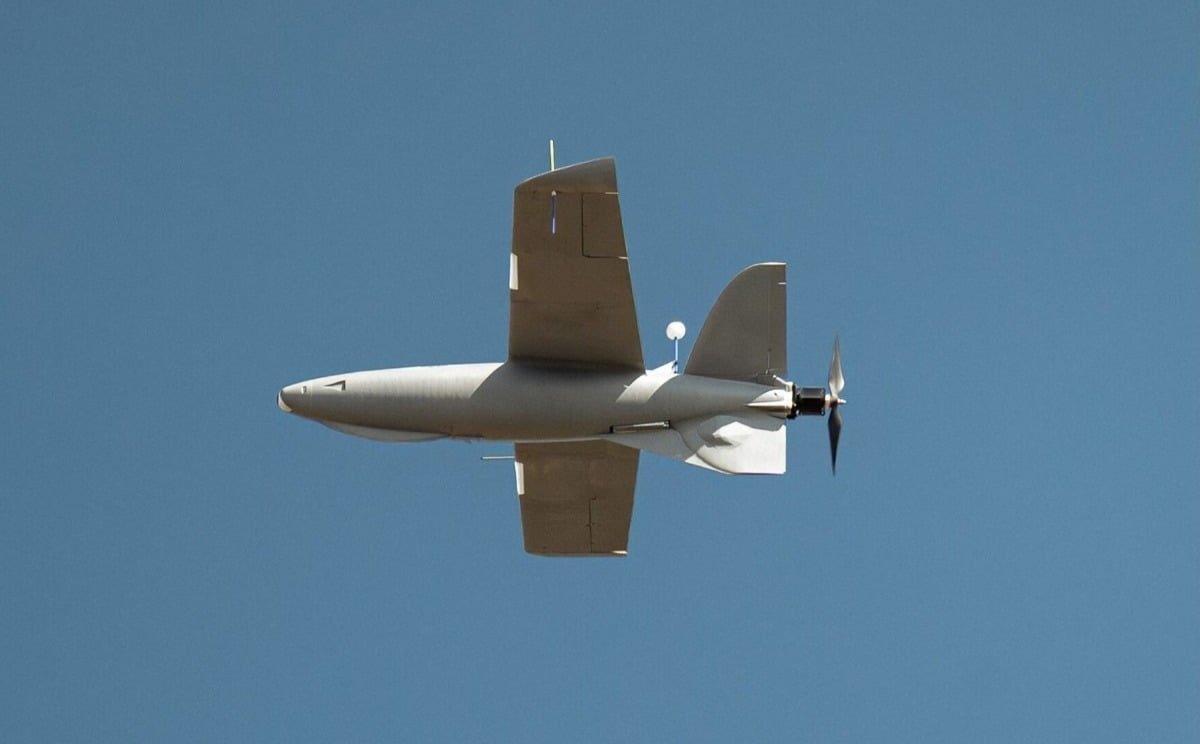
KYIV, Ukraine — Ukrainian defense-technology company Ukrainska Bavovna has unveiled the Last Shadow T200, a fixed-wing interceptor drone designed for city air defense and frontline operations against Russian unmanned aerial vehicles.
The system was presented at an event organized by the Technological Forces of Ukraine association. According to information provided by the company to Militarnyi, the T200 is designed to intercept Shahed (Geran), Gerbera, Molniya, Lancet, Orlan and Zala drones. Development began last year.
The T200 has a maximum speed of 300 km/h, a practical ceiling of 5,000 meters, and a maximum climb rate of 35 meters per second. Its propulsion system provides about 7 kilograms of thrust, although the company says normal flight uses much less of the available power.
The drone has an endurance of about one hour at a cruising speed of 130 km/h, and around 40–50 minutes at higher interception speeds. Its initially stated operational range was 70 kilometers, but recent combat trials saw the aircraft cover 122 kilometers while maintaining a stable, high-quality video link with ground control.
The interceptor is designed to operate in heavy electronic-warfare environments. It uses beacon-based navigation, a jamming-resistant Sine.link data channel, and systems that switch between video channels and frequency bands to counter Russian interference, including the Shtora image-spoofing system.
Target detection is supported by a movable, gimbal-mounted camera that can be raised and lowered. It can tilt from -80 to +45 degrees and provides thermal imaging.
Ukrainska Bavovna is also integrating an automated terminal-guidance system. The operator will designate the target using a switch, after which the onboard autopilot will control the final approach. The T200 uses a codified warhead and initiation board, with a PWM signal used when engaging aerial targets. Its 2.5-kilogram shaped-charge warhead was developed by Rendrock Ukraine. Both the drone and warhead have been codified.
The T200 is launched from a pneumatic catapult, which can be deployed in less than five minutes. Its airframe is currently produced using 3D printing, but the company plans to switch to molding within several months to increase structural strength and enable reusable landings.
Small-scale serial production has already begun following state codification.
Ukrainska Bavovna said it focuses on maximizing the use of Ukrainian-made components and also provides joint research and development, testing, and maintenance, repair and overhaul services to foreign partners. For operator training, it works with the Dovzhyk pilot school, where more than 70 veterans prepare crews to operate various drones, including interceptors.
——— End of Article ———