KYIV, Ukraine— Ukraine's air defense forces intercepted multiple Russian aerial threats during an overnight attack that included ballistic missiles, guided missiles, and large numbers of drones, according to the Air Force Command of the Armed Forces of Ukraine.
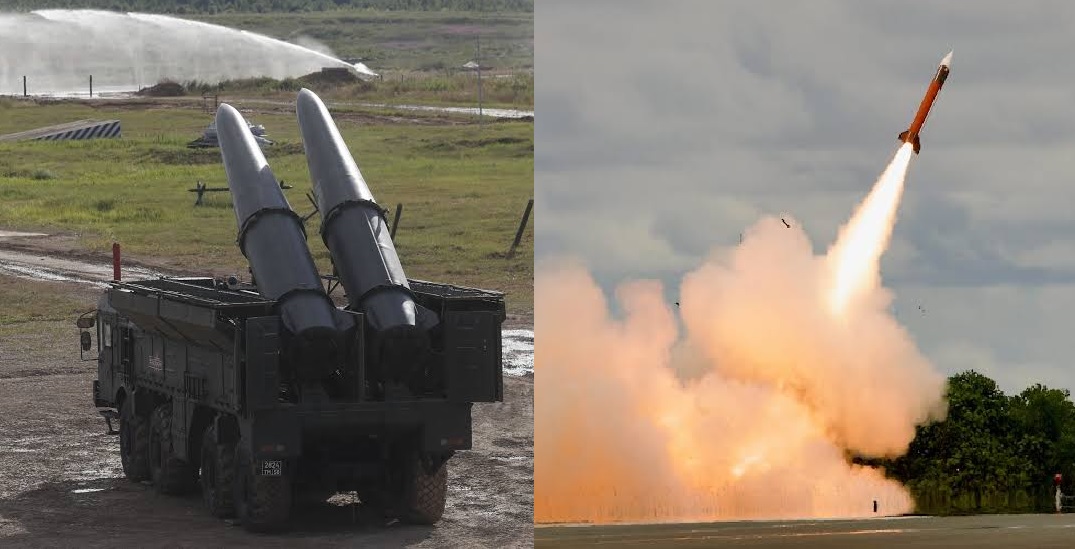
The Ukrainian Air Force said the attack began at 6:00 p.m. on July 13 and continued overnight into July 14. According to the military, Russia launched 8 Iskander-M ballistic missiles, 2 Kh-59/69 guided air-to-ground missiles, and 135 strike and other unmanned aerial vehicles (UAVs) from multiple directions.
According to the official statement, Ukrainian air defenses shot down or suppressed five Iskander-M ballistic missiles, both Kh-59/69 guided missiles, and 108 enemy UAVs. The intercepted drones included Shahed, Gerbera, Italmas, Banderol loitering munitions, Parody decoy drones, and other UAV types. The interceptions took place across northern, southern, eastern, and central regions of Ukraine.
The reported interceptions come after Ukrainian officials acknowledged earlier this month that the country's air defenses had been unable to intercept Russian ballistic missiles during a previous large-scale attack because of a shortage of PAC-3 interceptor missiles for the Patriot air defense system. The latest operation marks the first officially reported successful interception of Russian ballistic missiles since those concerns were raised.
According to the Ukrainian Air Force, the drones were launched from Orel, Kursk, Bryansk, Millerovo, and Primorsko-Akhtarsk in Russia, as well as from Russian-controlled areas of Donetsk and Hvardiiske in occupied Crimea. The Kh-59/69 guided missiles were launched from airspace over occupied Crimea.
The Air Force reported that ballistic missile impacts and strikes by 25 attack UAVs were recorded at 17 locations, while debris from intercepted weapons fell at 10 additional locations. Information regarding two ballistic missiles was still being verified at the time of the update.
Ukraine said the attack was repelled by fighter aircraft, anti-aircraft missile forces, electronic warfare units, unmanned systems units, and mobile fire groups of the Ukrainian Defense Forces.
Ukraine Seeks Additional Patriot Interceptors
The overnight attack comes as Ukraine continues efforts to strengthen its air defense capabilities against Russia's growing use of ballistic missiles.
On July 9, President Volodymyr Zelensky announced that Ukraine would receive a shipment of PAC-3 interceptor missiles for its Patriot air defense systems from the United States in the coming days.
Ballistic missiles remain among the most difficult aerial threats to intercept because of their high speed and flight trajectory. Ukraine currently relies primarily on Patriot air defense systems equipped with PAC-3 interceptors to defend against such attacks.
Earlier in July, Ukraine's Ministry of Defense announced that the country had taken a step toward purchasing approximately 100 Patriot interceptor missiles using financing from a European Union loan.
During a joint press conference with President Volodymyr Zelensky on the sidelines of the NATO summit in Ankara on July 8, U.S. President Donald Trump said the United States could consider granting Ukraine a license to manufacture missiles for the Patriot air defense system.
The following day, Polish Minister of National Defense Władysław Kosiniak-Kamysz said Poland would cooperate with Ukraine on the production and maintenance of PAC-3 interceptor missiles. Polish officials also stated that the country had previously supplied five PAC-3 interceptor missiles to Ukraine following consultations within NATO.
Clarification on the Official Statement
The official statement issued by the Air Force Command of the Armed Forces of Ukraine refers to "Iskander-M/S-400 ballistic missiles." However, this wording appears to be technically inaccurate.
The Iskander-M is a short-range ballistic missile, whereas the S-400 is a long-range air defense system, not a ballistic missile. Referring to the S-400 as a ballistic missile is therefore technically incorrect.
At the time of publication, the Air Force Command of the Armed Forces of Ukraine had not issued any clarification or correction regarding the terminology used in its official statement.
Source : Air Force Command of the Armed Forces of Ukraine
——— End of Article ———