KYIV — May 1, 2026 : Ukraine’s Armed Forces have confirmed a long-range drone strike targeting Russian military aircraft at the Shagol airfield in Russia’s Chelyabinsk region, marking one of the deepest known Ukrainian strikes into Russian territory since the start of the war.
According to the General Staff of the Armed Forces of Ukraine, the operation was carried out on April 25, 2026, by the country’s Forces of Unmanned Systems. The airfield lies approximately 1,700 kilometres from the Ukrainian border, placing it well beyond the range of conventional battlefield strike systems. The Ukrainian military publicly confirmed the operation on May 1, stating that it forms part of ongoing efforts to reduce Russia’s ability to conduct air strikes against civilian targets in Ukraine. The statement concluded with the note: “More to follow.”
Strike Details and Targeted Aircraft
Ukrainian officials reported that the strike targeted several high-value Russian combat aircraft stationed at the airfield. These included multiple Su-57 fifth-generation fighters and at least one Su-34 fighter-bomber. Initial damage assessments remain ongoing.
Additional details provided by Ukrainian unmanned systems commander Robert “Madyar” Brovdi indicated that a total of four aircraft were affected in the strike. According to his account, the damaged assets include two Su-57 fighters, one Su-34, and one unidentified Sukhoi-series aircraft.
Military analysts assess that the operation likely involved long-range Ukrainian-developed strike drones, such as the Liutyi platform, which is believed to have an operational range of approximately 2,000 to 2,500 kilometres. Such systems are designed to penetrate deep rear areas while avoiding layered air defence networks.
Independent Verification and Satellite Imagery
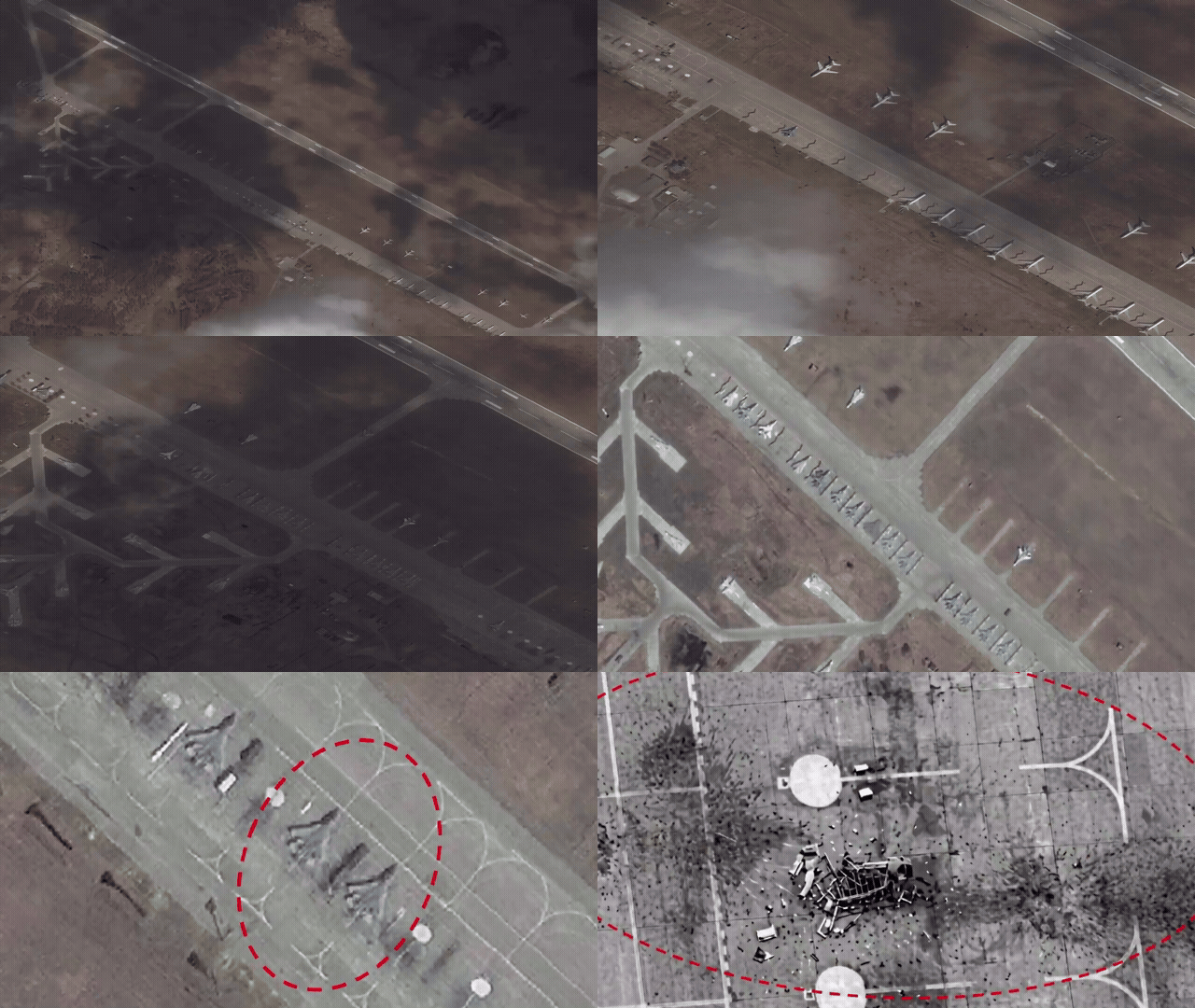
The Ukrainian claims have been supported by open-source intelligence (OSINT) analysis. The Exilenova+ analytical community released comparative satellite imagery of the Shagol airfield captured on April 17 and April 26, 2026.
The imagery shows visible impact sites within aircraft parking areas, along with activity consistent with post-strike response operations. Russian ground crews can be observed clearing affected zones, while at least two Su-57 aircraft and one Su-34 appear to have been relocated from their original positions following the strike. Such movements are typically associated with damage assessment procedures and efforts to prevent further losses.
Aircraft Capabilities and Operational Roles
The aircraft reportedly targeted represent key components of Russia’s tactical and strategic aviation capabilities.
The Su-57, known by the NATO reporting name “Felon,” is Russia’s most advanced combat aircraft. It incorporates low-observable design, advanced avionics, and internal weapons bays. Due to limited production numbers, the platform has generally been used in a standoff role, launching cruise missiles such as the Kh-59 and Kh-69 from within Russian airspace rather than operating directly over contested areas.
The Su-34, designated “Fullback” by NATO, is a twin-seat, twin-engine strike aircraft used extensively for precision ground attacks and anti-ship missions. It has been a primary platform for deploying guided glide bombs along the frontline and plays a central role in Russia’s strike operations.
Previous Ukrainian strikes have already affected the Su-57 fleet, including the destruction of one aircraft and damage to two others in earlier operations. Given the limited production rate of the platform, any additional damage or loss is assessed to have a measurable impact on Russia’s advanced aviation capacity.
Strategic Significance of the Strike
The Shagol airfield, located in the southern Ural region near the city of Chelyabinsk, functions as a training, maintenance, and operational hub for Russian aviation units. The region itself is a significant center for Russia’s defense industry, hosting major metallurgical facilities and armored vehicle production infrastructure.
Its location east of the Ural Mountains has historically placed it beyond the reach of Ukrainian conventional strike capabilities. The successful targeting of this site indicates an expansion in Ukraine’s ability to conduct long-range precision strikes using unmanned systems.
Analysts note that the operation establishes a new operational threshold, demonstrating that rear-area bases previously considered secure may now be vulnerable to drone-based attacks. This could necessitate changes in Russian aircraft basing, dispersal practices, and air defence allocation.
Russian Response
As of May 1, 2026, the Russian Ministry of Defence has not issued an official statement regarding the incident and has not confirmed any aircraft losses or damage.
Ongoing Assessment
The full extent of the damage to the targeted aircraft remains under evaluation. Ukrainian military officials have indicated that further details may be released as additional information becomes available.
——— End of Article ———