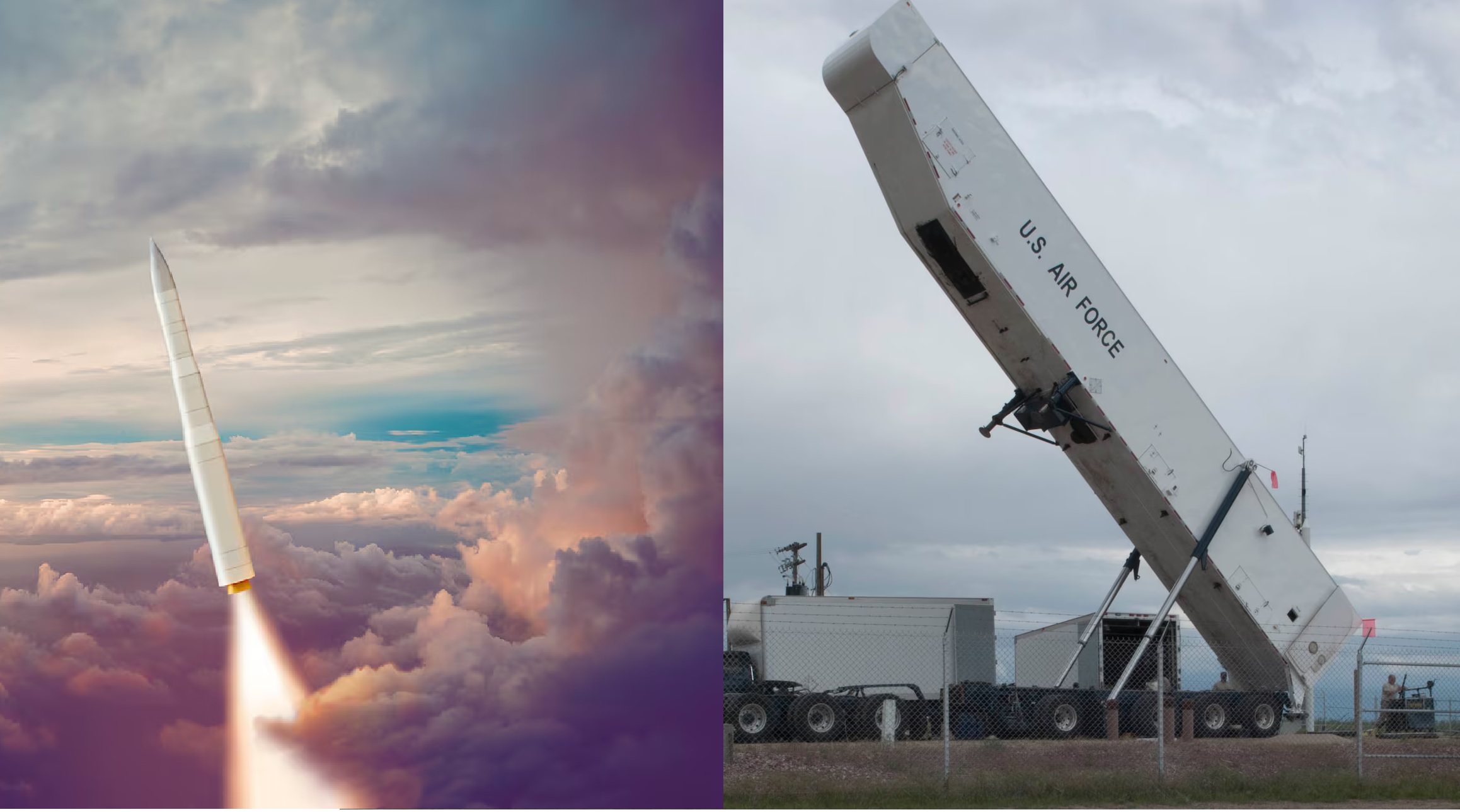
LOS ANGELES / KIRTLAND AIR FORCE BASE, N.M., — May 1, 2026 : The United States Space Force, through its Space Systems Command, has issued a Request for Information (RFI) to identify contractors capable of dismantling and permanently destroying solid rocket motors from decommissioned Minuteman II intercontinental ballistic missiles.
The solicitation, designated RSLP-Demil2026, was released on April 30, 2026, by the Rocket Systems Launch Program (RSLP) under the Assured Access to Space directorate. It represents a continuation of market research that began with a sources-sought notice issued in May 2025. Industry responses to the RFI are due by May 15, 2026.
Contract Scope and Processing Requirements
The Space Force has outlined a substantial inventory of legacy missile hardware requiring demilitarization. A confirmed baseline includes 178 solid rocket motors, consisting of 91 SR-19 second-stage motors and 87 M55 first-stage motors. The total workload could expand to 282 motors, with an additional 41 SR-19 and 63 M55 units identified as optional quantities.
The proposed contract structure includes a five-year base period with an option to extend for an additional five years, bringing the maximum performance duration to ten years. Annual processing requirements are expected to range between 12 and 48 motors, allowing flexibility based on contractor capacity, facility throughput, and logistical constraints.
All motors are currently stored at Camp Navajo. The RFI requests that contractors outline their ability to manage transportation from the storage site, with the government offering specialized rocket motor semi-trailers to support transit operations.
System Background and Technical Characteristics
The Minuteman II missile formed a core component of the United States’ land-based nuclear deterrent during the Cold War. Introduced in the early 1960s, it was retired in the early 1990s following arms reduction commitments under the START I treaty.
The system employed a two-stage solid propulsion design:
M55 First-Stage Motor: Approximately 54,000 pounds in weight and 25 feet in length, constructed with a high-strength steel casing.
SR-19 Second-Stage Motor: Approximately 15,000 pounds and 14 feet long, featuring a 6AL-4V titanium casing commonly used in aerospace applications.
Both motors utilize ammonium perchlorate-based solid propellant, a chemically stable but reactive compound that remains hazardous decades after manufacture.
Demilitarization Standards and Methods
The RFI specifies that all work must meet the Department of Defense’s 5X demilitarization certification, the highest standard, ensuring that the motors cannot be reconstructed into functional military systems. This level of demilitarization requires complete removal of propellant, destruction or alteration of structural components, and full documentation for compliance with arms control obligations.
The preferred method is propellant washout, a process that uses high-pressure water to remove solid propellant from motor casings. This method produces wastewater contaminated with ammonium perchlorate, requiring contractors to demonstrate capabilities for treatment, handling, and disposal in accordance with federal and local environmental regulations.
The Space Force has also requested detailed information on alternative demilitarization methods, including crack-and-burn techniques, with emphasis on associated safety protocols and environmental impact mitigation.
Material Handling and Industrial Capabilities
Beyond propellant removal, the RFI highlights the need for specialized capabilities in handling and processing recovered materials. Contractors are asked to describe their ability to process titanium casings from SR-19 motors, which may have recycling or controlled disposal considerations.
Facilities must also be capable of accommodating the size and weight of M55 motors, requiring heavy-lift infrastructure, safety-certified processing environments, and compliance with hazardous material handling standards.
Program Oversight and Strategic Context
The demilitarization effort is managed by the Rocket Systems Launch Program at Kirtland Air Force Base. RSLP oversees both the conversion of select retired missile systems into space launch vehicles for small satellites and the destruction of motors that are not suitable for reuse.
The program has previously completed the demilitarization of hundreds of Minuteman II motors, indicating an established operational framework. However, the issuance of a second, more detailed RFI suggests that the Space Force is refining technical and contractual requirements before proceeding to a formal acquisition phase.
No timeline has been announced for contract award.
Acquisition Outlook
The transition from a preliminary sources-sought notice in 2025 to a detailed RFI in 2026 indicates a structured progression in procurement planning. The current phase focuses on gathering industry input on technical feasibility, environmental compliance, logistics, and long-term processing capacity.
The forthcoming acquisition will form a key component of the broader effort to manage legacy strategic systems, ensure treaty compliance, and safely dispose of aging solid rocket propulsion assets no longer required for defense or space launch applications.
——— End of Article ———