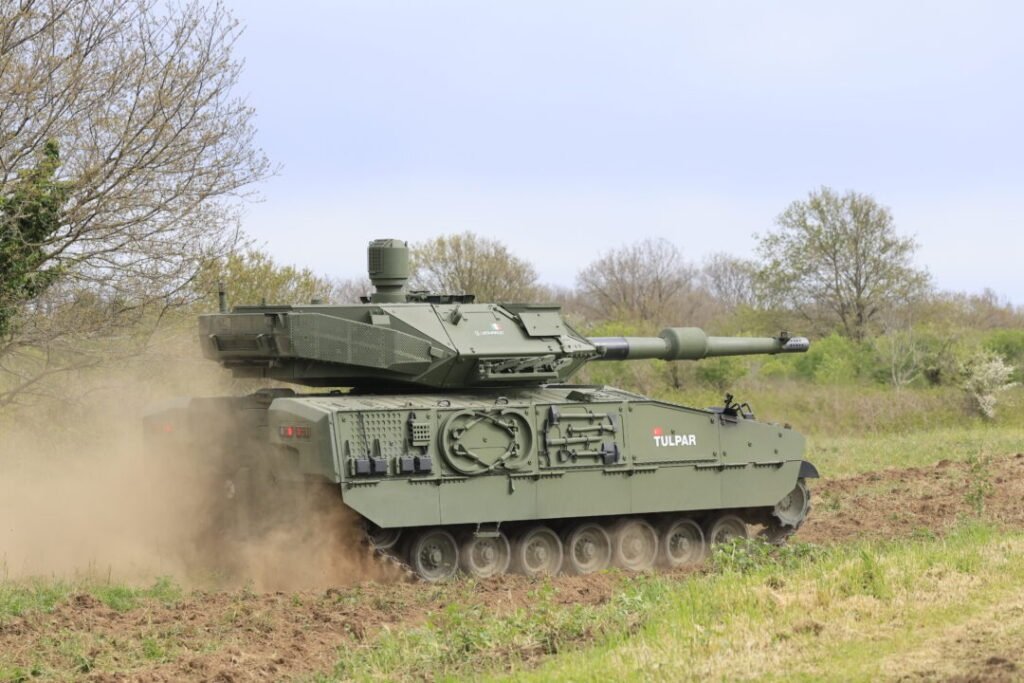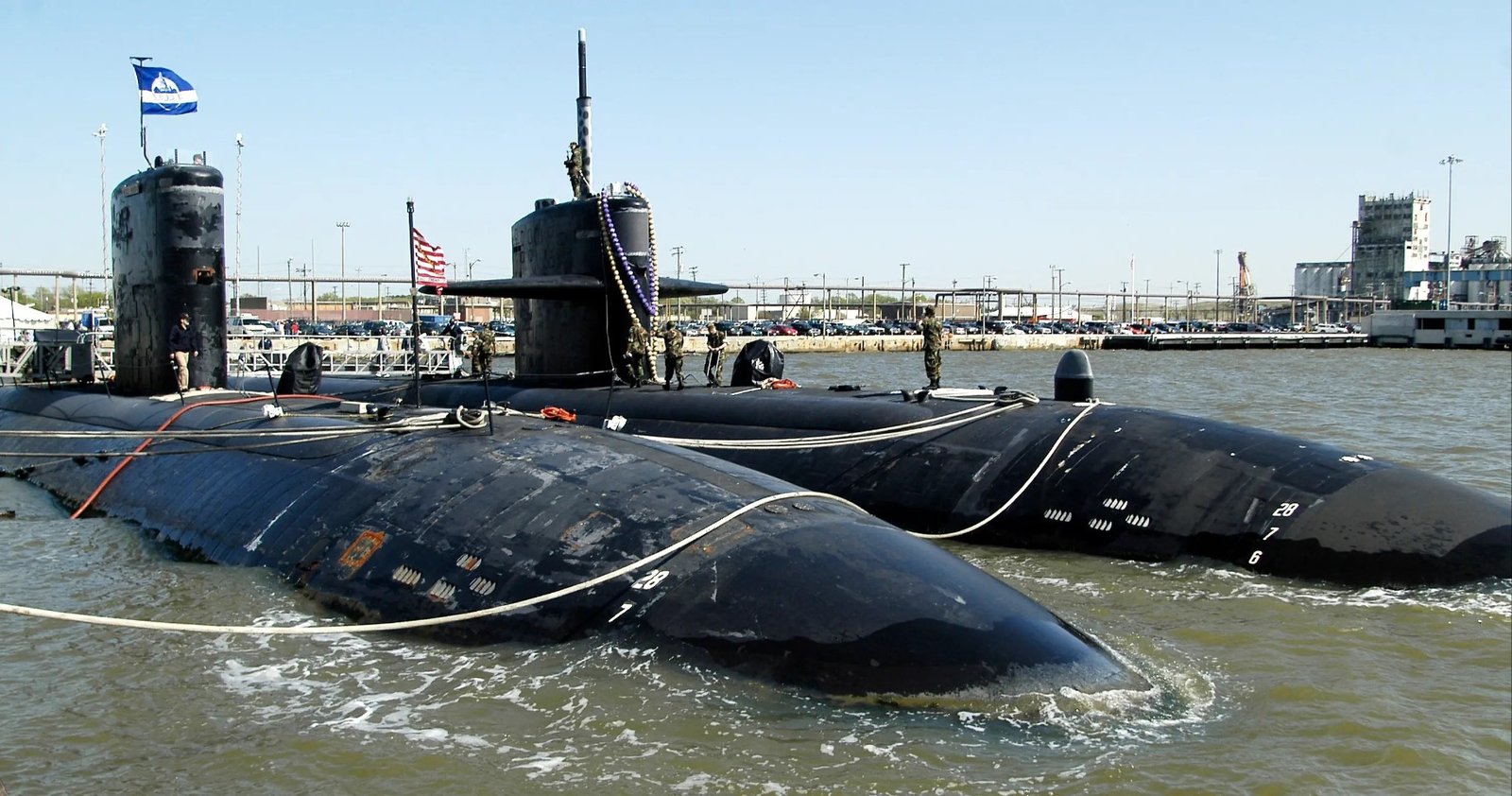
WASHINGTON — The United States remained the world's largest arms exporter during the 2021–2025 period, accounting for 42% of global major arms exports, according to the Stockholm International Peace Research Institute (SIPRI). The figure represents an increase from 36% in 2016–2020, while France ranked second with a 9.8% share.
Despite its dominant position in the global defense trade and one of the world's largest defense industrial bases, the United States has remained absent from one of the most valuable segments of the international arms market—the export of conventional submarines.
Recent procurement programs by two close US partners illustrate this gap.
On July 6, 2026, Canadian Prime Minister Mark Carney announced that Germany's ThyssenKrupp Marine Systems (TKMS) had been selected as the preferred supplier for the Canadian Patrol Submarine Project (CPSP). Negotiations are underway for a fleet of up to 12 conventionally powered submarines, in what the Canadian government has described as the country's largest defense procurement program. Estimates place the project value at roughly US$30 billion or more, depending on the final scope and industrial participation. South Korea's Hanwha Ocean was the other shortlisted bidder.
At the same time, India is advancing Project 75(I). Negotiations between TKMS and Mazagon Dock Shipbuilders for the construction of six Type-214 conventional submarines have reached an advanced stage. Cost discussions have been completed, and the agreement—valued at around €8 billion (approximately Rs 90,000 crore)—is expected to move toward approval by the Cabinet Committee on Security (CCS) and could be signed in the coming months, possibly as early as September 2026.
Although both Canada and India are strategic partners of the United States, no US defense company participated as a bidder in either submarine program.
A Navy Built Around Nuclear Submarines
The United States operates one of the world's largest submarine fleets. According to Global Firepower's 2026 assessment, both the United States and Russia operate 66 submarines each, while China fields 61.
However, the composition of these fleets differs significantly. The US Navy's entire combat submarine fleet is nuclear-powered, while Russia and China continue to operate a combination of diesel-electric and nuclear-powered submarines.
This was not always the case.
Following the Second World War, the United States possessed a large fleet of diesel-electric submarines. More than 200 submarines had been built during the war, and 232 remained in commission afterward. Between the early 1950s and the 1970s, the US transferred many of these submarines to allied nations, including Turkey, Spain, Italy, Greece, the Netherlands, Canada and Taiwan. During that period, the United States accounted for roughly one-quarter of global diesel-electric submarine exports.
The direction of US submarine development changed permanently in 1954 with the commissioning of USS Nautilus, the world's first nuclear-powered submarine. Nuclear propulsion provided virtually unlimited submerged endurance, higher sustained underwater speed and global operating range.
Following Nautilus, the US Navy built only three additional diesel-electric attack submarines—the Barbel class. By the early 1960s, all newly built US combat submarines were nuclear-powered. The final diesel-electric attack submarine, USS Blueback, was decommissioned in 1990, completing the Navy's transition to an all-nuclear submarine force.
The United States has not exported a submarine since 1973, when two Tench-class submarines, including USS Cutlass (later commissioned by Taiwan as ROCS Hai Shih), were transferred to Taiwan.
Why the United States Does Not Export Submarines
Several long-standing policy, legal and industrial factors explain why the United States remains outside today's international submarine market.
Protection of Advanced Technology
Modern US nuclear-powered submarines, including the Virginia-class, incorporate highly sensitive technologies such as nuclear propulsion systems, acoustic quieting methods, sonar suites and combat systems.
These technologies are protected under the US Munitions List, the International Traffic in Arms Regulations (ITAR), the Arms Export Control Act, and additional restrictions contained in the Atomic Energy Act, making their export subject to strict legal controls.
Naval Strategy and Security Considerations
The US Navy has historically opposed the widespread export of advanced submarine technology, particularly modern diesel-electric submarines. Navy officials have argued that the global proliferation of increasingly quiet conventional submarines could complicate future US naval operations in coastal and littoral waters.
For this reason, Washington has maintained strict control over submarine-related technologies for decades.
Industrial Capacity
Industrial capacity is another major factor.
US shipyards are currently focused on meeting domestic naval requirements, with plans to increase Virginia-class submarine production to two to three boats annually through the 2040s. Existing production commitments leave little additional capacity for export construction even if policy restrictions were eased.
Rare Exceptions to US Policy
The United States has rarely shared nuclear submarine technology.
The first exception is the 1958 US–UK Mutual Defense Agreement, which established long-term cooperation on nuclear propulsion between the United States and the United Kingdom, beginning with the reactor used in HMS Dreadnought. This arrangement is considered alliance cooperation rather than a commercial export program.
The second exception is the AUKUS security partnership announced in 2021. Under current plans, the United States intends to transfer up to three Virginia-class nuclear-powered attack submarines to Australia beginning in the early 2030s. Australia will later build its own nuclear-powered submarines based on a future UK-Australian design under the AUKUS framework.
Nuclear Submarine Transfers Remain Extremely Rare
Only six countries operate nuclear-powered submarines: the United States, Russia, China, France, the United Kingdom and India.
The only known transfers of nuclear-powered submarines have been two Soviet/Russian leases to India—the Charlie I-class K-43 (INS Chakra, 1988–1991) and the Akula-class INS Chakra II (2012–2021).
China has exported conventional submarines, including an agreement to supply eight Hangor-class diesel-electric submarines to Pakistan under a program valued at about US$5 billion, but it has not transferred nuclear propulsion technology.
European and Asian Shipbuilders Dominate the Market
Because the United States no longer builds diesel-electric submarines, maintains strict controls on nuclear propulsion technology and remains focused on domestic submarine production, it has effectively stayed outside the international conventional submarine market.
As a result, major conventional submarine export programs continue to be led by shipbuilders in Germany, France, Russia, China, Spain and South Korea, while recent procurement decisions in Canada and India further reinforce the absence of US defense companies from this sector.
Source : eurasiantimes
——— End of Article ———