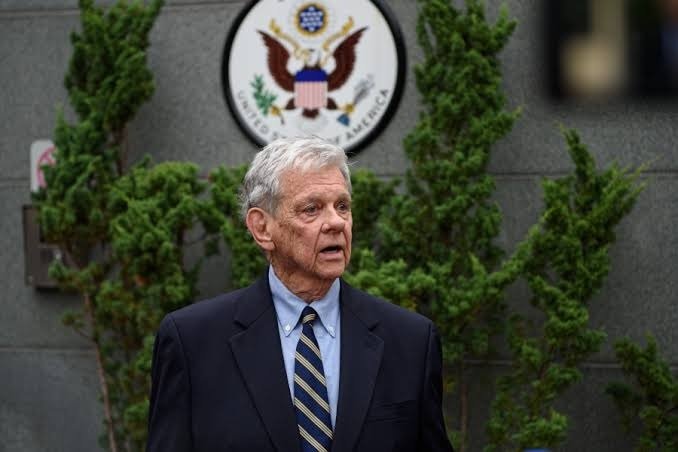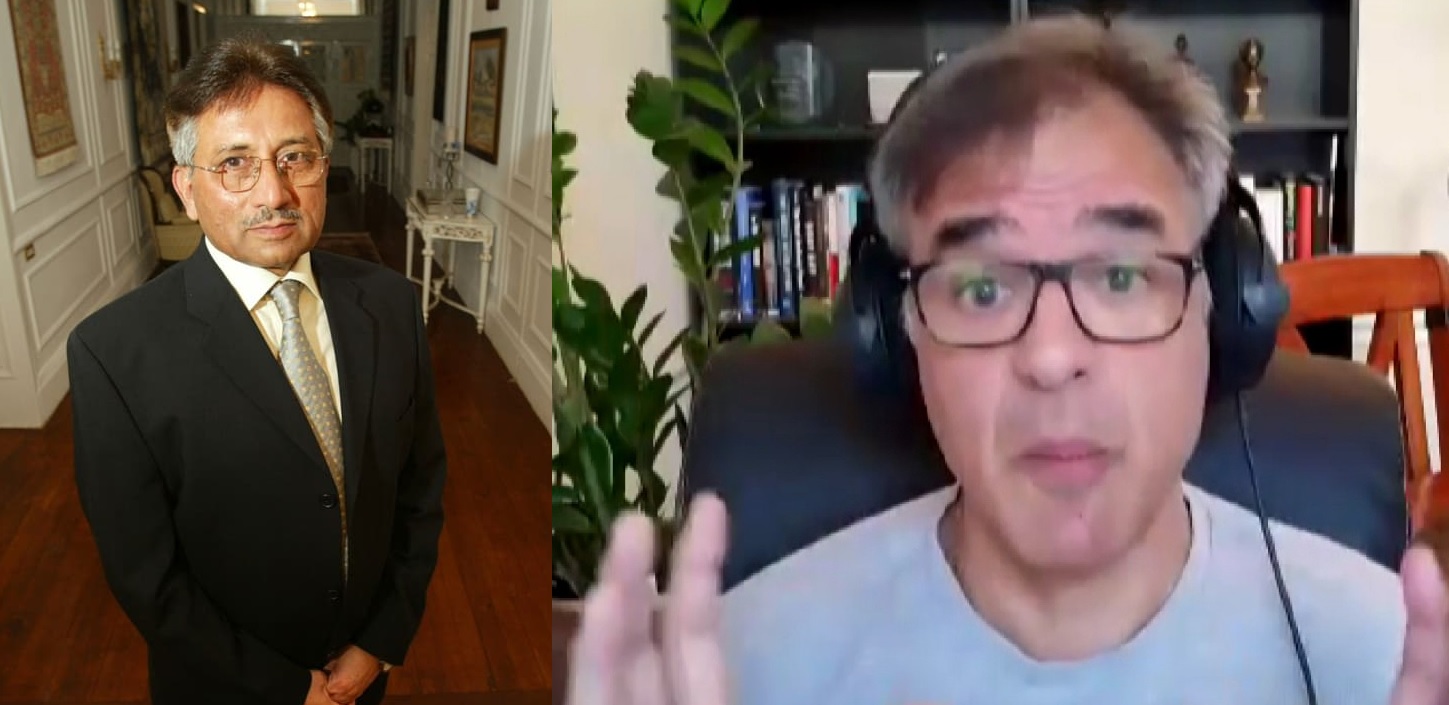
Former CIA officer John Kiriakou has made startling revelations about the United States’ relationship with Pakistan during General Pervez Musharraf’s rule. According to Kiriakou, the U.S. “essentially purchased” Musharraf with millions in aid, while Musharraf reportedly handed over control and monitoring of Pakistan’s nuclear arsenal to Washington.
“We Essentially Just Purchased Musharraf”
In an interview with ANI, Kiriakou, who served 15 years in the CIA as an analyst and counterterrorism officer, said the U.S. enjoyed “very, very good relations” with Pakistan under Musharraf after the 9/11 attacks.
“The United States loves working with dictators,” Kiriakou said. “Because then you don’t have to worry about public opinion or the media anymore. And so, we essentially just purchased Musharraf.”
He explained that the U.S. provided millions of dollars in military and economic aid, met regularly with Musharraf, and gained broad operational freedom inside Pakistan. Musharraf, Kiriakou said, needed to keep Pakistan’s military elite satisfied, which allowed him to balance U.S. demands with domestic pressures.
Nuclear Arsenal Under U.S. Oversight
Kiriakou claimed that Musharraf quietly handed over control and monitoring of Pakistan’s nuclear weapons program to the United States. This gave Washington unprecedented influence over Pakistan’s nuclear command and security protocols, including warhead safety, storage, and operational readiness.
Experts note that after 9/11, the U.S. sought safeguards on Pakistan’s nuclear assets due to concerns about insider threats and proliferation. Musharraf’s cooperation allowed American specialists to advise Pakistan on permissive action links, nuclear security, and monitoring protocols, effectively giving Washington visibility and influence over one of the region’s most sensitive assets.
Dual Policy: Public Cooperation, Private Divergence
Kiriakou said Musharraf maintained a “dual life”: publicly cooperating with the U.S. on counterterrorism while tolerating militant networks targeting India.
“The military didn’t care about Al-Qaeda; they cared about India,” he explained. “To keep the military and some extremists satisfied, Musharraf allowed them to continue this dual life — pretending to cooperate with the Americans while committing terror against India.”
He noted that India and Pakistan came close to war in 2002, following the December 2001 Indian Parliament attack, illustrating the risks of this balancing act.
Lavish Corruption Among Pakistan’s Political Elite
Kiriakou criticized the deep corruption in Pakistan’s political class. He recounted a visit to Benazir Bhutto in exile in Dubai, describing her multimillion-dollar Gulf residence and joking about her husband Asif Ali Zardari buying luxury cars.
He used the anecdote to highlight the disconnect between Pakistan’s elite and ordinary citizens:
“She lived in a $5 million palace on the Gulf, and he had a collection of Bentleys. How can they go back to Pakistan and look the people in the face when those people don’t even have shoes or enough food to eat? That level of corruption — come on!”
Kiriakou lamented that such leaders reinforce the struggles of the Pakistani public, who remain vulnerable to poverty and neglect.
Musharraf’s Strategic Calculus
In his autobiography, In the Line of Fire, Musharraf admitted that Pakistan’s decision to abandon the Taliban and align with the U.S. was based on survival:
“I war-gamed the United States as an adversary,” Musharraf wrote. “The answer was no — we could not survive on three counts: our military would be wiped out, our economy destroyed, and our nation divided.”
This led to a U.S.-aligned Pakistan, massive aid inflows, and deeper American involvement in strategic and nuclear oversight.
Fragile Nation Held Together by Money and Power
Kiriakou warned that Pakistan’s chronic political instability remains a major risk, with factional fights often spilling into violence:
“Pakistanis have a tendency to get themselves spun up. People die during demonstrations, political figures are attacked, assassinated, and the country isn’t known for leaders making transformative, positive decisions.”
Analysts say decades of U.S. financial aid, combined with domestic corruption and military dominance, created a fragile state dependent on external support.
Background: Billions in Aid
After 9/11, Pakistan became a top recipient of U.S. military and economic assistance, receiving over $20 billion between 2001 and 2011. In exchange, Washington gained strategic access to Pakistani airspace, intelligence cooperation, and logistical support in Afghanistan.
Kiriakou’s revelations suggest that this aid came with hidden costs: compromised sovereignty, elite corruption, and U.S. oversight over Pakistan’s nuclear arsenal.
——— End of Article ———