WASHINGTON, — April 10, 2026 : The United States has lost a total of 24 MQ-9 Reaper unmanned aerial vehicles during combat operations related to Iran, including eight drones shot down since the beginning of April, according to a report by CBS News citing U.S. officials. The Pentagon has not publicly confirmed the full extent of the losses.
The reported losses mark a significant increase from earlier figures. As of March 9, 2026, 11 MQ-9 Reapers had been confirmed lost. The additional incidents in subsequent weeks bring the total to 24, reflecting the continued intensity of operations in contested airspace.
Financial Impact and Cost Estimates
The destruction of 24 MQ-9 Reapers represents an estimated financial loss of between $700 million and $720 million. Each aircraft has a unit cost of approximately $30 million or more, depending on configuration, onboard systems, and mission equipment.
The cost estimates align with the cumulative loss figures reported by officials, although no detailed breakdown of individual incidents or configurations has been released.
Operational Role in Current Campaign
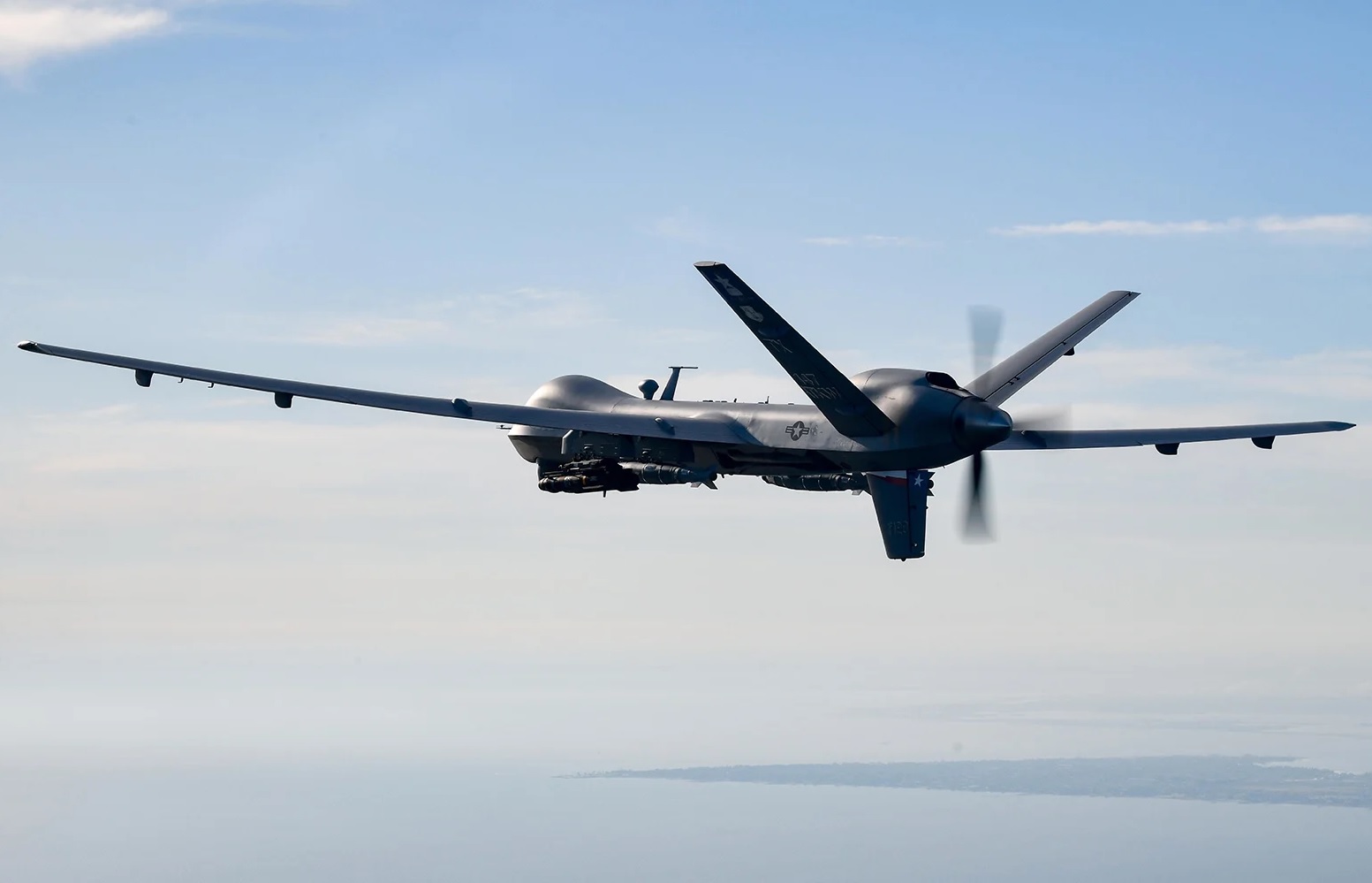
The MQ-9 Reaper, developed by General Atomics Aeronautical Systems, remains a central platform in U.S. operations. The aircraft is primarily used for intelligence, surveillance, and reconnaissance (ISR) missions, as well as precision strike operations.
In the ongoing campaign, the drones have been deployed for a range of tasks, including reconnaissance missions, target identification, targeting support, and battle damage assessment. They have also been used to engage various targets, including airfields, ballistic missile launchers, naval vessels, and air defense systems.
Military officials indicate that the losses are associated with sustained operations in defended airspace, where the risk to unmanned systems is elevated due to the presence of integrated air defense networks.
Platform Capabilities and Technical Specifications
The MQ-9 Reaper conducted its first flight on February 2, 2001, and has since become one of the primary unmanned systems used by the United States and allied forces.
The aircraft operates at medium altitude with long endurance capabilities. It has a service ceiling of approximately 13,000 meters, with some configurations capable of reaching up to 50,000 feet. The platform can remain airborne for up to 27 hours, enabling persistent surveillance over operational areas.
The MQ-9 is powered by a Honeywell TPE331-10GD turboprop engine and is operated remotely by a two-person crew consisting of a pilot and a sensor operator.
The aircraft features six external hardpoints for weapons and sensors:
- Two inner stations, each capable of carrying up to 680 kilograms
- Two mid-wing stations, each capable of carrying up to 270 kilograms
- Two outer wingtip stations, each capable of carrying up to 90 kilograms
This configuration allows the Reaper to carry a mix of precision-guided munitions, including AGM-114 Hellfire missiles, GBU-12 Paveway II laser-guided bombs, and other Mark 82-series weapons, along with additional sensor payloads.
International Operators
In addition to the United States, the MQ-9 Reaper is in service with multiple allied countries, including the United Kingdom, France, Italy, Spain, the Netherlands, Belgium, Denmark, Poland, India, and Japan.
Ongoing Assessment
No further details have been provided regarding the specific circumstances of the individual drone losses. U.S. officials cited in the CBS News report did not disclose locations, engagement methods, or attribution for each incident.
Despite the losses, the MQ-9 Reaper continues to play a key role in U.S. military operations due to its combination of endurance, sensor capability, and strike capacity.
——— End of Article ———