The U.S. State Department has recently approved a potential military sale to Taiwan, valued at $228 million, as part of ongoing efforts to bolster the island's defenses amid increasing tensions with China. This development comes at a time when China's military posturing around Taiwan has intensified, with frequent aircraft incursions and naval exercises around the island, testing Taiwan's defense capabilities.
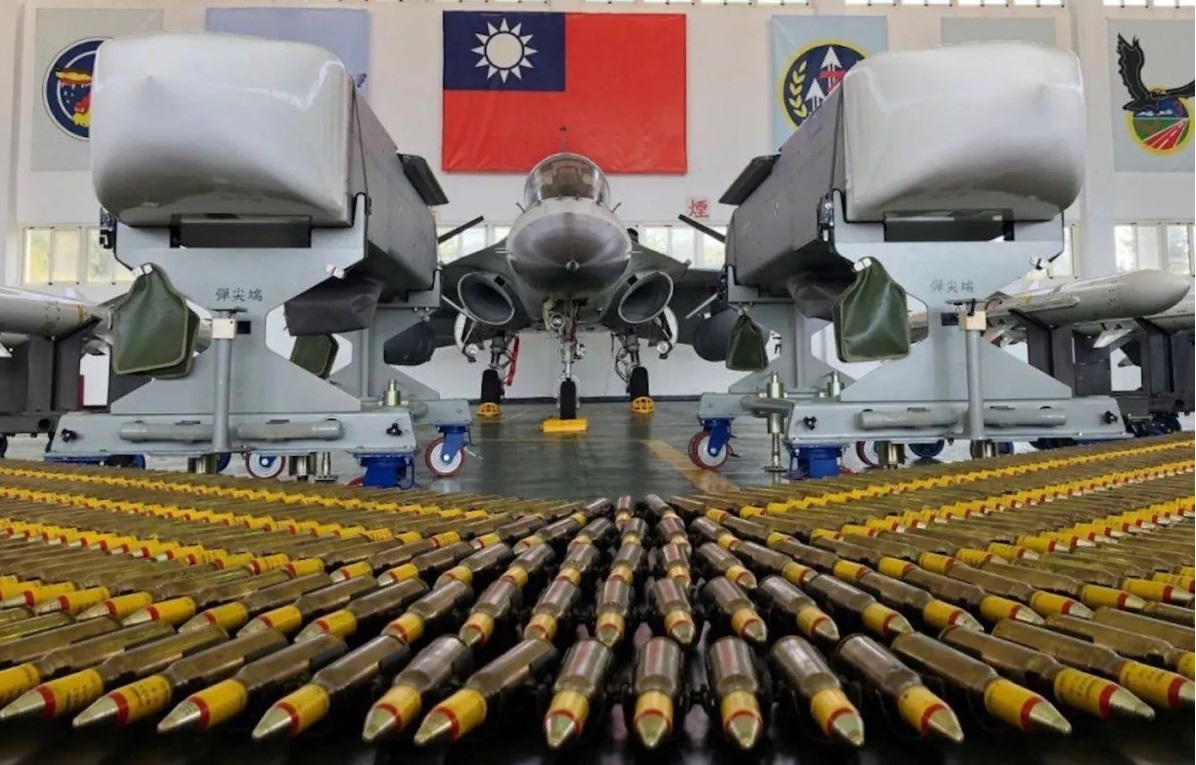
The sale primarily involves the return, repair, and reshipment of spare parts and other equipment essential for Taiwan's military aircraft. According to the U.S. Department of Defense’s Defense Security Cooperation Agency (DSCA), this includes classified and unclassified components, engineering services, technical support, and logistical aid. The equipment aims to enhance Taiwan's Air Force capabilities, which are under growing pressure due to China's "grey zone" tactics—operations meant to wear down Taiwan's defenses without full-scale conflict.
The deal will now head to the U.S. Congress for final approval, though it is expected to pass smoothly, given the strong bipartisan support for Taiwan’s defense. Taiwan’s Ministry of Foreign Affairs welcomed the sale, expressing gratitude for Washington’s continued military assistance under the Taiwan Relations Act and the Six Assurances, long-standing commitments by the U.S. to help Taiwan maintain its self-defense.
Taiwan’s Ministry of National Defense emphasized that this military support is crucial to maintaining the operational readiness of its air force, which has been stretched thin by regular Chinese military activity in the region. In recent years, Taiwan's air force has had to scramble fighters almost daily in response to Chinese incursions, which has put significant strain on its fleet.
This sale marks the 16th approved by the Biden administration, highlighting the steady growth of U.S.-Taiwan military cooperation. Over the past few years, the U.S. has steadily ramped up its arms sales to Taiwan, with significant deals including F-16 fighter jets and anti-ship missiles. These sales are not only intended to modernize Taiwan’s aging military hardware but also to send a clear message of deterrence to China.
In 2021, the U.S. approved the sale of 66 F-16V fighter jets to Taiwan, a deal valued at over $8 billion. These advanced jets are designed to strengthen Taiwan’s air defense capabilities and will include enhanced radar systems and precision weaponry. Delivery of the F-16Vs, originally set for earlier dates, is now expected to commence in 2026 after delays due to production and logistical challenges.
Beyond military sales, U.S.-Taiwan relations have deepened in economic and technological spheres as well. Taiwan is a key player in the global semiconductor industry, and U.S. officials have increasingly collaborated with Taipei to secure critical supply chains and reduce dependence on Chinese technology.
Despite growing cooperation, Washington still adheres to its "One China" policy, which acknowledges Beijing’s claim over Taiwan but continues to engage with Taiwan on unofficial terms. China, predictably, has responded with strong condemnation. Beijing views U.S. arms sales to Taiwan as a direct provocation and has ramped up its military activities around the island in response.
In the broader geopolitical context, the U.S. has also supported Taiwan’s inclusion in international organizations such as the World Health Organization (WHO) and the Comprehensive and Progressive Agreement for Trans-Pacific Partnership (CPTPP), both of which Taiwan has been historically excluded from due to Chinese objections.
The sale of this equipment comes amid a sharp rise in military tensions in the Taiwan Strait. As China continues to increase its military pressure on Taiwan, Washington's arms sales have become a critical component of Taiwan's defense strategy, providing much-needed hardware and reinforcing U.S. support for the island's security.
While the U.S. maintains that its policy towards Taiwan is rooted in ensuring peace and stability in the region, China sees these actions as attempts to embolden Taiwanese independence movements, a red line for Beijing. As the situation continues to evolve, the U.S. sale of military equipment to Taiwan underscores the island's strategic significance and Washington's commitment to countering China's influence in the Indo-Pacific.
——— End of Article ———