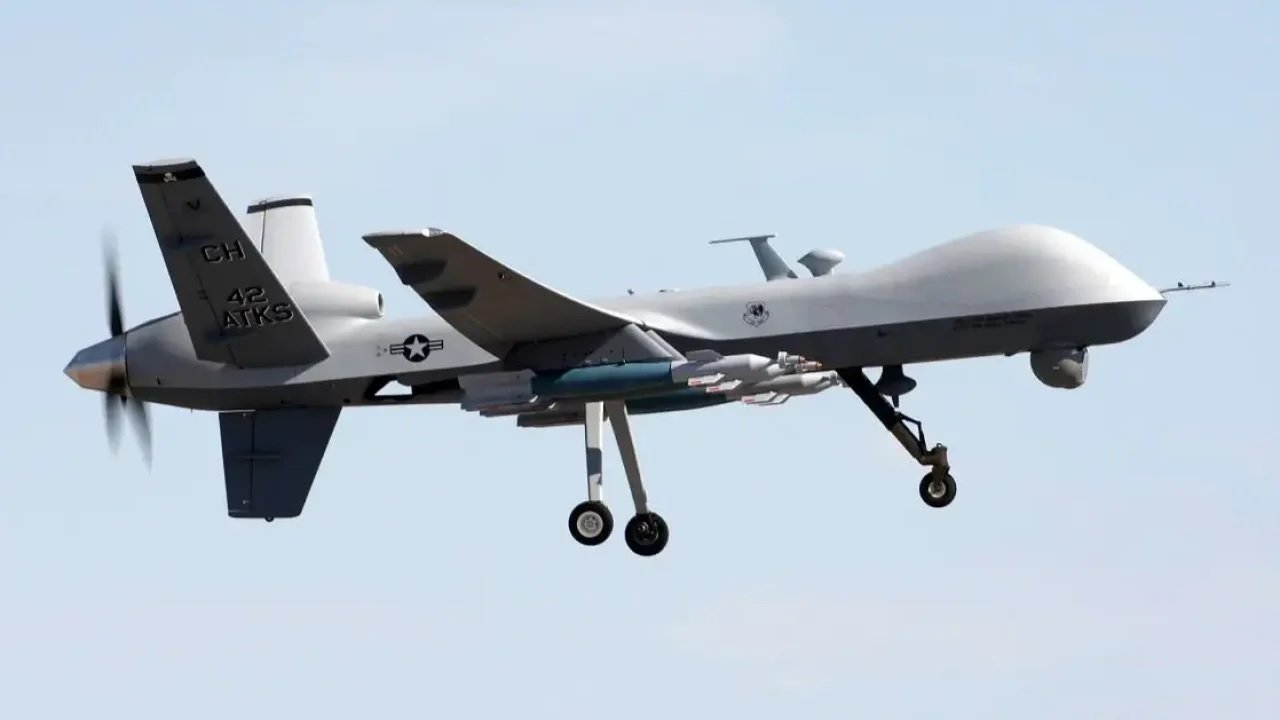
Middle East — U.S. forces destroyed a $23.6 million MQ-9A Reaper after the drone made a hard landing during a nearly 19-hour mission in the Middle East on August 31, 2025. The incident occurred at an undisclosed location within the U.S. Central Command area of responsibility.
The MQ-9A, tail number 13-4245, was assigned to the 432nd Wing at Creech Air Force Base, Nevada, and remotely operated by a pilot and sensor operator from the 89th Attack Squadron at Ellsworth Air Force Base, South Dakota.
The Reaper was returning to a regional base when its engine suddenly shut down. Flight data showed a brief fuel-flow spike followed by a complete drop to zero. Two automatic engine restart attempts and two manual attempts by the crew all failed. The crew kept the unpowered aircraft airborne for nearly 10 minutes while following emergency procedures.
The crew then selected a relatively flat, isolated desert area for a forced landing away from population centers. The landing was attempted with the landing gear down, but communication was lost below 2,000 feet. The aircraft reached the selected area, but the impact collapsed the landing gear.
U.S. forces recovered sensitive equipment from the wreckage and demolished the remaining parts on site to prevent sensitive technology and intelligence materials from potentially falling into enemy hands. No injuries, fatalities or civilian property damage occurred.
Investigation Finds Electrical Failure
The Air Combat Command Accident Investigation Board report, released on August 13, 2026, determined that the most likely cause was internal electrical wire chafing inside the fuel control unit.
According to the investigation, a frayed wire allowed enough voltage to inadvertently close the electrical fuel shutoff valve, cutting fuel to the engine. General Atomics reproduced the sequence in laboratory testing by closing the valve, matching the flight data recorded during the incident.
The aircraft was on its first flight after a complete engine replacement during a routine 3,000-hour inspection. During the maintenance, contractors replaced a chafed propeller governor cable, installed an overhauled fuel control unit because of a missing log card, and repaired a leaking compressor seal.
The inspection did not include removal of the fuel control unit's top cover, despite the manufacturer having identified known cases of sensor-wire chafing in the component. However, investigators found no evidence that the engine replacement or related maintenance caused the wire failure.
The board also identified gaps in planning, briefing and written procedures. MQ-9 maintenance rules do not require a dedicated post-engine-replacement check flight, unlike procedures for most manned Air Force aircraft. The crew was also not informed that the Reaper had received a new engine.
The report listed these procedural and communication issues as relevant factors but did not blame the maintenance work for the failure. The incident is one of multiple MQ-9 losses recorded in the region during the previous 18 months.
——— End of Article ———