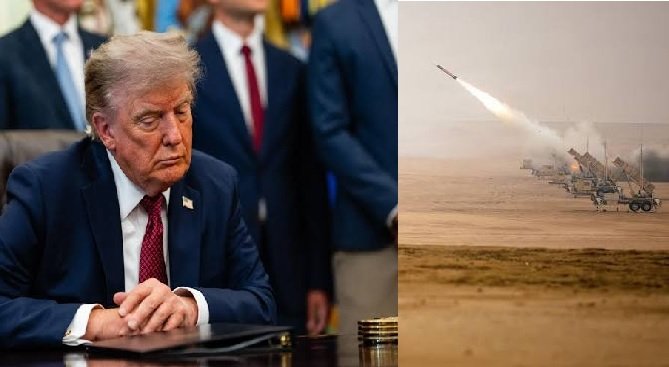
WASHINGTON, — May 1, 2026 : Pete Hegseth, the U.S. Secretary of Defense, told lawmakers on Capitol Hill that the administration’s fiscal year 2027 defense budget request includes $71 billion dedicated to modernizing the United States’ nuclear triad and its supporting nuclear command, control, and communications (NC3) systems.
Testifying before the Senate Armed Services Committee, Hegseth said the investment reflects the central role of nuclear deterrence in U.S. defense policy. “This budget invests in it — $71 billion in our nuclear triad and nuclear command, control and communications, understanding that if you get that wrong, you get everything else wrong,” he stated during the hearing.
The nuclear modernization funding is part of a broader $1.5 trillion fiscal year 2027 defense budget proposal submitted under the administration of Donald J. Trump. The allocation supports upgrades across all three components of the nuclear triad—air, land, and sea—as well as investments in infrastructure, sustainment, and industrial base capacity.
Hegseth pointed to evolving global security challenges to justify the scale of the investment, including concerns about Iran’s nuclear ambitions. He noted that a credible and modern nuclear deterrent imposes strategic constraints on adversaries and underpins U.S. operational flexibility.
Air-Based Nuclear Forces
Within the air leg of the triad, the budget proposes $6.1 billion for the B-21 Raider program. The next-generation stealth bomber, developed by Northrop Grumman and publicly unveiled in 2022, is designed as a dual-capable platform able to deliver both conventional and nuclear payloads.
The U.S. Air Force plans to procure at least 100 B-21 aircraft. The FY2027 funding supports continued development, expansion of testing activities, production readiness, and low-rate initial production. The aircraft is intended to replace aging elements of the bomber fleet while maintaining long-range strike capability in contested environments.
The budget also includes $1.5 billion for the Long Range Stand-Off Weapon (LRSO), a nuclear-armed air-launched cruise missile intended to replace the AGM-86B Air Launched Cruise Missile. The LRSO is designed with advanced survivability features and extended range, enabling platforms such as the B-52 Stratofortress and future B-21 bombers to remain effective in modern threat environments. A production decision for the program is expected in 2027.
Land-Based Deterrent
For the land-based leg, the budget allocates $4.6 billion to the LGM-35A Sentinel program, previously known as the Ground Based Strategic Deterrent. The Sentinel system will replace the aging LGM-30G Minuteman III intercontinental ballistic missiles, many of which have been in service for more than five decades.
The program calls for approximately 400 operational missiles deployed across 450 hardened silos located in five U.S. states. It also includes modernization of launch facilities, command infrastructure, and support systems. Following cost and schedule reviews, the program is undergoing a restructured acquisition strategy, with initial flight testing planned for 2027 or 2028 and initial operational capability expected in the early 2030s.
Sea-Based Nuclear Forces
The sea-based component receives $16.2 billion for the Columbia-class submarine program, which is intended to replace the existing Ohio-class submarine fleet. The program is being executed by General Dynamics Electric Boat in partnership with Newport News Shipbuilding.
The FY2027 funding includes procurement of the fourth submarine in the class, continued funding increments for the third vessel, USS Groton, and support for research, development, testing, and evaluation activities. Additional investments are directed toward expanding shipyard capacity and strengthening the submarine industrial base to meet production timelines.
Each Columbia-class submarine is designed to carry 16 Trident II D5 ballistic missiles and incorporates an electric-drive propulsion system along with a life-of-the-ship nuclear reactor core, eliminating the need for mid-life refueling.
Nuclear Command, Control, and Communications
Beyond delivery systems, the budget includes $20.2 billion across the broader nuclear enterprise to support nuclear command, control, and communications (NC3) architecture. These systems are intended to ensure reliable strategic warning, secure communications, and decision-making capability for national leadership under all conditions.
Industrial Base and Production Capacity
Hegseth emphasized that modernization of the nuclear triad is closely tied to the health of the U.S. defense industrial base. He told lawmakers that the ability to design, manufacture, and sustain advanced systems at scale is fundamental to maintaining deterrence.
“A nation’s ability to build, to innovate and to support critical needs of its warfighters at speed and at scale is the foundation upon which its deterrence and survival rests,” he said. He added that the administration is pursuing measures to strengthen domestic production capacity and address long-standing gaps in the industrial base.
Hegseth stated that under President Trump’s leadership, efforts are underway to reverse years of underinvestment and to place the industrial base on a wartime footing. He also noted that updated management structures, including direct reporting program managers, are being used to accelerate program execution and improve oversight.
Program Scope and Outlook
The Department of Defense’s nuclear modernization plan focuses on replacing legacy systems originally fielded during the Cold War with next-generation platforms designed for current and future threat environments. The FY2027 request supports continued development, procurement, and infrastructure upgrades across all three legs of the triad.
While the testimony outlined funding levels and program priorities, no additional changes to major program schedules were detailed during the hearing. Hegseth described the $71 billion allocation as necessary to sustain long-term deterrence requirements and ensure the operational credibility of U.S. strategic forces.
——— End of Article ———