MELBOURNE, Fla. — L3Harris Technologies has received an undefinitized contract from Lockheed Martin worth more than $6 billion, excluding escalations, over seven years to expand propulsion production for the U.S. Terminal High Altitude Area Defense (THAAD) system.
The award was announced on September 29, 2026, and follows a framework agreement signed earlier this year by L3Harris, the U.S. Department of War and Lockheed Martin to quadruple THAAD propulsion production.
New THAAD production capacity
Under the contract, L3Harris will build a new facility for increased production of THAAD Solid Rocket Boost Motors (SRBMs). It will also expand production of the Liquid Divert and Attitude Control Systems (LDACS).
L3Harris currently manufactures THAAD solid rocket boost motors in Huntsville, Alabama, and Camden, Arkansas, while LDACS production is carried out at its Los Angeles facility.
Ken Bedingfield, president of Missile Solutions at L3Harris, said the contract highlights the company's ability to provide defense technologies at the scale and speed required by the Department of War. He said facility expansions and continued investments in the propulsion portfolio will support missile-defense missions.
THAAD system and interceptor production
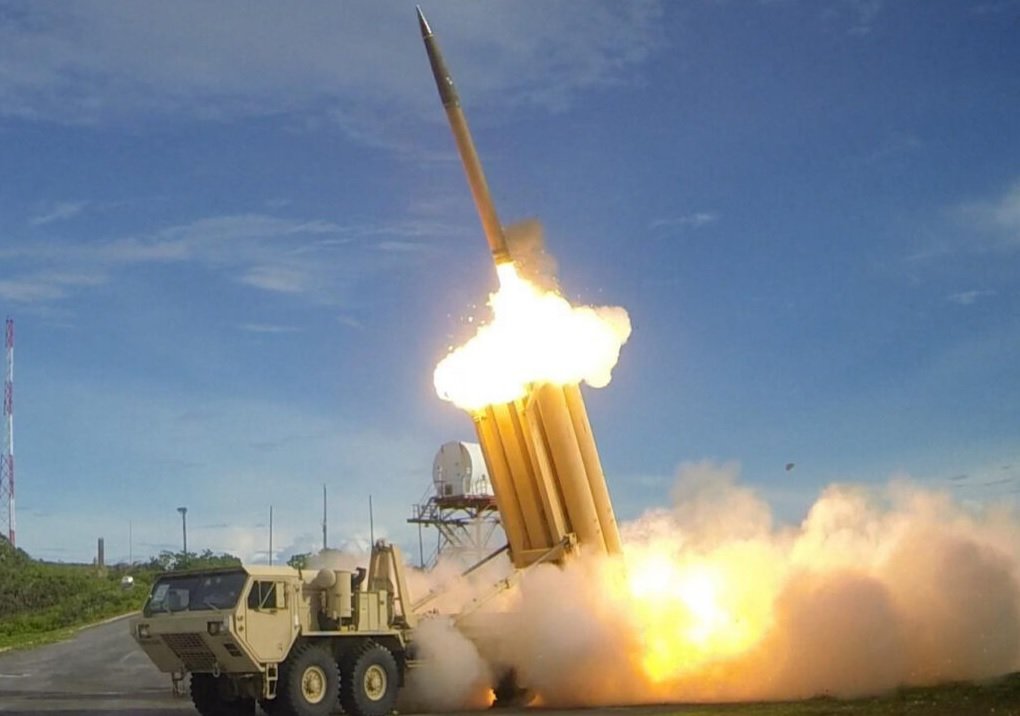
THAAD is a mobile, globally deployable ballistic-missile defense system designed to intercept short-, medium- and intermediate-range ballistic missiles during their terminal phase.
The system uses hit-to-kill technology, destroying targets through kinetic impact rather than an explosive warhead. Its interceptors can engage targets both inside and outside Earth's atmosphere and reach approximately Mach 8.2.
A standard THAAD battery includes an AN/TPY-2 X-band radar, tactical fire-control and communications equipment, and six mobile launchers carrying up to 48 interceptors. It is typically supported by about 90 to 95 personnel.
THAAD operates as the middle tier of the U.S. ballistic-missile defense architecture, between systems such as Aegis Ballistic Missile Defense and Ground-based Midcourse Defense and lower-tier systems such as Patriot.
L3Harris says THAAD has achieved a 100 percent intercept success rate in flight tests since production began. The company has also reported delivering its 1,000th solid rocket boost motor and 1,000th LDACS ahead of schedule.
Lockheed Martin, the THAAD prime contractor, previously received a seven-year undefinitized contract action worth up to $35 billion from the Missile Defense Agency to increase annual THAAD interceptor production from 96 to 400 units.
The expansion is intended to strengthen U.S. missile-defense industrial capacity and replenish interceptor inventories following operational deployments, including in the Middle East.
PAC-3 MSE and Army oversight
L3Harris recently received another $4.7 billion, seven-year undefinitized contract from Lockheed Martin for PAC-3 MSE propulsion systems. The work covers the interceptor's two-pulse solid rocket motor, attitude control motors and lethality enhancer. A related framework agreement was aimed at nearly tripling production of certain PAC-3 MSE propulsion components.
Meanwhile, administrative oversight of operational THAAD batteries is being transferred from the Missile Defense Agency to the U.S. Army by fiscal year 2027. The Army already operates the systems, while the Missile Defense Agency has handled development and procurement.
The latest THAAD contract remains undefinitized, with final pricing and delivery schedules expected to be completed in the coming months.
——— End of Article ———