NORTH KINGSTOWN, R.I. — The U.S. Marine Corps Warfighting Lab (MCWL) has awarded an additional $5 million to Rhode Island-based REGENT Craft to expand testing of its electric Seaglider technology. The latest funding brings the total value of the military partnership to $19.25 million.
Fourth phase to focus on operational testing
The new funding supports the fourth phase of the partnership, which includes six deliverables. REGENT will test its full-scale Viceroy Seaglider in conditions designed to closely resemble real-world military operations.
The phase will also examine command-and-control integration, including how the Seaglider would be tasked, tracked and coordinated with other military assets. REGENT has not announced when or where the demonstrations will take place.
The partnership began with $4.75 million for the first two phases, which focused on technical feasibility. The third phase received $9.5 million and supported demonstrations of the full-scale prototype. REGENT said the third phase is now complete and included flight testing.
“What started as a feasibility question has become a real operational program, and that trajectory says a lot about where this technology is headed,” said Billy Thalheimer, co-founder and CEO of REGENT.
Viceroy completes crewed flight
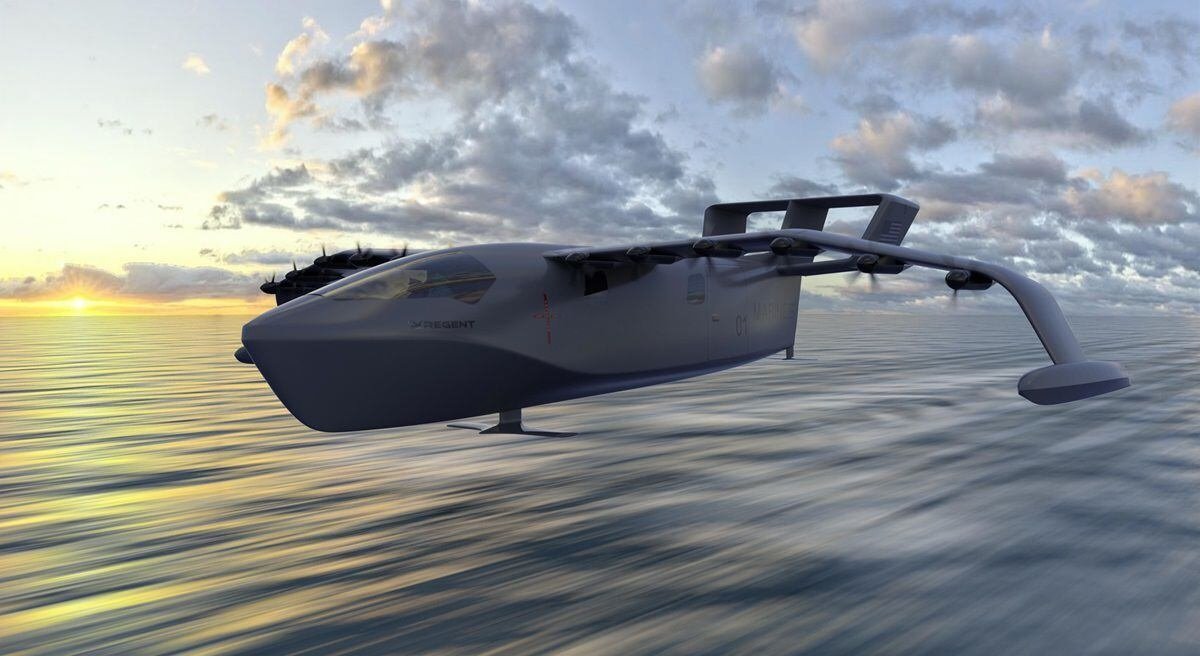
The Seaglider starts as a boat, rises onto a hydrofoil as it accelerates and then lifts off to fly within about one wingspan of the water. At this low altitude, it uses ground effect, which reduces drag.
REGENT says the Viceroy is designed to carry up to 12 passengers, reach 180 mph (290 km/h) and travel up to 180 miles (290 km). It operates from water without requiring a runway and can be recharged from a ship or shore facility.
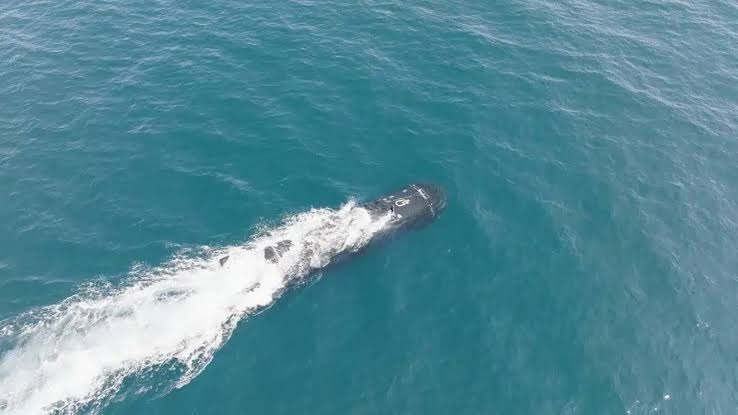
On September 2, two captains conducted the Viceroy's first human-crewed flight over Narragansett Bay, Rhode Island. The flight lasted about 30 seconds, covered nearly 2,000 feet and reached 33 feet in altitude.
REGENT says the flight provided engineering and performance data for the ongoing development program.
Squire supports autonomous logistics
REGENT is also testing the smaller Squire, a fully autonomous Seaglider designed for uncrewed logistics missions.
The Squire is designed to carry a 50-pound payload and travel at 80 mph (70 knots) for more than 115 miles (100 nautical miles).
Marine Corps focuses on expeditionary logistics
For the Marine Corps, the Seaglider's main potential use is expeditionary logistics. The technology is intended to provide another option for moving troops and equipment between remote islands and naval vessels without relying on established ports or airfields.
This is relevant to the Marine Corps' plans for dispersed operations in the Pacific.
“This next phase of our MCWL partnership is about putting the technology in the hands of the warfighter so they can fully realize the advantages Seagliders bring to the forward-operating areas,” said Becky Russo, REGENT’s director of defense mission integration.
REGENT also says the Seaglider's low flight path could keep it below some radar coverage and that its electric motors produce limited heat signatures. However, these specific defense claims have not been independently verified through public testing.
Commercial development
REGENT is also pursuing commercial applications for the Seaglider. The company says it has secured more than $340 million in funding commitments, including investment from Lockheed Martin and Japan Airlines, and has civilian orders across six continents.
The additional $5 million from the Marine Corps now moves the partnership into its fourth phase, with testing focused on operational conditions and integration with military command-and-control systems.
——— End of Article ———