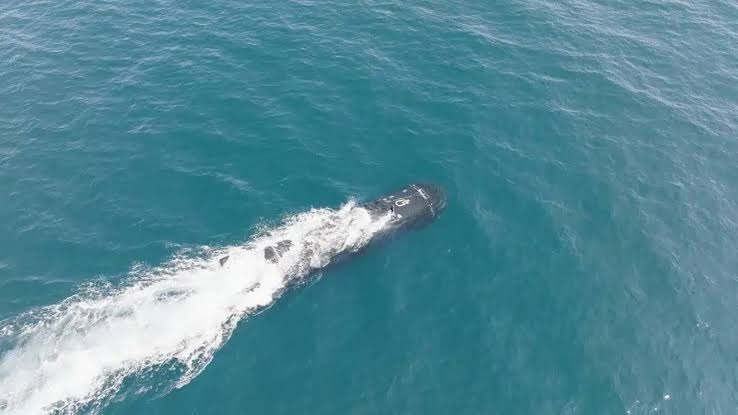
KYLE OF LOCHALSH, Scotland — A Royal Navy experimental uncrewed submarine has successfully launched and controlled a U.S. Navy Mk48 Mod 4 Heavyweight Torpedo during a trial off the northwest coast of Scotland. The test marked the first time either the UK or United States has launched a heavyweight torpedo from an uncrewed underwater vessel instead of a crewed submarine.
The vessel, XV Excalibur, an Extra-Large Uncrewed Underwater Vessel (XLUUV), conducted the firing at the British Underwater Test and Evaluation Centre (BUTEC) near Kyle of Lochalsh on September 13, 2026. The three-week trial was codenamed Project Broadsword, also known as Trial Iron, and formed part of work under the AUKUS partnership between Australia, the UK and the United States.
The trial is described as a major operational milestone for AUKUS Pillar 2, which focuses on the rapid development of advanced military capabilities. The objective is to develop uncrewed systems capable of conducting undersea warfare operations while reducing risks to personnel.
External Torpedo Launch
XV Excalibur is a 12-metre-long, approximately 19-tonne experimental vessel measuring about two metres across. It entered service in May 2025 after development by UK-based MSubs under Project Cetus.
Because Excalibur was not designed with conventional internal torpedo tubes, engineers developed an external launch arrangement. The nearly six-metre-long, more than 1.5-tonne Mk48 was fitted beneath the vessel, while a specialist management system was integrated to allow Excalibur to control and fire the weapon.
The test used an inert, recoverable torpedo. The Mk48 is designed to engage submarines and warships and is operated by several navies.
Neither Excalibur nor the Mk48 was originally designed for this type of deployment. British and American teams completed the integration in less than seven months after the project was approved in February 2026 by the U.S. Department of the Navy Rapid Capabilities Office.
The work involved the Royal Navy, U.S. Navy, UK Submarine Delivery Group Autonomy Unit, which is part of the Defence Nuclear Enterprise, as well as MSubs and QinetiQ, which operates the BUTEC range.
AUKUS and Hybrid Navy
First Sea Lord General Sir Gwyn Jenkins said the trial demonstrated what Australia, the UK and the United States could achieve together. He said the teams had delivered a credible capability in about six months and highlighted the role of uncrewed vessels in the Royal Navy's hybrid navy approach.
Jenkins added that combining uncrewed vessels with crewed warships and submarines could provide greater underwater combat power while reducing risks to personnel.
UK trial director Lieutenant Commander David Iwanek said the achievement paves the way for a step change in underwater lethality.
U.S. Chief of Naval Operations Admiral Daryl Caudle described the test as a historic first for allied undersea warfare, saying it demonstrated that a U.S. heavyweight torpedo could be launched from a Royal Navy autonomous underwater vehicle and supported the goal of greater interchangeability between allied platforms.
Project CUTLASS
The Excalibur firing is the first in a planned series of trials to develop uncrewed underwater systems for more advanced missions. Follow-on work under Project CUTLASS is planned using the Anduril Dive-XL platform to examine further payload integration, tactical employment and command-and-control systems.
The longer-term aim is to develop torpedo-launching uncrewed underwater vessels for potential operational use.
The trial was conducted at BUTEC, a QinetiQ-operated facility on behalf of the UK Ministry of Defence that provides tracking and evaluation of vessels, underwater vehicles, weapons and targets.
——— End of Article ———