White Sands Missile Range, New Mexico — The U.S. Army, in partnership with Northrop Grumman, has successfully completed the 34th consecutive missile flight test and the 44th successful target intercept of the Integrated Battle Command System (IBCS), further demonstrating the system's ability to support integrated air and missile defense operations.
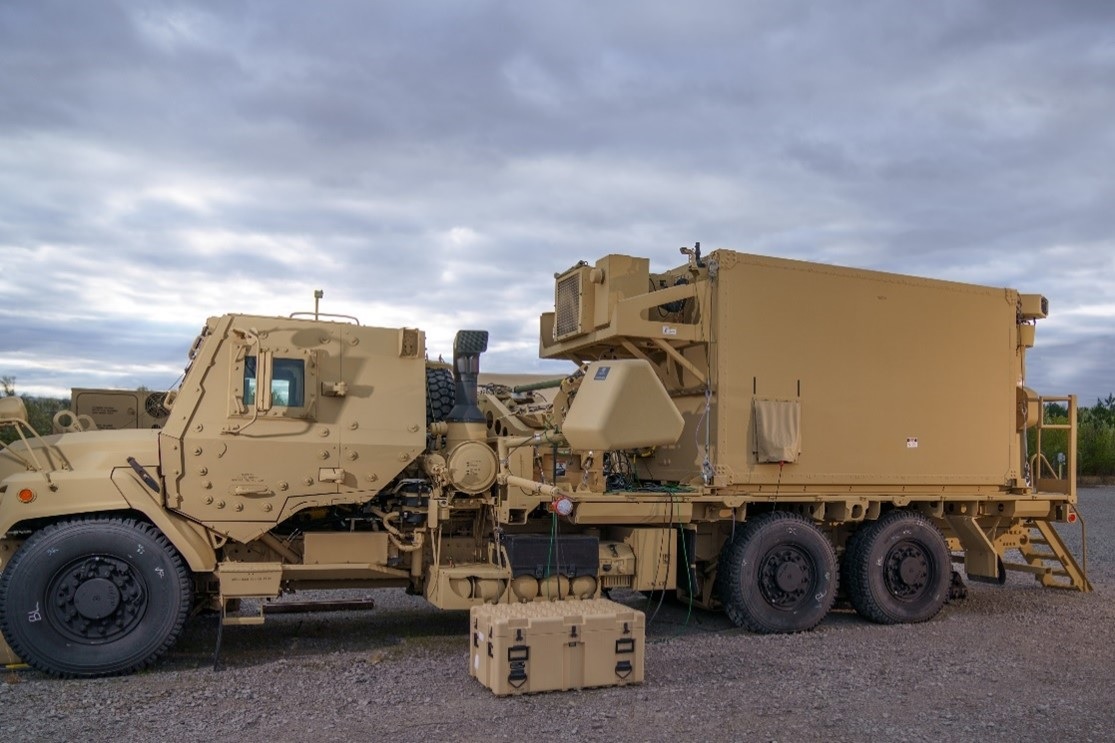
The live-fire events were conducted in late April 2026 at White Sands Missile Range, New Mexico. The demonstrations evaluated IBCS' ability to operate with multiple air and missile defense systems, including the Indirect Fire Protection Capability (IFPC) and the Lower Tier Air and Missile Defense Sensor (LTAMDS) radar.
Successful Integration with IFPC and LTAMDS
During the IFPC demonstration, IBCS successfully connected with the Sentinel A4 high-performance surveillance radar to detect and track incoming targets. The IFPC is a ground-based air defense system designed to defeat threats such as cruise missiles, uncrewed aircraft systems (UAS), and other airborne targets.
In a separate live-fire event, IBCS integrated with the LTAMDS radar. During the test, the system successfully detected, classified, engaged, and intercepted the designated target, demonstrating reliable coordination between the radar and the battle management network.
The tests validated IBCS' ability to integrate different sensors and weapon systems into a unified command-and-control network, allowing operators to respond more effectively to complex air and missile threats.
Networked Air and Missile Defense
IBCS is designed to connect existing and future air and missile defense systems regardless of manufacturer, military service, or operational domain. Its network-enabled, modular, open, and scalable architecture combines data from multiple sensors into a single, real-time picture of the battlespace.
By providing fire-control quality data, the system enables accurate target engagement while helping preserve interceptor inventory and reducing the risk of friendly fire incidents. The integrated battlespace picture also gives military operators more time to assess threats and coordinate defensive responses.
The latest demonstrations further confirmed the system's ability to integrate multiple sensors and effectors into a single operational network, supporting coordinated air and missile defense operations.
Operational Deployment
IBCS has entered full-rate production and is being fielded as part of the U.S. Army's integrated air and missile defense modernization program.
The system is already operational in Poland, where it supports the WISŁA medium-range air defense program. Poland became the first NATO ally to declare an IBCS-equipped WISŁA air defense system fully combat-ready in late 2025.
The U.S. Army has also fielded IBCS to U.S. Combatant Commands in Europe and the Indo-Pacific, expanding its role in integrated air and missile defense missions alongside allied forces.
Production and Manufacturing
To support increasing production demand, Northrop Grumman manufactures IBCS at its Enhanced Production and Integration Center (EPIC) in Madison, Alabama.
The facility uses advanced manufacturing technologies, including additive manufacturing and precision laser systems, to increase production capacity and support deliveries for the U.S. Army and allied customers.
Expanding Integrated Air and Missile Defense
IBCS has undergone years of development and testing, including successful integration with Patriot missile systems, LTAMDS, Sentinel radars, IFPC, and other air defense assets. Its open architecture allows additional sensors, radars, and interceptor systems to be integrated as operational requirements evolve.
The latest successful flight tests continue to demonstrate the U.S. Army's transition toward a networked air and missile defense architecture, enabling multiple sensors and weapon systems to operate together through a single battle management system.
Source: defence-industry
——— End of Article ———