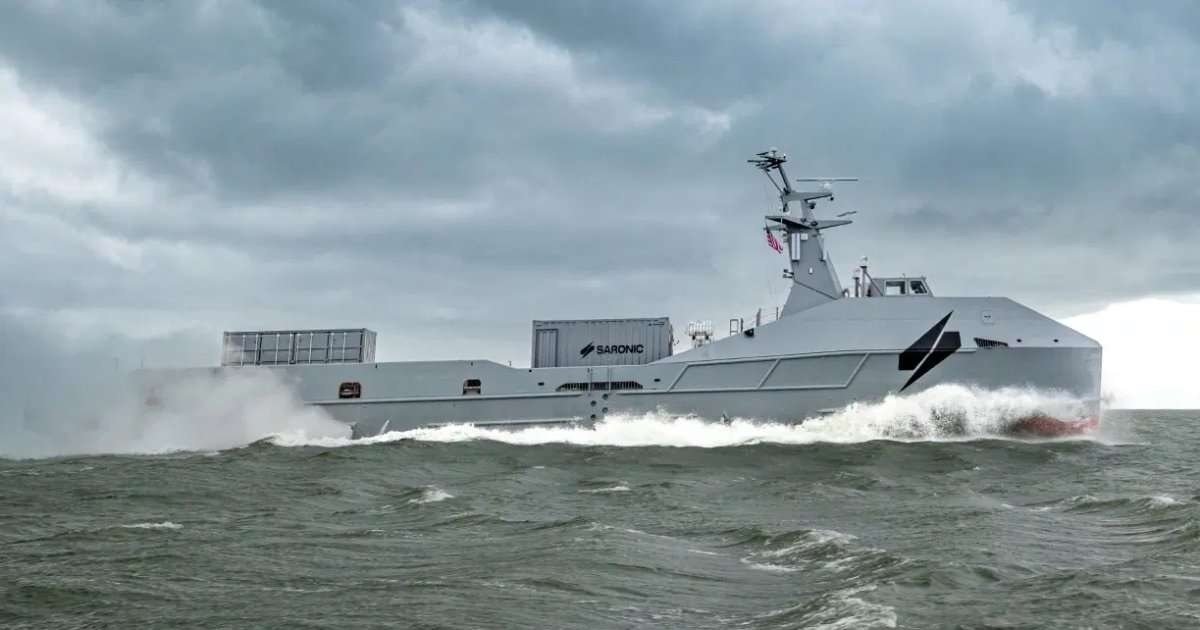
MADRID / CARTAGENA, Spain — April 9, 2026 : UAV Navigation–Grupo Oesía has announced the successful demonstration of its autonomous control and guidance system during recent U.S. Special Forces maritime exercises conducted in Cartagena, Spain. The system was integrated aboard NEWT21’s FOG unmanned surface vessel (USV), with the company confirming the results on April 9, 2026.
The demonstration took place in an operational military environment rather than a controlled test setting, providing validated performance data under real-world conditions. The exercise highlighted the increasing adoption of autonomous surface platforms in maritime security and special operations missions.
Platform Integration and System Architecture
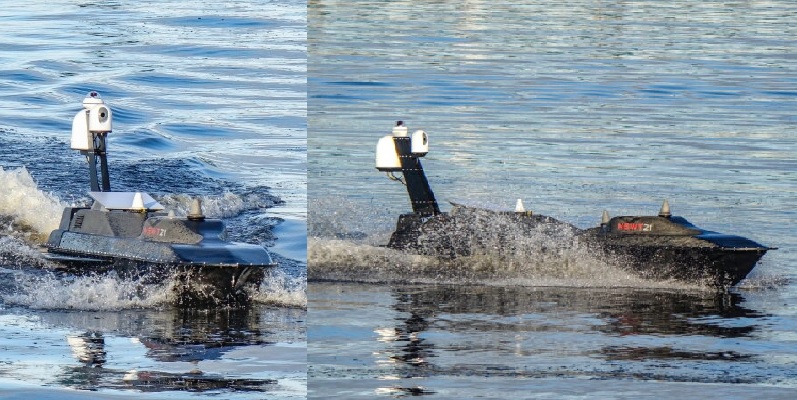
The trials centered on the FOG USV, a 4.7-metre shallow-draft, crewless surface platform developed by Latvian company NEWT21. Designed for operations in coastal environments, estuaries, and riverine areas, the vessel has a payload capacity of 200 kilograms.
The platform was equipped with UAV Navigation–Grupo Oesía’s VECTOR 400 autopilot and guidance system. The integration enabled the vessel and navigation suite to operate as a unified autonomous system, supported by satellite communications (SATCOM) for connectivity and control.
The collaboration between the two companies combined the surface vessel platform with advanced guidance technology into a single operational package. According to the companies, the partnership was built on proximity, mutual confidence, and a shared focus on customer requirements.
Operational Demonstration in Military Exercise
During the Cartagena exercise, which involved U.S. Special Forces maritime units, the FOG USV executed a fully autonomous navigation plan. The system demonstrated stable movement, accurate route tracking, and consistent performance under operational constraints.
The vessel operated alongside other participating assets, adapting its navigation in real time. This included dynamic route adjustment relative to moving vessels in the operational area, allowing the system to maintain mission objectives while responding to changing conditions.
One of the key operational tasks involved safe approach maneuvers toward a mothership. The onboard autopilot system successfully managed collision avoidance during proximity operations, maintaining safe distances while completing assigned movements.
In addition to navigation tasks, the platform continuously performed onboard health monitoring throughout the mission. This diagnostic capability ensured system awareness and contributed to uninterrupted operation during the exercise.
Fault-Tolerant Design and System Reliability
A central feature of the autonomous control system is its fault-tolerant architecture, developed to meet military operational requirements. The system is designed to maintain safe functionality even in the event of partial subsystem failure.
During the exercise, the USV remained stable and responsive while executing its assigned route, demonstrating the resilience of the navigation and control system under real-world conditions. The performance validated the system’s ability to operate reliably in complex maritime environments.
The successful execution of navigation tasks and collision-avoidance maneuvers provided a measurable operational benchmark for the system’s current level of maturity.
Role in Multi-Domain Operations
The demonstration offered a practical example of how autonomous maritime platforms can be integrated into multi-domain operations involving naval forces and special operations units. The use of a crewless surface vessel in coordination with manned assets reflects evolving operational concepts in maritime security.
By operating in an active military exercise, the system moved beyond laboratory validation and technology preview stages, demonstrating readiness for deployment in operational scenarios.
Industry Position and Future Outlook
UAV Navigation–Grupo Oesía stated that the results reinforce its position as a provider of advanced autonomous navigation and control technologies for defense applications. The company noted that its autopilot system had previously demonstrated reliable performance on the FOG USV platform in earlier trials, with the Cartagena exercise serving as further confirmation under operational conditions.
The cooperation with NEWT21 enabled both companies to validate the integration of their technologies in a realistic environment. The demonstration also highlighted the operational advantages of next-generation unmanned maritime platforms, particularly in missions requiring precision navigation, adaptability, and reduced human involvement.
UAV Navigation–Grupo Oesía indicated that it will continue supporting international defense partners and allied forces with field-proven autonomous navigation solutions. The exercise results confirmed both the robustness of the system and the practical applicability of autonomous USVs such as NEWT21’s FOG platform in modern maritime operations.
——— End of Article ———