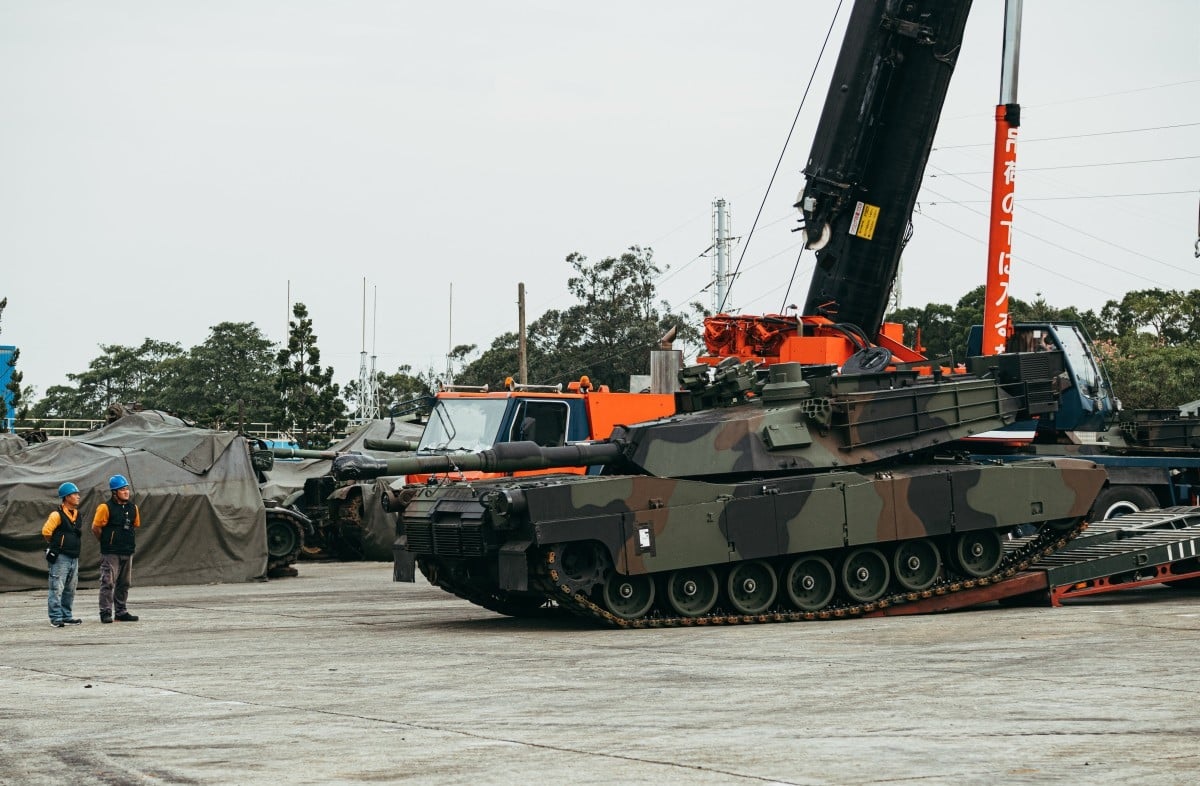
Taiwan has bolstered its defense posture with the delivery of 38 M1A2 Abrams main battle tanks, a significant milestone in its efforts to counter potential military aggression from China. This marks the first installment of the 108 tanks ordered from the United States in 2019, under a $1.2 billion deal. The delivery underscores Taiwan's strategic efforts to modernize its aging armored forces while navigating rising tensions in the Taiwan Strait.
The newly arrived Abrams tanks represent the first significant upgrade to Taiwan’s armored vehicle fleet in over three decades. Until now, Taiwan’s tank inventory consisted of older-generation models, including the domestically built CM-11 Brave Tiger and the US-made M60A3. These legacy systems, while reliable, are becoming increasingly obsolete against the backdrop of China's expanding military might.
Why the Abrams Tanks Matter
The M1A2 Abrams is a modern battlefield powerhouse, renowned for its blend of firepower, mobility, and protection. Developed by General Dynamics, it is a staple of the US Army and one of the most advanced main battle tanks in the world. The variant delivered to Taiwan, known as the M1A2T, is customized for the island’s unique defense requirements.
Key specifications of the M1A2 Abrams include:
- Engine: A 1,500-horsepower Honeywell AGT1500 gas turbine engine, providing impressive speed and maneuverability despite its hefty 60+ ton weight.
- Armor: Chobham composite armor, supplemented by depleted uranium layers, offers exceptional protection against modern anti-tank munitions.
- Main Armament: A 120mm M256 smoothbore cannon capable of firing a variety of advanced ammunition, including armor-piercing fin-stabilized rounds and programmable airburst rounds.
- Secondary Armament: Includes a 7.62mm M240 coaxial machine gun and a .50 caliber M2 machine gun for close-range threats.
- Advanced Electronics: Features the Fire Control System (FCS) with thermal imaging, a laser rangefinder, and advanced targeting capabilities that enable precision strikes, even on the move or in low visibility.
Geopolitical Context
The delivery of Abrams tanks highlights Taiwan’s growing reliance on the United States for advanced military hardware. Washington remains Taipei’s primary security partner, even as it avoids directly challenging Beijing’s claim over the self-governed island.
Taiwan has ramped up its defense spending in recent years, with the 2024 budget allocating a record $19 billion—a clear response to China’s escalating military activities. This budget increase accompanies Taiwan's broader strategy of asymmetrical defense, combining high-tech imports with domestic innovations.
However, the Abrams tank deal reflects broader challenges in global arms procurement. The COVID-19 pandemic disrupted supply chains, while ongoing US commitments to Ukraine and Israel have delayed deliveries of promised weaponry to Taiwan. As of 2024, this backlog has reached over $21 billion, underscoring the intense demand for US-made military equipment worldwide.
Rising Threats from China
China has intensified its military maneuvers near Taiwan, with frequent incursions by fighter jets and naval forces. Last week, Taiwan reported China’s largest maritime drills in years, involving around 90 vessels engaging in simulated blockades and attacks. These actions underline the persistent threat Taiwan faces, making the modernization of its military capabilities even more critical.
The Abrams tanks will initially be stationed at a training base in Hsinchu, south of Taipei, before being integrated into Taiwan’s combat units. Their role will likely focus on defending critical locations and supporting Taiwan’s broader strategy of deterring Chinese aggression.
Looking Ahead
The rest of the Abrams order is expected to arrive by 2026, further enhancing Taiwan’s ability to defend itself in an increasingly hostile environment. While Taiwan’s numerical disadvantage against China remains stark, advanced systems like the Abrams tanks aim to level the playing field, signaling the island’s commitment to preserving its sovereignty.
As Beijing continues to apply pressure through military exercises and diplomatic measures, Taiwan’s efforts to modernize its forces serve as a reminder of its resolve to stand firm against external threats. The Abrams tanks are more than just military hardware—they are a symbol of the enduring partnership between Taiwan and the United States in the face of growing geopolitical uncertainty.
——— End of Article ———