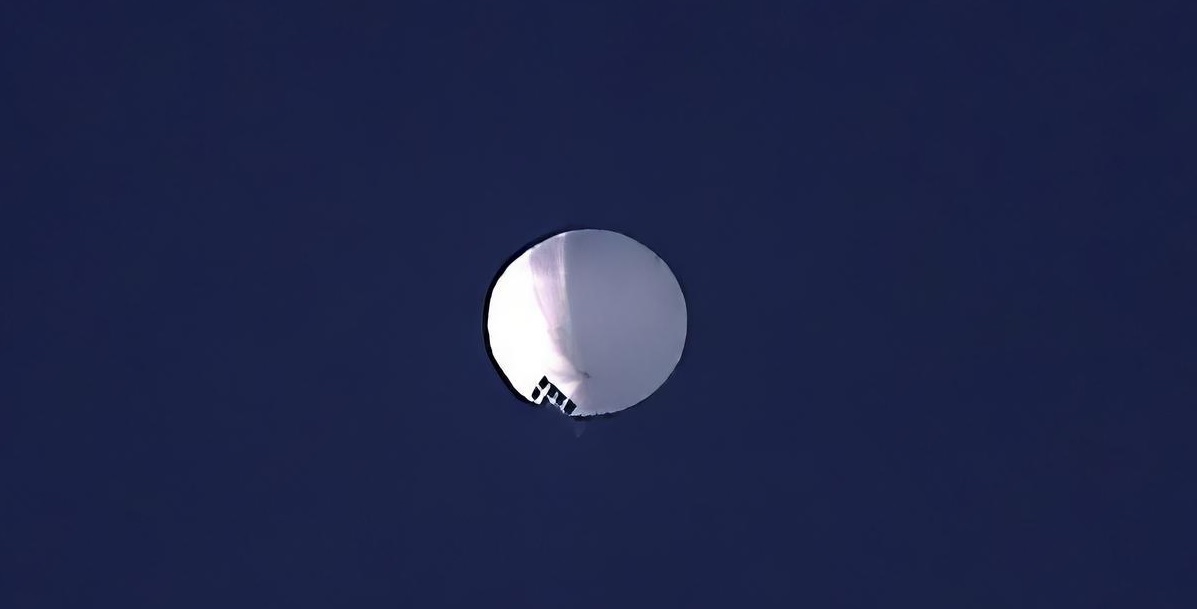
Defense News ,Taiwan :- In a recent development, Taiwan reported the detection of six Chinese balloons either flying over the island or traversing the airspace just north of it on Monday. This incident unfolded alongside the presence of Chinese warplanes and navy ships in the region. The deployment of such balloons, which typically vanish into the Pacific to the east, seems to be increasing, although their specific purpose has not been officially disclosed.
Taiwan's Defence Ministry documented these balloon sightings on a list detailing Chinese People's Liberation Army activities in the waters and airspace surrounding Taiwan. One of the balloons passed near the southern city of Pingtung, while the others traversed just north of the strategically significant naval base in Keelung.
The explicit military function of these balloons remains unclear, yet they seem to be part of a larger campaign aimed at harassing the self-governed island. China asserts territorial claims over Taiwan, considering it as its own, and has expressed its intention to reclaim it by force if necessary.
This event echoes a similar incident in the United States last year when President Joe Biden pledged stricter regulations for tracking, monitoring, and potentially intercepting unknown aerial objects. The announcement followed a three-week episode involving the discovery of a suspected Chinese spy balloon traversing much of the United States. The U.S. classified the balloon as a military craft and shot it down, recovering advanced surveillance equipment. China, in response, insisted it was a weather balloon off course and criticized the U.S. for overreacting.
Such incidents are often categorized as China's "gray area tactics," causing unease among its adversaries without directly provoking a confrontation. China has a history of blurring the lines between military and civilian functions, notably in the South China Sea, where it operates a massive maritime militia functioning as ostensibly civilian fishing boats under government directives to assert Beijing's territorial claims.
China's intimidation campaign against Taiwan regularly involves deploying warships and planes in the waters and airspace around the island, often breaching the 160-kilometer-wide Taiwan Strait's middle line that separates them. Between Sunday and early Monday morning, Taiwan's Defence Ministry reported the detection of four Chinese warplanes and four navy ships around Taiwan. Taiwan's military responded by monitoring the situation with combat aircraft, navy vessels, and land-based missile systems.
This escalation in activities occurred in the lead-up to Taiwan's presidential and legislative elections on January 13. Despite increased rhetoric and threats from Beijing, the independence-leaning Democratic Progressive Party secured a third consecutive term in the presidency under current Vice President Lai Ching-te (William Lai). The pro-unification Nationalist Party gained only one more seat in the legislature than the DPP, with some votes diverted to the party of former Taipei Mayor Ko Wen-je, who particularly resonated with disillusioned young voters.
——— End of Article ———