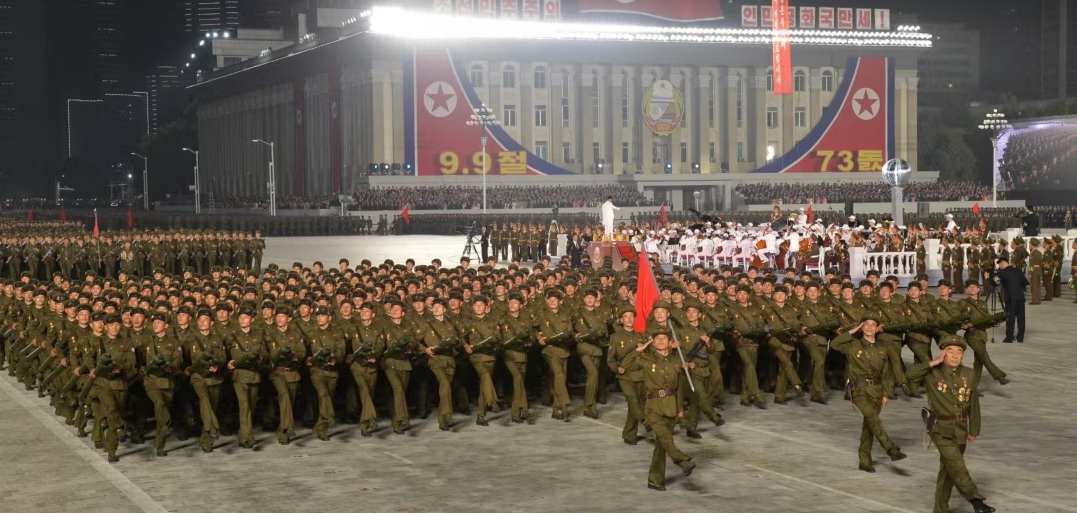
In a rapidly escalating situation, South Korea has demanded the immediate withdrawal of North Korean troops allegedly stationed in Russia, marking a significant shift in the dynamics of the Korean Peninsula. This development comes amidst rising concerns over deepening military cooperation between North Korea and Russia, which could pose grave threats to South Korea's national security and regional stability.
On Monday, South Korean Vice Foreign Minister Kim Hong Kyun summoned the Russian Ambassador to Seoul, Georgy Zinoviev, to express strong disapproval over the alleged deployment of 1,500 North Korean special operations forces to Russia to support its war efforts in Ukraine. The South Korean government, which had received intelligence from its spy agency confirming the North's military presence, labeled this action as an immediate and serious security risk.
According to South Korea’s National Intelligence Service (NIS), this dispatch of North Korean forces to Russia is not an isolated event. The intelligence suggests that North Korea is preparing up to 10,000 soldiers to join Russian forces in their ongoing war against Ukraine. Ukrainian President Volodymyr Zelenskyy had already mentioned similar findings, highlighting the possible scale of North Korean involvement in the conflict.
South Korea's response has been unequivocal. Kim Hong Kyun condemned North Korea’s participation, calling it a "grave security threat" to both South Korea and the international community. He emphasized that South Korea, in concert with global partners, would deploy all available diplomatic and strategic tools to counter this threat. The Russian Embassy, however, maintained that the cooperation between Moscow and Pyongyang was not intended to compromise South Korean security.
In the midst of these alarming revelations, South Korean President Yoon Suk Yeol engaged in a phone conversation with NATO Secretary-General Mark Rutte to discuss the implications of this military collaboration. President Yoon made it clear that South Korea would not stand idly by while North Korea strengthens its ties with Russia, potentially gaining advanced military technologies in return. Rutte, in a statement on X (formerly Twitter), warned that North Korean involvement in the Ukraine war would signal a "significant escalation" in the conflict.
Although the U.S. and NATO have not officially confirmed the presence of North Korean troops in Russia, the mere reports of such an alliance have heightened concerns in South Korea. The possibility that Russia might transfer cutting-edge military technology to North Korea in exchange for manpower could dramatically advance Pyongyang’s nuclear and missile capabilities—an existential threat to South Korea.
North Korea's burgeoning nuclear arsenal has been a longstanding source of concern for Seoul. Pyongyang’s recent hostile rhetoric, including threats of preemptive nuclear strikes, has left South Korea and its allies in a heightened state of alert. If Russia is indeed providing North Korea with advanced missile and nuclear technologies, it could alter the balance of power on the Korean Peninsula.
Meanwhile, South Korea has participated in U.S.-led sanctions against Russia over its invasion of Ukraine but has stopped short of directly supplying arms to Kyiv, citing its policy of not sending weapons to nations actively engaged in conflicts. However, there are growing speculations that South Korea may reconsider its stance if credible evidence of Russian technology transfers to North Korea surfaces. Such a development could see South Korea increase its support for Ukraine in more tangible ways.
The Kremlin, for its part, has remained vague on the matter. When questioned, Russian government spokesman Dmitry Peskov pointed to the mixed reports surrounding the issue, suggesting that no definitive conclusions should be drawn just yet. Similarly, North Korea has been silent, with no official statements regarding the troop deployment from its state-controlled media.
Video footage recently released by Ukrainian officials purports to show North Korean soldiers receiving Russian military uniforms and supplies, though this footage has not been independently verified. The deployment, if confirmed, would mark the first time North Korean forces have participated in a major conflict since the Korean War in the 1950s.
The growing military alliance between Pyongyang and Moscow has been in the works for some time. Over the past two years, the two nations have strengthened their cooperation, with North Korea reportedly supplying conventional arms to Russia in return for much-needed economic and military aid. Earlier this year, North Korean leader Kim Jong Un and Russian President Vladimir Putin signed an agreement pledging mutual military assistance in the event of external aggression against either nation.
As the international community watches these developments closely, the potential implications for global security, especially in East Asia, remain profound. For South Korea, the immediate concern is whether this new alliance between Russia and North Korea could tip the delicate balance of power in the region, possibly leading to further instability or even conflict on the Korean Peninsula.
South Korea’s insistence on the immediate withdrawal of North Korean troops from Russia underscores the gravity of the situation, as the specter of increased military collaboration between the two adversaries looms large over the region.
In this evolving geopolitical chess game, the stakes are higher than ever.
——— End of Article ———