South Korea is making a significant leap in its defense capabilities with the acquisition of 100 advanced Meteor air-to-air missiles, specifically for its upcoming KF-21 Boramae fighter jet. The deal, formalized with European missile manufacturer MBDA, positions the KF-21 to stand among the world’s most advanced combat aircraft. This partnership between South Korea's Defense Acquisition Program Administration (DAPA) and MBDA not only underscores a milestone in regional security but also reflects South Korea’s dedication to enhancing its military’s self-reliance and technological edge.
The KF-21 Boramae Program: Setting New Standards
The KF-21 Boramae is South Korea’s ambitious step toward replacing the Republic of Korea Air Force's aging F-4 and F-5 jets, building on indigenous and international expertise. Developed through a joint program with Indonesia, South Korea holds a 60% share in the project, while Indonesia owns 20%, with the remaining 20% in private hands, including from Korea Aerospace Industries (KAI), the primary manufacturer. The KF-21 program is planned in three progressive blocks, each introducing more sophisticated capabilities over time. South Korea has committed to producing over 130 of these jets by 2032, with the first 20 units set to be ready by 2026.
This multi-phase development approach not only enables more rigorous testing and refinement but also allows South Korea to adopt advanced technologies at each stage, keeping the KF-21 relevant against evolving threats. Potentially, future models will include electronic attack and carrier-based variants, opening the door for broader operational applications, including exports.
The Meteor Missile: A Game-Changer in Air Combat
The Meteor missile, selected for the KF-21, is a powerful addition to South Korea’s defense capabilities. Often considered one of the premier beyond-visual-range (BVR) air-to-air missiles, the Meteor has an effective range exceeding 200 kilometers (124 miles) and features a world-leading no-escape zone of 60 kilometers (37 miles). This means that once a target is within 60 kilometers of the Meteor’s trajectory, there is virtually no way to evade it, a critical asset in aerial combat where response time can be a matter of seconds.
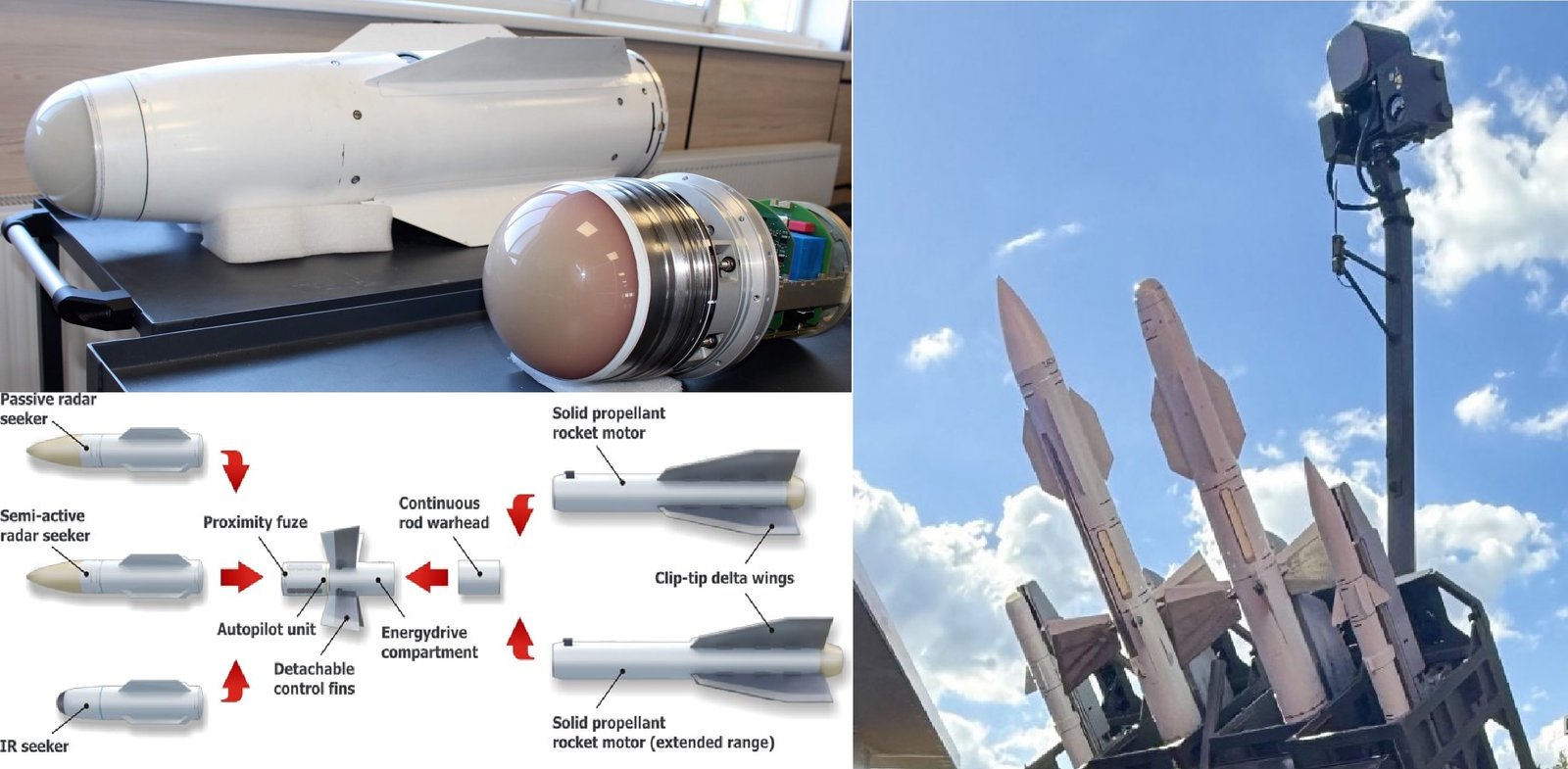
The missile’s unique propulsion system—a ramjet—provides sustained thrust, enabling it to reach high speeds and maintain them over long distances. The advanced active radar seeker on the Meteor allows it to track and engage agile targets like fast jets, small drones, and even cruise missiles. Equipped with impact and proximity fuses and a fragmentation warhead, the Meteor is designed to maximize impact on a range of targets, ensuring high versatility in combat scenarios.
Integrating the Meteor with the KF-21
KAI and MBDA began preparations to integrate the Meteor with the KF-21 platform in 2019, a complex process involving the transfer of crucial know-how and development of specialized equipment for testing and trials. This step was essential to ensure that the Meteor could be deployed effectively with the KF-21's systems, sensors, and radar capabilities. Another collaboration in 2023 expanded this integration effort to include other MBDA missiles, potentially adding Brimstone and Spear missiles for air-to-ground missions, as well as the Advanced Short-Range Air-to-Air Missile (ASRAAM), a valuable asset for close-quarters dogfighting.
This missile integration is critical for the KF-21’s overall mission profile, as the aircraft’s design is modular, allowing for adaptation to various operational needs. Testing earlier this year even included the IRIS-T, a short-range air-to-air missile, indicating the KF-21’s readiness to handle a diverse array of advanced munitions.
Strategic Importance and Future Prospects
For South Korea, the KF-21 Boramae and its Meteor-equipped arsenal represent a strategic advancement. The Meteor’s ability to neutralize long-range threats before they can engage is a deterrent in itself, enhancing South Korea’s air superiority in the region. In a broader context, this defense procurement reflects South Korea's shift toward developing a self-sufficient military, reducing reliance on foreign powers for advanced weaponry while contributing to the local defense industry.
The project also has significant geopolitical implications. As the KF-21 is set to be marketed to international customers, its features, including compatibility with cutting-edge weaponry like the Meteor, make it a competitive option in the global fighter jet market. By collaborating with Indonesia and exploring new integration possibilities with MBDA, South Korea not only strengthens its regional defense network but also enhances its position as a rising player in the global defense arena.
The KF-21 project is more than just a domestic fighter jet program; it represents South Korea’s commitment to creating a defense ecosystem capable of meeting future challenges. With production underway and the Meteor missiles on the horizon, South Korea’s skies will soon be patrolled by one of the most sophisticated fighter jets in Asia, marking a new chapter in the country's defense narrative.
——— End of Article ———