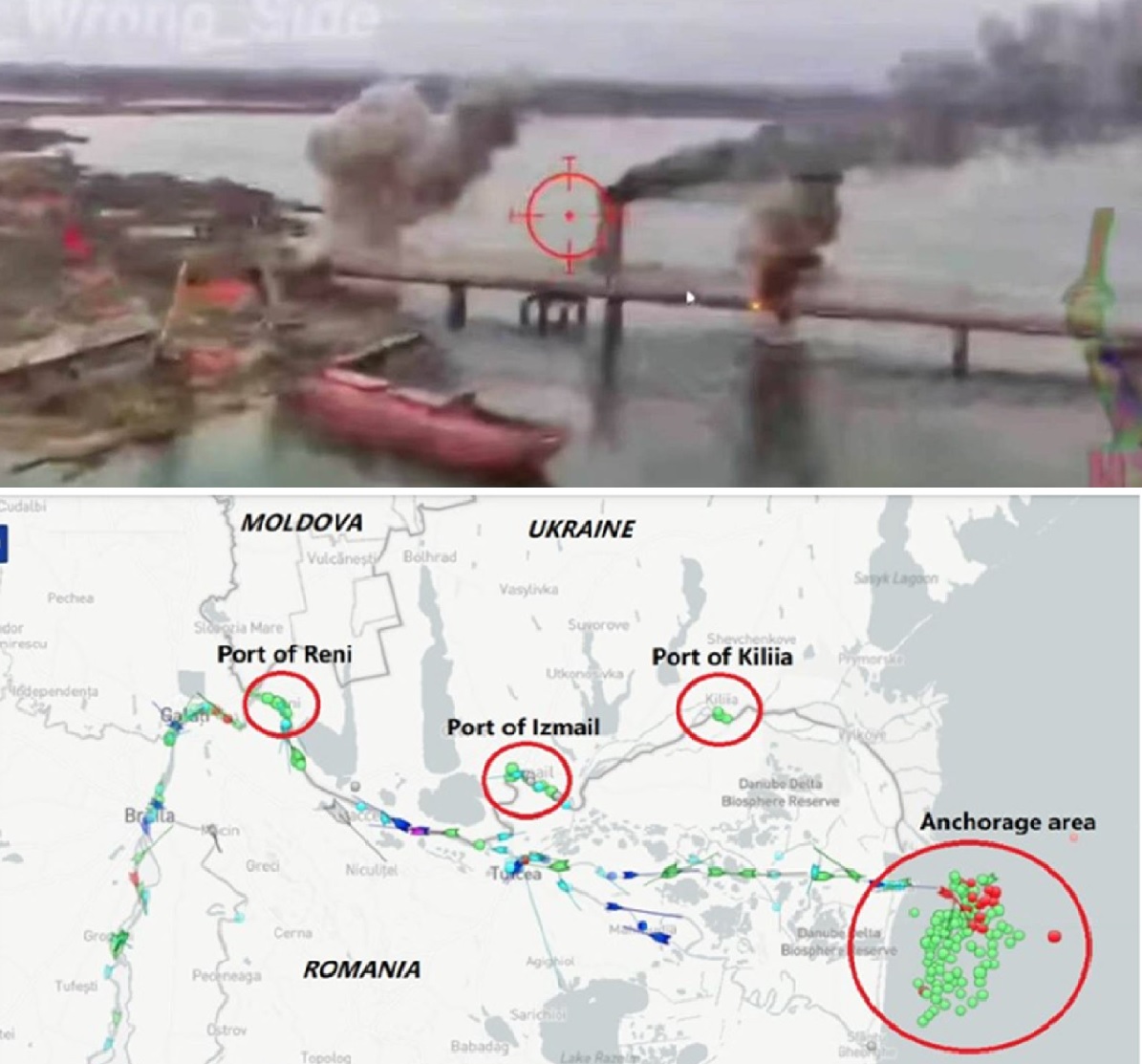
A Russian strike on a bridge near the settlement of Mayaki has drawn renewed attention to a critical vulnerability in Ukraine’s wartime economy: the heavy dependence of its fuel supply on a narrow logistics corridor feeding the Danube port of Izmail. Industry assessments indicate that roughly 60 percent of Ukraine’s fuel imports pass through Izmail, meaning that disruption to a single transport node can ripple rapidly across the national market.
The damage to the bridge, which connects Danube port facilities with inland road networks, did not merely slow traffic. It underscored how concentrated Ukraine’s fuel import system has become since the loss or degradation of Black Sea routes. Analysts say the strike illustrates how a limited number of precision attacks could significantly impair fuel flows without directly hitting ports or storage depots.
Izmail’s Central Role in Wartime Imports
Since 2022, Ukraine has redirected much of its fuel trade through Danube ports, with Izmail emerging as the dominant hub. Diesel, gasoline, and liquefied petroleum gas arrive by barge and tanker along the river, are unloaded at port terminals, and then moved by road tankers to western fuel bases before being distributed nationwide.
This configuration has allowed Ukraine to sustain supplies under wartime constraints, but it has also created a structural chokepoint. The Mayaki bridge sits on one of the main arteries linking Izmail to the rest of the country. Logistics experts note that its temporary loss immediately complicates deliveries, forcing detours, queues, and delays that cascade through the system.
Prices Rise as Logistics Tighten
Market reaction was swift. Dmytro Levushkin, representing Prime Logistics, warned that even a short disruption could trigger immediate price increases. According to his assessment, wholesale prices at western fuel bases could rise by at least two hryvnias per liter, with retail prices following as supplies tighten.
Beyond pricing, operators report a growing shortage of available fuel tankers. Vehicles are spending more time idle or rerouted, reducing effective transport capacity. Industry sources say gas stations in eastern and southern regions are likely to feel the impact first, with phased shortages possible if deliveries remain disrupted.
Limited and Risky Alternatives
Emergency workarounds have included the use of temporary pontoon crossings and alternative road routes. However, such measures are widely seen as stopgaps. Pontoon bridges cannot handle the same traffic volumes as permanent structures and are themselves vulnerable to further strikes.
Rerouting fuel through Romania or Moldova offers another option, but one that comes with significant logistical drawbacks. Longer distances, border formalities, and limited tanker availability slow deliveries and raise costs. Analysts stress that these routes can supplement Izmail but cannot replace its throughput at scale.
The Deeper Constraint: Manpower
Behind the visible infrastructure damage lies a more persistent problem: a severe shortage of qualified fuel tanker drivers. Many experienced drivers have been mobilized into the armed forces, leaving logistics companies without sufficient personnel to operate existing fleets.
This labor deficit means that even if infrastructure is repaired quickly, distribution may remain constrained. Fuel can reach depots, but moving it onward to retail stations is increasingly difficult. Industry participants describe this shortage as the system’s most stubborn bottleneck, one that cannot be resolved quickly through engineering fixes alone.
A Test for Economic Resilience
Fuel traders are bracing for what they describe as a week of intense market volatility, marked by uneven supply and nervous pricing. While Ukraine has repeatedly demonstrated an ability to reconfigure logistics under fire, each adjustment has come at higher cost and with thinner margins for error.
The strike on the Mayaki bridge signals a shift toward targeting economic pressure points rather than symbolic infrastructure. For Ukraine, it reinforces the urgency of diversifying import routes, decentralizing fuel storage, and addressing chronic labor shortages in logistics.
As repairs continue and contingency plans are activated, the episode stands as a reminder that in a prolonged conflict, the stability of everyday infrastructure can be as strategically decisive as events on the front line.
——— End of Article ———