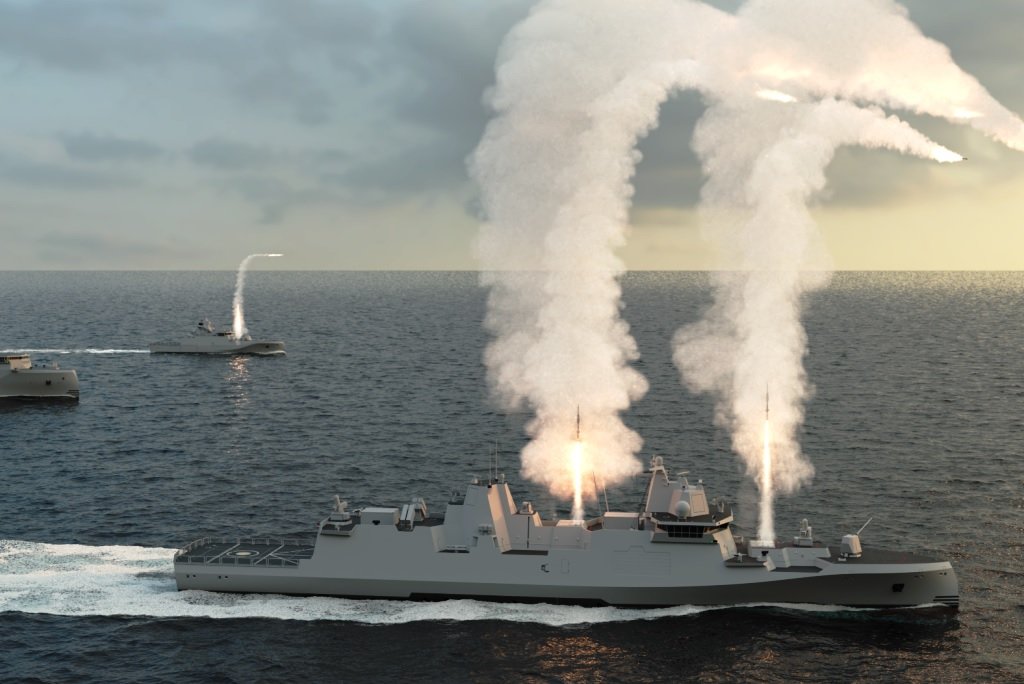
DÜSSELDORF, Germany — German defence company Rheinmetall has officially unveiled the GMF140, a next-generation guided-missile frigate designed for NATO and allied navies. Measuring 140 metres in length and displacing approximately 6,000 tonnes, the new surface combatant is intended to meet evolving naval requirements across air defence, missile defence, anti-submarine warfare, and long-range strike missions.
The company said the GMF140 will first be offered as part of a procurement campaign in North America, before being marketed to countries modernising their naval fleets across Europe, the North Atlantic, and the Indo-Pacific.
Designed for Multi-Mission Naval Operations
Rheinmetall said the GMF140 has been designed to operate in high-threat blue-water environments while retaining the flexibility to support expeditionary, littoral, and coalition operations.
The frigate is intended to carry out a wide range of missions, including:
- Anti-Air Warfare (AAW) against conventional airborne threats.
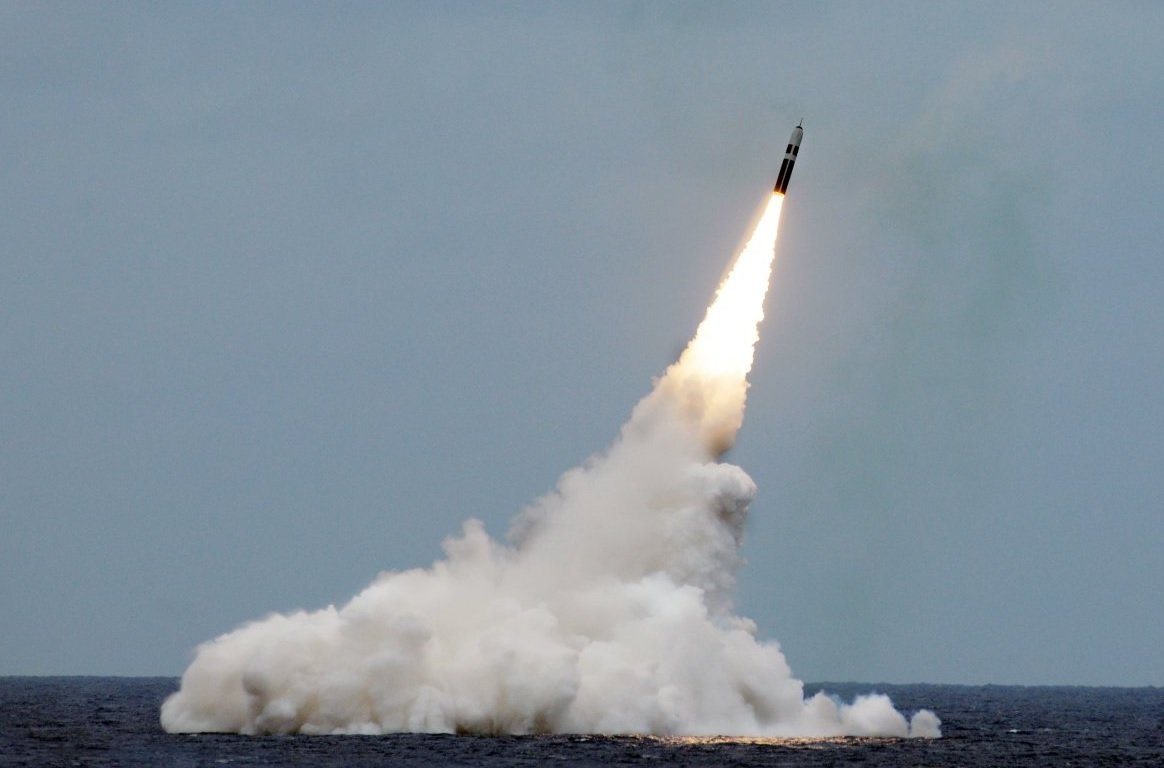
- Ballistic Missile Defence (BMD), including the detection, tracking, and interception of ballistic and hypersonic weapons.
- Anti-Submarine Warfare (ASW) using a low-signature hull, integrated acoustic management, and advanced sonar systems.
- Long-range strike missions against distant targets.
According to Rheinmetall, the vessel has been designed as a flexible platform capable of supporting modern naval operations while maintaining compatibility with allied forces.
Combat System and Sensor Suite
The GMF140 is built around an open-architecture combat system designed to support future upgrades and interoperability with allied navies.
Its primary combat system is based on the US-developed Aegis Combat System, with the option to integrate Lockheed Martin's CMS330 Combat Management System where required. Rheinmetall said the open architecture enables the integration of a wide range of European sensors and weapon systems.
The frigate can also be equipped with several US-sourced primary radar options capable of supporting full ballistic missile defence tracking. These radar systems are designed to detect, track, and engage conventional aircraft as well as ballistic and hypersonic threats.
According to the company, the combination of the Aegis Combat System, advanced radar, and combat management architecture provides surveillance and fire-control performance typically associated with much larger surface combatants.
Proposed Weapons and Mission Systems
Rheinmetall's proposed configuration includes a broad range of weapons and mission systems to support the frigate's multi-role capabilities.
The planned armament includes:
- 64 strike-length Vertical Launch System (VLS) cells for air-defence, ballistic missile-defence, and land-attack missiles.
- One 5-inch main gun.
- Dedicated anti-ship missiles.
- Torpedo launchers for anti-submarine warfare.
- Laser systems.
- Close-In Weapon Systems (CIWS) for point defence.
The ship is also designed to operate US or European maritime helicopters and unmanned systems, extending its surveillance, anti-submarine, and engagement capabilities beyond the ship itself.
Rheinmetall said the final configuration—including secondary armament, electro-optical sensors, electronic warfare equipment, decoy systems, and other defensive systems—can be customised to meet individual customer requirements.
Anti-Submarine Warfare Features
For anti-submarine operations, the GMF140 combines a low-signature hull with integrated acoustic management, along with both hull-mounted and towed sonar systems.
These features are intended to improve underwater detection while reducing the vessel's acoustic signature during operations.
Digital Design and Crew Requirements
According to Rheinmetall, the GMF140 is a digitally integrated and minimally crewed platform developed with an emphasis on operational efficiency, survivability, NATO interoperability, and future upgrades.
Additional details released during the unveiling state that the frigate has:
- A top speed of 30 knots
- A core crew of about 90 personnel
- Accommodation for approximately 35 additional personnel
The company also noted that the 64 VLS cells provide greater missile capacity than several existing frigate classes of similar size.
Initial Focus on North America
Rheinmetall said its first marketing effort for the GMF140 will focus on North America, with the design later being offered to allied navies seeking new multi-mission surface combatants.
The company is positioning the GMF140 as a future-ready frigate that combines air defence, ballistic missile defence, anti-submarine warfare, and long-range strike capabilities within an open and interoperable architecture designed for long-term fleet modernisation.
——— End of Article ———