In a clear alignment with Indian Prime Minister Narendra Modi's perspective, Russian President Vladimir Putin has emphasized that BRICS, the economic grouping comprising Brazil, Russia, India, China, and South Africa, is not an anti-Western bloc but a non-Western one. This clarification came ahead of the BRICS Summit scheduled for October 22-24, which will be hosted by Putin in Kazan, Russia.
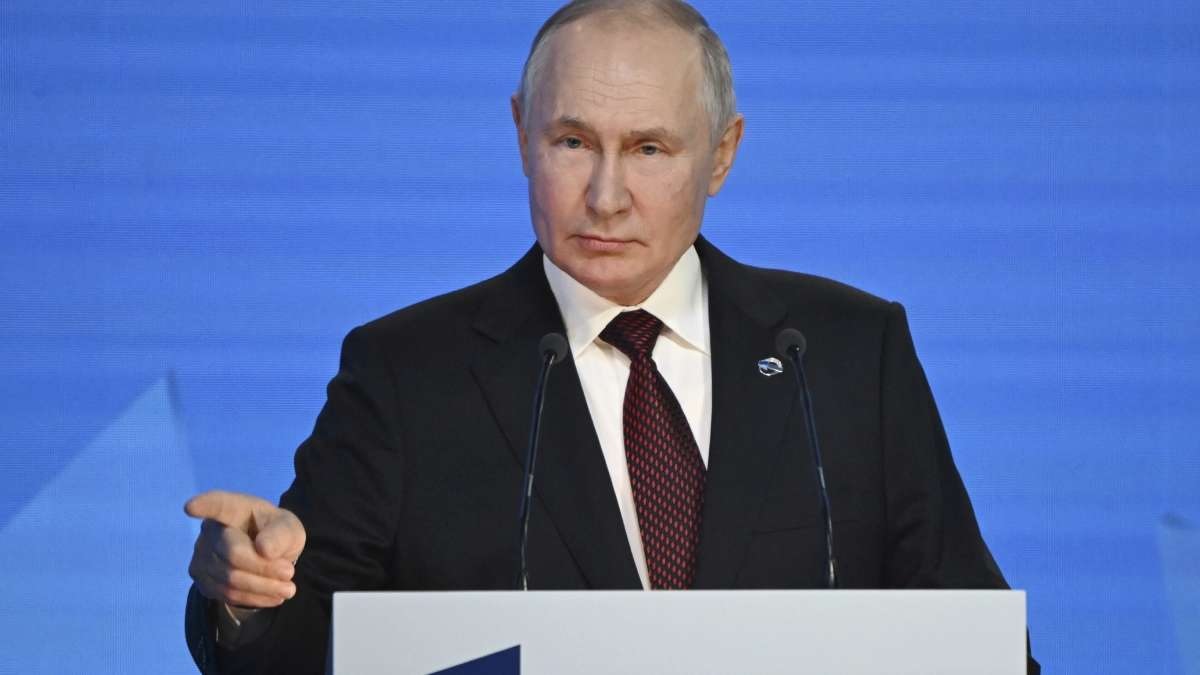
During a recent interaction with senior journalists from BRICS nations, Putin echoed Modi's words, saying, “BRICS is not an anti-Western group; it’s just a non-Western group.” He went on to elaborate that BRICS does not seek to position itself against any other bloc or nation but rather represents a collective of countries that share values of cooperation, mutual respect, and a desire for development. The emphasis, Putin noted, is on respecting each other’s interests while working towards common goals.
This statement aligns with a broader message that both Russia and India have been communicating in global forums—that BRICS is not intended to challenge the West directly but to offer an alternative platform for dialogue and cooperation among emerging economies. By positioning BRICS as "non-Western," both Putin and Modi are highlighting the group's focus on balancing global influence without seeking to undermine or oppose Western powers.
Putin also used the occasion to express his gratitude to PM Modi for consistently raising concerns about the Ukraine conflict during their conversations. "Every time we speak, PM Modi brings up the Ukraine situation and shares his thoughts on finding a peaceful resolution. We appreciate his concerns," Putin remarked. He reiterated that Russia is open to resolving the conflict through negotiations but claimed that it was the Ukrainian side that withdrew from talks, not Russia.
This acknowledgment comes shortly after PM Modi’s visit to Kyiv, where he met with Ukrainian President Volodymyr Zelenskyy and reaffirmed India's commitment to supporting a peaceful end to the conflict. Modi's diplomatic approach to the war has been marked by a careful balance, engaging with both Ukraine and Russia while urging dialogue and de-escalation.
The upcoming BRICS Summit in Kazan is significant not just because Russia holds the presidency of BRICS this year, but also due to the growing influence of the group. Since its formation in 2006, when leaders from Russia, India, and China first met on the sidelines of the G8 Outreach Summit, BRICS has evolved into a major economic coalition. South Africa joined in 2010, and in 2024, the group expanded further to include Egypt, Ethiopia, Iran, and the United Arab Emirates.
The 16th BRICS Summit is expected to focus on several critical global issues, including the geopolitical shifts following the Ukraine conflict, economic cooperation, and strengthening the BRICS bank to reduce dependency on Western financial systems. Putin’s comments, reiterating that BRICS is "non-Western," serve as a reminder of the group’s aim to carve out a more significant space for emerging nations in global governance.
PM Modi is set to attend the summit, accepting Putin’s invitation to visit Russia from October 22-23. The interaction between these two leaders highlights the growing significance of India-Russia relations within the BRICS framework. The partnership between the two nations, both of which share a long history of cooperation, has seen renewed focus as global tensions continue to rise, especially after the Ukraine conflict.
As BRICS continues to expand, the group's role in shaping the future of global governance cannot be understated. With its unique approach to development, cooperation, and diplomacy, BRICS is increasingly becoming a platform for countries that seek an alternative to traditional Western-dominated institutions without actively opposing them. Putin’s alignment with Modi’s stance only reinforces this perspective, signaling that BRICS is here to offer a non-Western path forward for many emerging nations.
BRICS has, over the years, hosted 15 summits, the first of which was held in Yekaterinburg, Russia, in 2009. The group’s Chairship rotates annually, and India notably held the position in 2021, coinciding with the 15th anniversary of BRICS.
As the world looks forward to the upcoming BRICS Summit, the message from both Modi and Putin is clear—BRICS is about building bridges, not walls. It's a grouping focused on cooperation and development, offering a "non-Western" alternative that respects the diversity and interests of its member states.
——— End of Article ———