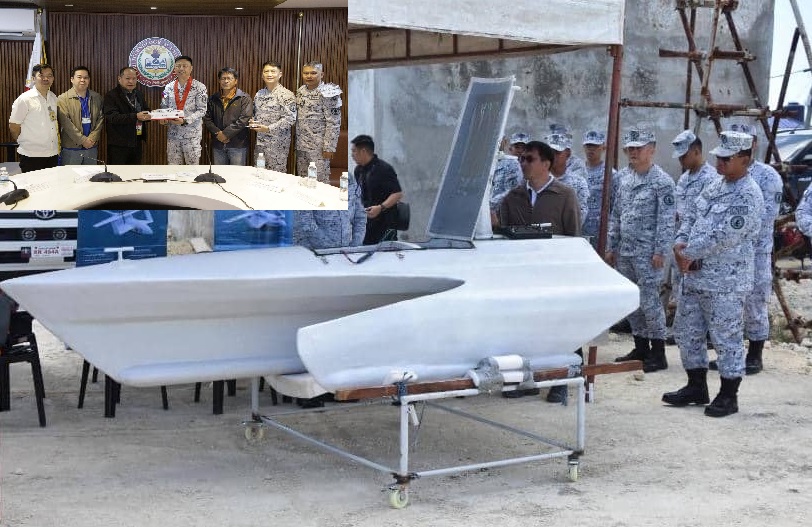
MANILA, — April 10, 2026 : The Philippine Navy has entered into a formal partnership with Cebu Technological University (CTU) to develop two indigenous autonomous platforms—a Hybrid Marine-Air Vehicle (HMAV) and a Maritime Autonomous Surface Ship (MASS)—as part of efforts to strengthen the country’s Self-Reliant Defense Posture (SRDP) program and expand domestic capabilities in maritime and defense technologies.
The agreement was formalized through a memorandum of agreement signed on March 26, 2026, at the CTU main campus in Cebu City. The signing was led by Rear Admiral Juario C. Marayag, commander of the Naval Sea Systems Command (NSSC), representing the Philippine Navy, and Dr. Jonathan C. Maglasang, designated project leader for both platforms, representing the university. Officials from both institutions attended the ceremony, including Vice Admiral Jose Ma. Ambrosio Q. Ezpeleta for the Navy and senior CTU leadership such as Dr. Romeo P. Montecillo, Dr. Rosein A. Ancheta Jr., and Dr. Pet Roey L. Pascual.
Platform Development and Capabilities
The collaboration centers on the development of two autonomous systems designed to address operational requirements across the Philippine archipelago, with both prototypes scheduled for completion in 2026.
The Hybrid Marine-Air Vehicle (HMAV) is an aerial hybrid platform engineered to transport at least 12 passengers and operate over a range of up to 600 nautical miles. It is intended to support inter-island mobility, logistics operations, and disaster preparedness and response, particularly in geographically dispersed and disaster-prone areas.
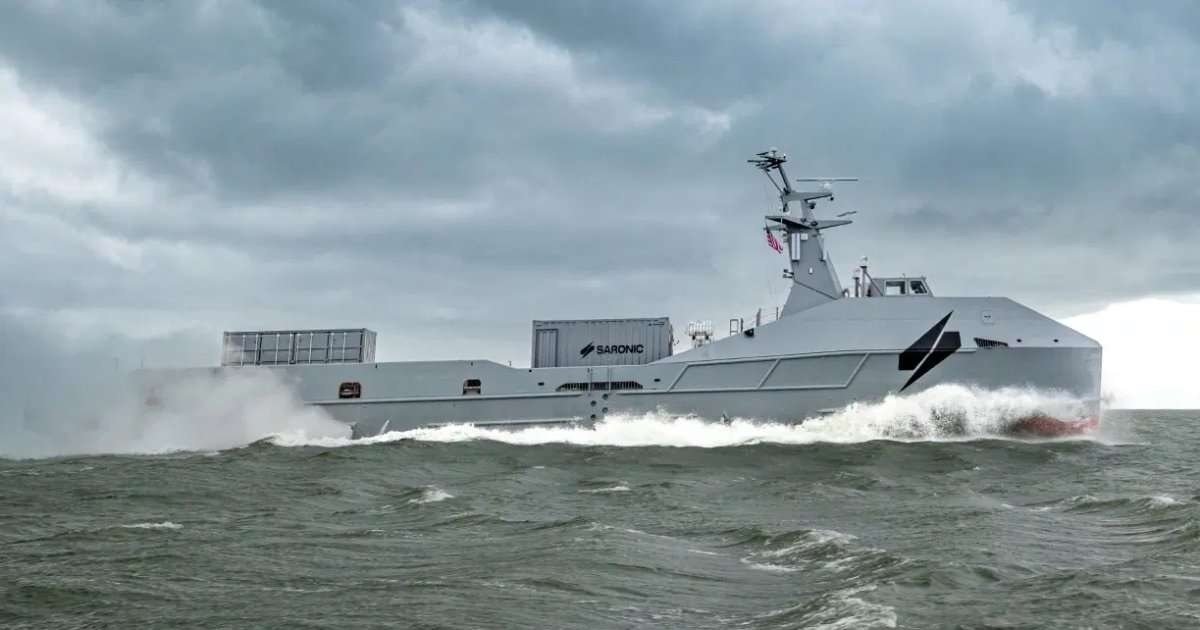
The Maritime Autonomous Surface Ship (MASS) is a sea-based unmanned vessel incorporating environmentally sustainable or “green” maritime technologies. It is designed to function as an autonomous logistics platform capable of supporting naval operations and civilian requirements while reducing environmental impact.
Research, Funding, and Training Framework
Research and development activities for both platforms began in 2023 under CTU’s Center for Advanced Vehicles and Energy Systems (CAVES). The university is responsible for system design, development, integration, testing, and performance evaluation.
The projects are funded by the Department of Science and Technology–Philippine Council for Industry, Energy and Emerging Technology Research and Development (DOST-PCIEERD). In addition to development responsibilities, CTU will provide technical training to Philippine Navy personnel to support future operation and maintenance of the systems.
Dr. Romeo P. Montecillo, CTU Vice President for Student Affairs, stated that the initiatives are aimed at addressing national mobility challenges through advanced and environmentally responsible technologies applicable to both defense and civilian sectors.
Alignment with National Defense Policy
The partnership aligns with the objectives of the SRDP program, which prioritizes the development of indigenous defense technologies, including unmanned systems, domestic powder production, and maintenance, repair, and overhaul (MRO) capabilities for military assets.
The SRDP framework was reinforced with the enactment of the SRDP Revitalization Act (Republic Act No. 12024), signed into law by President Ferdinand Marcos Jr. on October 8, 2024. The legislation mandates the strengthening of the domestic defense industry through sustained research and development of weapon systems and related technologies.
Existing Capabilities and Prior Initiatives
At present, the Philippine Navy operates a limited number of unmanned surface vessels and aerial drones, primarily sourced from the United States, for territorial defense and maritime security missions.
The Navy has also undertaken previous indigenous development efforts. In 2022, it unveiled the “Buhawi” (Building a Universal Mount for Heavy-Barrel Automated Weapon Integration), a remote-controlled weapon system (RCWS) designed for a 0.50-caliber machine gun. The system was developed in collaboration with the DOST Metals Industry Research and Development Center (MIRDC) and the Mechatronics and Robotics Society of the Philippines. An initial batch of 10 units was ordered in 2023 for deployment on small naval vessels. These systems operate alongside imported platforms such as the Israeli-made 12.7mm Rafael Mini Typhoon RCWS.
Broader Modernization Efforts
Parallel to the Navy’s initiatives, both the Philippine Air Force and the Philippine Army are pursuing their own autonomous vehicle development programs as part of broader military modernization efforts.
The collaboration with CTU reflects a wider national strategy to reduce reliance on foreign technology and build sustainable, locally developed defense capabilities amid evolving regional security challenges. No specific cost details for the HMAV and MASS programs have been disclosed.
The Philippine Navy continues to monitor the progress of both prototypes as development advances toward their targeted completion later in 2026.
——— End of Article ———