HYDERABAD — March 15, 2026 : Indian defence technology startup Paninian India Pvt Ltd has unveiled the SVAYATT-M1, an artificial intelligence-enabled loyal wingman drone developed as a Collaborative Combat Aerial Vehicle (CCAV) designed to operate alongside manned fighter aircraft during combat missions.
The system is intended to support Manned-Unmanned Teaming (MUM-T) operations by enabling autonomous drones to fly in coordination with fighter jets while carrying out high-risk combat and reconnaissance tasks. According to the company, the platform is designed to enhance operational reach and survivability for manned aircraft operating in heavily defended environments.
Company Background and Development Infrastructure
Paninian India Pvt Ltd is a Hyderabad-based aerospace and defence startup founded in 2020 by former engineers from the Defence Research and Development Organisation (DRDO) and Hindustan Aeronautics Limited (HAL). The company operates from a 50,000-square-foot research and manufacturing facility in Hyderabad equipped with advanced simulation laboratories, wind tunnels, composite manufacturing infrastructure, and systems integration capabilities.
The firm employs more than 200 engineers working across artificial intelligence, avionics, propulsion systems, aerostructures, and autonomous flight control technologies. Paninian has received financial and technical support from Indian government innovation programs, including a ₹150-crore grant awarded through the Innovations for Defence Excellence (iDEX) initiative in 2024 and the MeitY TIDE 2.0 grant from the Ministry of Electronics and Information Technology to support indigenous aerospace technology development.
In 2023, Paninian also signed a memorandum of understanding with Godrej Aerospace to collaborate on the development of small aeroengines intended for unmanned aerial platforms.
Airframe Design and Stealth Characteristics
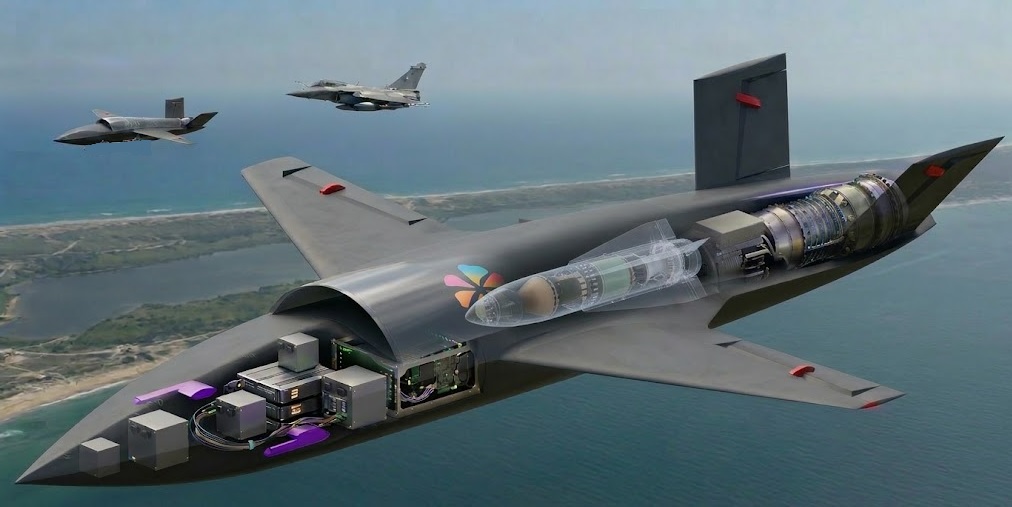
The SVAYATT-M1 features a low-observable stealth airframe constructed primarily from advanced composite materials designed to reduce radar and infrared signatures. The configuration is optimized for operations inside contested airspace, allowing the platform to approach defended targets while minimizing detection.
The aircraft incorporates a modular plug-and-play architecture, enabling rapid integration and replacement of payload modules depending on mission requirements. This design allows operators to configure the drone for different operational roles by swapping sensors, avionics packages, or mission systems without major structural modifications.
The platform is powered by an indigenous turbofan engine developed internally by Paninian, designed to deliver a high thrust-to-weight ratio while maintaining fuel efficiency suitable for extended mission profiles. Detailed specifications such as thrust output, endurance, speed, payload capacity, dimensions, and operational range have not yet been publicly disclosed.
Artificial Intelligence and Autonomous Systems
Autonomous mission planning and flight management are built around Kalman Intel, Paninian’s proprietary artificial intelligence-based mission intelligence platform. The system integrates data from multiple onboard and offboard sensors through advanced filtering algorithms and predictive data processing techniques.
The AI framework enables the drone to perform complex autonomous operations, including:
- Precise navigation in GPS-denied environments
- Adaptive threat response and real-time flight path optimization
- Terrain-following and terrain-hugging flight profiles designed to reduce detection
- Sensor fusion and real-time situational awareness
- Coordinated swarm operations involving multiple unmanned platforms
The system supports multi-agent collaboration, allowing several drones to coordinate actions during reconnaissance or strike missions. The platform’s digital flight control system incorporates redundancy layers, cybersecurity protections, and real-time data processing to maintain mission reliability in contested electromagnetic environments.
Mission Roles and Operational Capabilities
The SVAYATT-M1 has been designed as a multi-role unmanned combat platform capable of performing a wide range of mission profiles. These include:
- Intelligence, Surveillance and Reconnaissance (ISR) operations for battlefield monitoring and target identification.
- Electronic warfare (EW) missions involving electronic support measures and electronic attack capabilities.
- Air-to-ground strike operations against surface targets.
- Anti-ship missions for maritime strike operations.
- Decoy and attritable roles, where the drone can absorb risk in high-threat environments or function as a one-time strike platform if required.
The system can also perform cooperative strike missions through swarm coordination, enabling synchronized engagements involving multiple unmanned aircraft.
Integration with Indian Fighter Aircraft
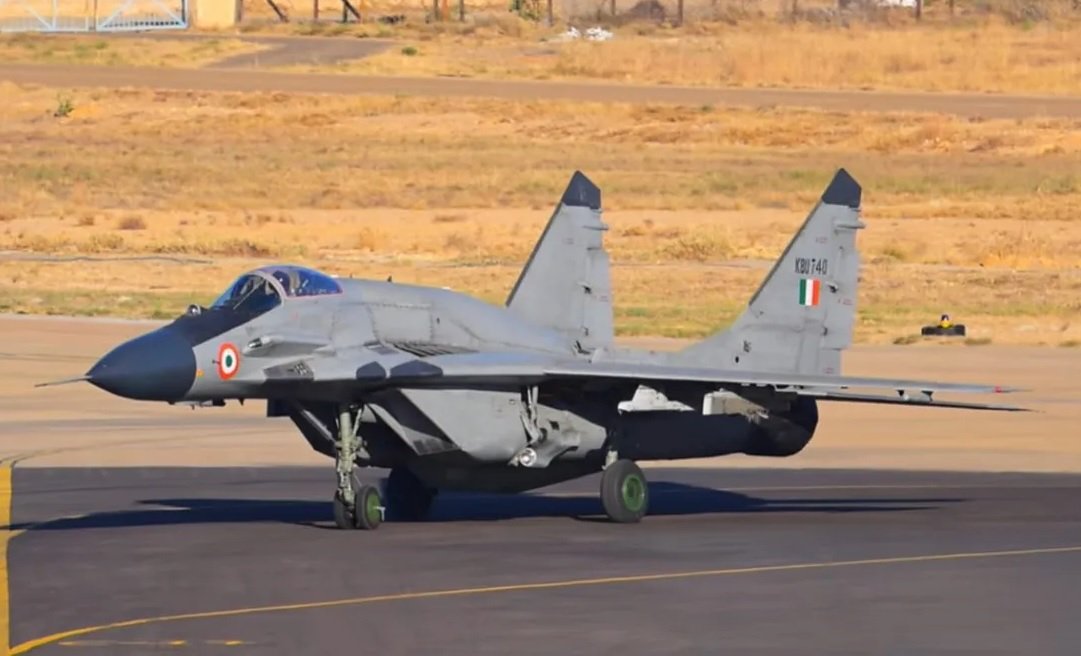
The SVAYATT-M1 has been designed to integrate with Indian Air Force fighter aircraft under Manned-Unmanned Teaming (MUM-T) concepts. The drone is intended to operate alongside platforms such as the Su-30MKI, Dassault Rafale, and the upcoming Advanced Medium Combat Aircraft (AMCA).
In these operational configurations, the drone can conduct reconnaissance, electronic warfare, or strike missions while the manned aircraft remains at a safer stand-off distance. This approach allows the drone to handle higher-risk tasks, extending the combat radius of fighter aircraft while improving situational awareness across the battlespace.
The platform is also designed to support naval operations, including launch and recovery from STOBAR-configured aircraft carriers, enabling integration with India’s carrier aviation capabilities.
Testing and Development Methodology
Development of the SVAYATT-M1 has incorporated advanced digital engineering approaches, including digital twin modeling, software-in-the-loop (SIL) simulations, and hardware-in-the-loop (HIL) testing. These testing frameworks allow engineers to evaluate flight control algorithms, sensor fusion systems, and mission planning software under simulated operational conditions before conducting physical trials.
According to the company, these methods are used to validate the drone’s autonomous systems and ensure compliance with defence aviation standards prior to flight testing.
Manufacturing Strategy and Indigenization
Paninian India has stated that the SVAYATT-M1 program is designed to achieve over 85 percent localization in its supply chain, aligning with India’s broader defence indigenization initiatives. The company aims to reduce dependence on imported components by developing domestic manufacturing capabilities for propulsion systems, avionics, flight control electronics, and composite aerostructures.
The startup’s manufacturing infrastructure in Hyderabad supports composite fabrication, structural assembly, avionics integration, and testing operations.
Production Timeline and Future Plans
Paninian India plans to continue development and validation testing of the SVAYATT-M1 through advanced simulation and prototype evaluation phases. The company has indicated that production scaling is targeted around 2027, subject to further testing, certification, and defence procurement requirements.
The SVAYATT-M1 forms part of Paninian’s broader unmanned systems portfolio, which also includes the Svayatt TD-1 target-decoy system and the PA-LW50 loyal wingman drone platform, both intended for future unmanned combat and training applications.
The development of the SVAYATT-M1 reflects ongoing efforts to introduce autonomous unmanned combat aircraft capable of operating in coordination with manned fighter jets, a concept increasingly being explored in modern air forces to extend operational reach and distribute mission risk across multiple platforms.
——— End of Article ———