TOKYO — Oki Electric Industry (OKI) has signed an agreement with Mitsubishi Heavy Industries (MHI) to supply OQQ-25 towed passive sonar systems and related equipment for the Royal Australian Navy (RAN)’s next-generation general-purpose frigates under Australia’s SEA 3000 program.
The agreement marks OKI’s first overseas defense equipment transfer project and covers the first three of Australia’s planned fleet of 11 Upgraded Mogami-class (06FFM) frigates.
First Three Frigates to Be Built in Japan
Australia selected Japan’s Upgraded Mogami-class frigate in August 2025 after evaluating the design and the performance of systems already integrated into Japan’s existing Mogami-class ships.
In April 2026, Australia finalized a multi-billion-dollar agreement with the Japanese government and Mitsubishi Heavy Industries for the construction of the first three frigates.
The initial three vessels will be built at MHI’s Nagasaki Shipyard & Machinery Works in Japan, with the first ship scheduled for delivery in December 2029. The remaining eight frigates are planned to be constructed at the Henderson Defence Precinct in Western Australia.
OQQ-25 Sonar Selected for Proven Performance
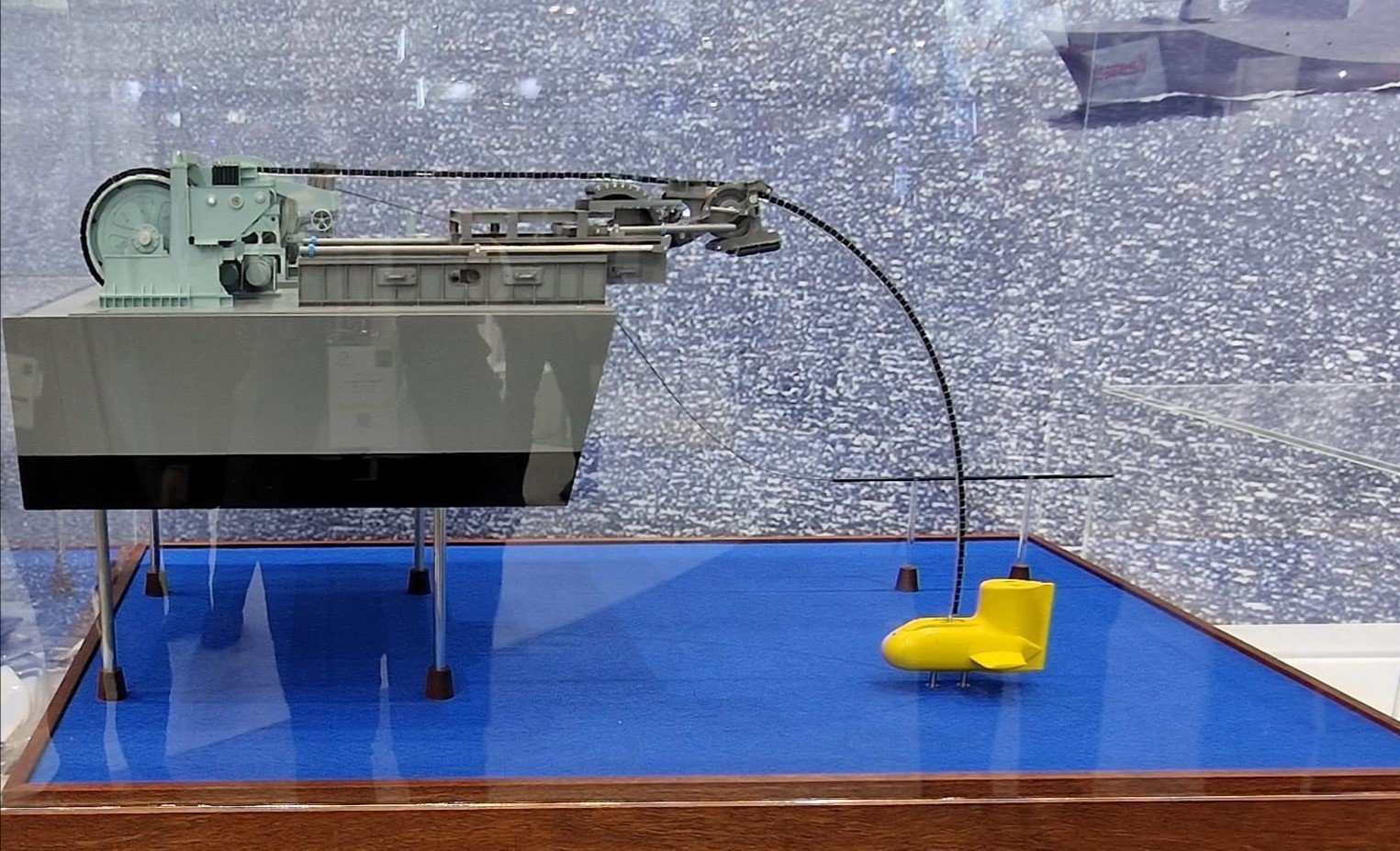
The OQQ-25 is a towed passive sonar system designed to detect submarines and other underwater targets by receiving acoustic signals through sensors towed behind the ship.
Australia selected the sonar because it is already integrated into Japan’s Mogami-class frigates and has an established operational record. Using an existing, ship-integrated system helps reduce technical risks during construction and integration.
Integration with Australia's ASW Network
While the OQQ-25 is already part of the Upgraded Mogami design, it will need to operate alongside the Royal Australian Navy’s existing anti-submarine warfare (ASW) assets.
Australia’s Hunter-class frigates will use the Thales CAPTAS-4 sonar system. Defence analysts note that the OQQ-25 will need to integrate with the RAN’s wider ASW network, including P-8A Poseidon maritime patrol aircraft and CAPTAS-4-equipped ships, particularly during multi-static anti-submarine warfare operations that involve different sonar systems working together.
Upgraded Mogami-Class Frigate Capabilities
Australia’s SEA 3000 program is intended to expand and modernize the Royal Australian Navy’s surface combatant fleet.
The Upgraded Mogami-class frigates are approximately 142 meters long and displace up to 6,200 tonnes. The ships are designed to operate with a highly automated crew of 92 sailors and officers, reach a top speed of 30 knots, and have a range of up to 10,000 nautical miles.
Each frigate will be equipped with a 32-cell vertical launch system (VLS) capable of launching surface-to-air and anti-ship missiles. The ships will also feature a flight deck designed to operate the Royal Australian Navy’s MH-60R Seahawk helicopter.
Other Key Systems for the Frigates
Alongside the sonar contract, several other major suppliers have been selected for the program.
Rolls-Royce will provide MT30 gas turbines, NEC will supply integrated mast technologies, and Raytheon’s SeaRAM close-in weapon system has also been contracted for the Australian frigates.
OKI Expands Its International Defense Business
OKI has developed underwater acoustic technologies for more than 90 years and has supplied and supported sonar systems for the Japan Maritime Self-Defense Force throughout their operational lifecycle.
The Australian contract supports the company's Management Plan 2031, which identifies defense and maritime businesses as key growth areas. OKI said it is expanding its production and overhaul capacity to meet increasing defense demand and plans to use its experience from Japan to support maritime safety and security in international markets.
The value of the contract has not been disclosed.
——— End of Article ———