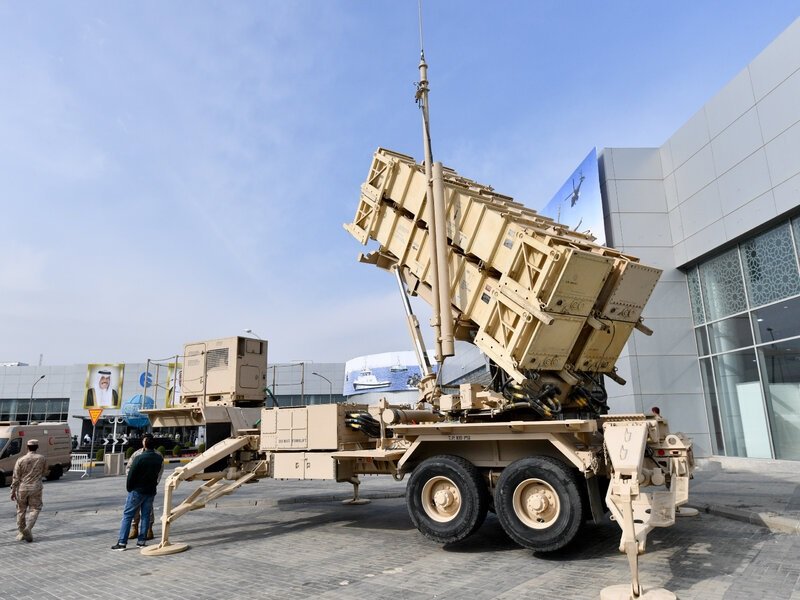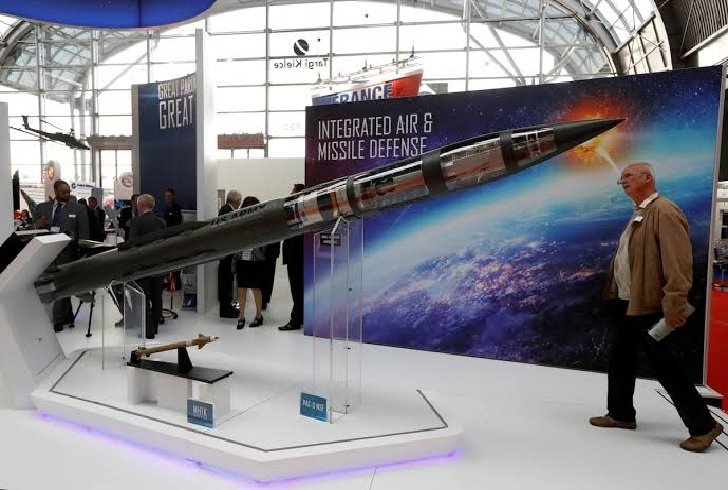
ARLINGTON, Va. — Northrop Grumman has signed two multiyear framework agreements worth more than $3 billion with the U.S. Department of War and Lockheed Martin to expand production of critical components for the Patriot Advanced Capability-3 Missile Segment Enhancement (PAC-3 MSE) and Terminal High Altitude Area Defense (THAAD) missile interceptor systems.
The agreements are designed to provide long-term production certainty for suppliers, allowing investments in manufacturing facilities, supply chains, and workforce expansion to increase the output of key air and missile defense components for the United States and allied partners.
The announcement comes as the United States continues efforts to replenish air defense inventories following extensive use of missile defense systems in recent conflicts, including Ukraine and Iran. It also follows the recent expansion of Lockheed Martin's Patriot interceptor contract, which increased to nearly $59 billion.
Two Framework Agreements
The agreements are divided into two separate programs covering components for the PAC-3 MSE and THAAD interceptor systems.
The first agreement, valued at approximately $2 billion, covers the production of solid rocket motors and ignition safety devices for the PAC-3 MSE interceptor. Under the agreement, Northrop Grumman will serve as a second source for PAC-3 MSE solid rocket motors while also increasing production of ignition safety devices. The PAC-3 MSE interceptor uses hit-to-kill technology and is powered by a dual-pulse solid rocket motor that improves interceptor performance in altitude and range.
The second agreement, worth approximately $1 billion, is a seven-year framework focused on THAAD components. Northrop Grumman said the agreement is expected to quadruple its THAAD component production while significantly increasing monthly deliveries.
According to the U.S. Department of War, the two agreements are intended to help triple PAC-3 interceptor production and quadruple THAAD production, supporting higher output of missile defense systems.
Production Capacity Expansion
To support the increased production requirements, Northrop Grumman is expanding manufacturing capacity across several U.S. facilities.
At its Utah facilities, the company is doubling solid rocket motor production capacity.
At the Allegany Ballistics Laboratory in Rocket Center, West Virginia, production capability for tactical solid rocket motors is being nearly tripled, with the expansion targeted for completion by 2027.
The company's Elkton, Maryland, facility is also increasing production capacity by 25 percent.
These investments support the U.S. Army's objective of increasing annual PAC-3 MSE missile production from approximately 600 interceptors per year to thousands of units in the near term.
THAAD Component Manufacturing
Northrop Grumman has supplied components for the THAAD interceptor program since 2002.
The company manufactures interceptor shell cores, aft bulkheads, heat shield assemblies, along with structural components including mid-body shells, muzzle covers, and rail car assemblies. Production takes place at the company's San Diego, California, facility, which uses proprietary bonding technology designed for high-temperature kinetic intercept missions and has operated for approximately 50 years.
Company and Government Statements
Ben Davies, corporate vice president at Northrop Grumman, said the company's investments in manufacturing and supply chains have positioned it to rapidly increase production.
"Our long-term investments in breakthrough manufacturing technologies and resilient supply chains let us pivot from steady production to a production surge in record time. As one of America's leading producers of solid rocket motors, we're supporting the administration's push to accelerate munitions output."
Davies said the agreements provide the production capacity needed to meet growing defense requirements.
Michael P. Duffey, Under Secretary of War for Acquisition and Sustainment, said the framework agreements are an important part of expanding missile interceptor production.
"Building the Arsenal of Freedom requires robust, dynamic supply chains at every level of the industrial base. Framework agreements with munition components suppliers like Northrop Grumman are vital to accelerating the tripling of PAC-3 and quadrupling of THAAD interceptor production."
Long-Term Investment in Missile Production
Northrop Grumman said it has invested more than $2 billion in munitions technologies and manufacturing facilities since 2019, including more than $1 billion dedicated to solid rocket motor production.
Over more than 70 years of propulsion manufacturing, the company has delivered more than 1.3 million solid rocket motors. Its portfolio also includes fixed ammunition, warheads, and fuzes supplied to all branches of the U.S. military.
The Department of War said the agreements also reflect a broader acquisition strategy that directly engages key component suppliers alongside prime contractors. The approach is intended to provide manufacturers with long-term demand certainty, enabling investments in production capacity, tooling, facility upgrades, and workforce development.
The initiative involves the Munitions Acceleration Council, the Economic Defense Unit, the Missile Defense Agency, and the Office of the Under Secretary of War for Acquisition and Sustainment as part of efforts to strengthen the U.S. missile defense industrial base.
——— End of Article ———