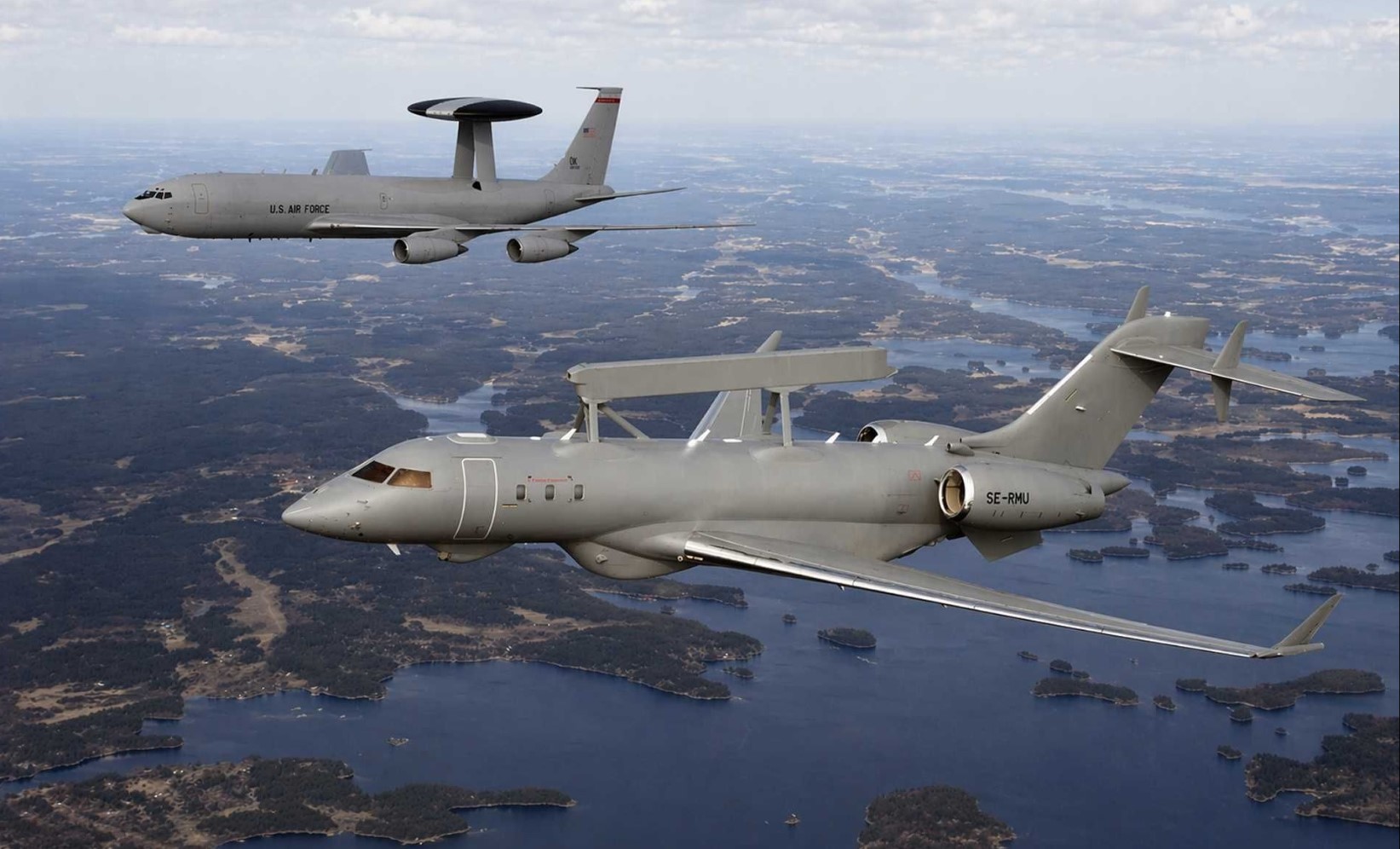
ANKARA, Turkey — According to a Reuters report, NATO will replace its fleet of Boeing E-3A Airborne Warning and Control System (AWACS) aircraft with Sweden's Saab GlobalEye, with the decision set to be announced at the alliance's summit in Ankara on July 7-8.
Four sources familiar with the discussions said NATO has selected the Swedish platform after reviewing options to replace the alliance's aging airborne surveillance fleet. A NATO spokesperson confirmed that a decision on the AWACS replacement will be announced during the summit but declined to provide further details. Saab also declined to comment.
The alliance operates 14 Boeing E-3A Sentry aircraft based at Geilenkirchen Air Base in Germany. The aircraft entered NATO service in 1982 and have provided airborne surveillance, command and control, and airspace monitoring for more than four decades. In recent years, they have flown surveillance missions along NATO's eastern flank following Russia's invasion of Ukraine.
Although the fleet has received upgrades to extend its service life until around 2035, the aircraft are built on Boeing 707 airframes that have become increasingly expensive to maintain. NATO has also been seeking improved capability against low-flying cruise missiles, drone swarms and targets with reduced radar signatures over land and sea.
The alliance had previously considered Boeing's E-7 Wedgetail to replace the E-3 fleet. That plan changed after the Pentagon dropped its 2025 proposal to buy 26 E-7 aircraft and shifted its focus toward satellite-based tracking. U.S. Defense Secretary Pete Hegseth later told Congress the Pentagon is seeking to restore funding for the E-7 program, but NATO moved ahead with the Saab option.
The GlobalEye is built on the Bombardier Global 6000/6500 business jet platform instead of a large commercial airliner. The smaller aircraft consumes less fuel, requires lower maintenance and operates with a smaller crew because of higher onboard automation.
Its primary sensor is Saab's Erieye Extended Range (ER) active electronically scanned array (AESA) radar mounted in a fixed "ski-box" configuration above the fuselage. The radar tracks air, land and maritime targets at the same time, including low-flying threats and objects with smaller radar signatures.
Flying at about 35,000 feet, the aircraft can detect targets at ranges exceeding 450 to 550 kilometers. It has an endurance of more than 11 hours and can operate from runways of about 6,500 feet. GlobalEye entered operational service in 2018.
NATO has not disclosed how many aircraft it intends to buy. Sources said the final order could depend on whether the alliance chooses a version equipped with aerial refueling capability, allowing the aircraft to remain on station for longer periods during missions similar to those flown near Ukraine.
Geilenkirchen Air Base will remain NATO's airborne surveillance hub and could eventually operate what would be the world's largest GlobalEye fleet.
The procurement will direct the contract to Sweden's Saab rather than a U.S. defense manufacturer. Reports of the pending agreement pushed Saab shares up 6.3%.
The decision follows Canada's recent order for six GlobalEye aircraft as part of its effort to modernize its airborne surveillance capability while reducing reliance on U.S. defense suppliers.
NATO is expected to release additional details on the procurement during the Ankara summit. Contract value, delivery schedule and the number of aircraft have not been announced.
Source: Reuters.
——— End of Article ———