SEATTLE — Boeing has received an $11,381,402 cost-plus-fixed-fee order from the U.S. Department of Defense to develop, test, and deliver updated flight control software for the P-8A Poseidon maritime patrol aircraft. The award, announced in a U.S. Department of Defense contracts notice dated July 31, 2026, supports continued modernization of the aircraft's flight-critical systems.
The contract covers the development of updated aircraft-loadable black label software for the Enhanced Digital Flight Control System (EDFCS), which manages the P-8A's autopilot functions. Black label software refers to flight-critical software that has completed the military's highest level of safety certification. The software package will be installed as an operational retrofit on aircraft already in service.
Software Update to Correct Six Autopilot Issues
According to the contract notice, the updated software will resolve deficiencies identified during software design description, developmental testing, and operational testing of the P-8A autopilot. The corrections are intended to improve the aircraft's automated flight control performance.
The update addresses six specific issues:
- Altitude acquire problems, affecting the aircraft's ability to climb or descend to a selected altitude and maintain it.
- Autopilot placard speed exceedance, caused by delayed throttle retard, which can allow the aircraft to exceed its maximum certified operating speed.
- Pitch oscillations during airspeed climbs and descents.
- Unexpected autopilot mode switching from altitude acquire mode to vertical speed mode after a speed command change.
- Slow auto-throttle response, reducing how quickly engine power adjusts to pilot commands.
- Bank limit margin tuning, refining the aircraft's bank angle during automated turns.
The Department of Defense stated that these deficiencies were identified through the normal developmental and operational testing process. The contract announcement does not mention any accidents or immediate safety concerns associated with the identified issues.
P-8A Poseidon Remains a Key Maritime Patrol Aircraft
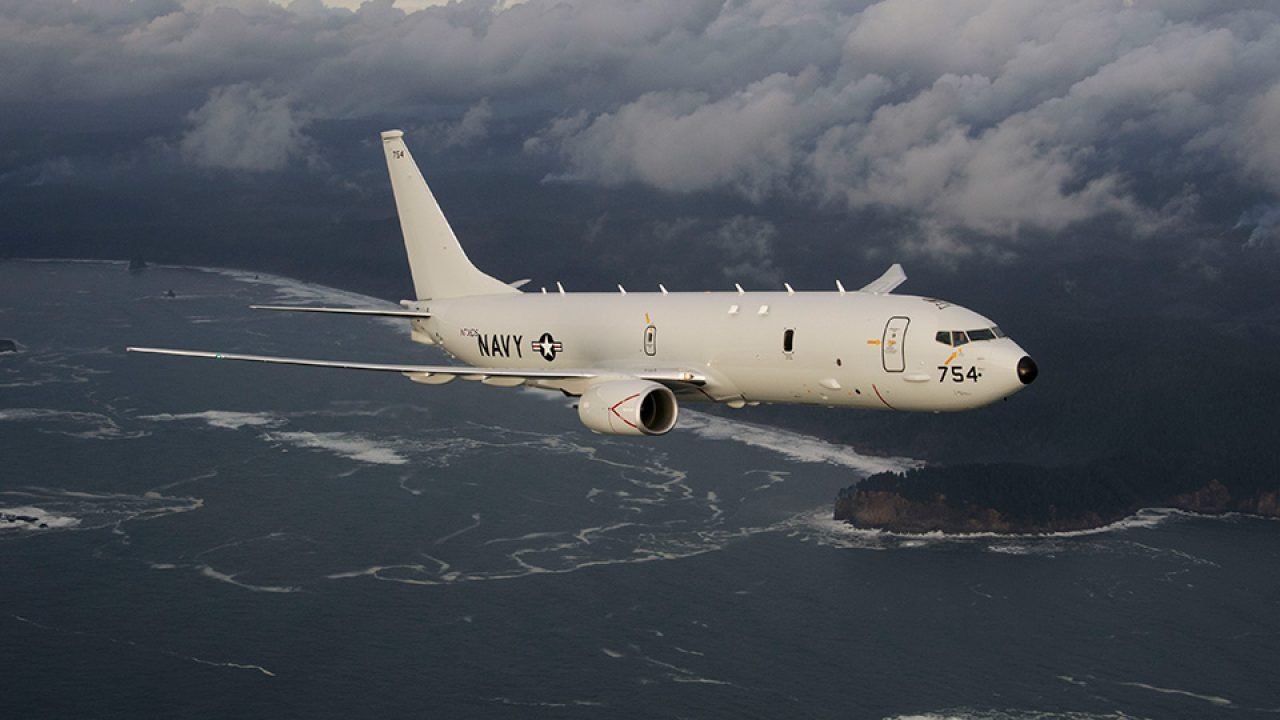
The P-8A Poseidon is a militarized version of the Boeing 737-800ERX and serves as the U.S. Navy's primary maritime patrol and anti-submarine warfare aircraft. It was developed to replace the aging P-3 Orion fleet.
The aircraft is equipped with an open-systems mission computing architecture that integrates radar, acoustic sensors, electronic support measures, and infrared sensors into a single tactical system. Operated by a nine-person crew, the P-8A is designed to detect, track, and engage submarines and surface vessels using torpedoes, anti-ship missiles, and other weapons carried in its internal weapons bay and on external wing pylons.
International Fleet Supports Continued Modernization
The P-8A is operated by the U.S. Navy, Royal Australian Air Force, Royal Air Force (United Kingdom), and the Royal Norwegian Air Force. Other operators and customers include India (P-8I variant), New Zealand, the Republic of Korea, Germany, and Canada.
As the international fleet continues to expand, software updates such as this one help maintain common flight control standards and support ongoing modernization across partner nations.
Contract Details
All development, testing, and integration work will be performed at Boeing's facilities in Tukwila, Washington, with completion expected by February 2028.
The $11,381,402 order is funded by the Royal Australian Air Force, with funding obligated at the time of award. According to the contract notice, none of the funds will expire at the end of the current fiscal year.
The order was not competed and was issued by Naval Air Systems Command (NAVAIR) in Patuxent River, Maryland, under a previously awarded basic ordering agreement.
The contract provides Boeing with approximately two years to complete development, testing, and formal delivery of the updated flight control software package for the P-8A Poseidon fleet.
——— End of Article ———