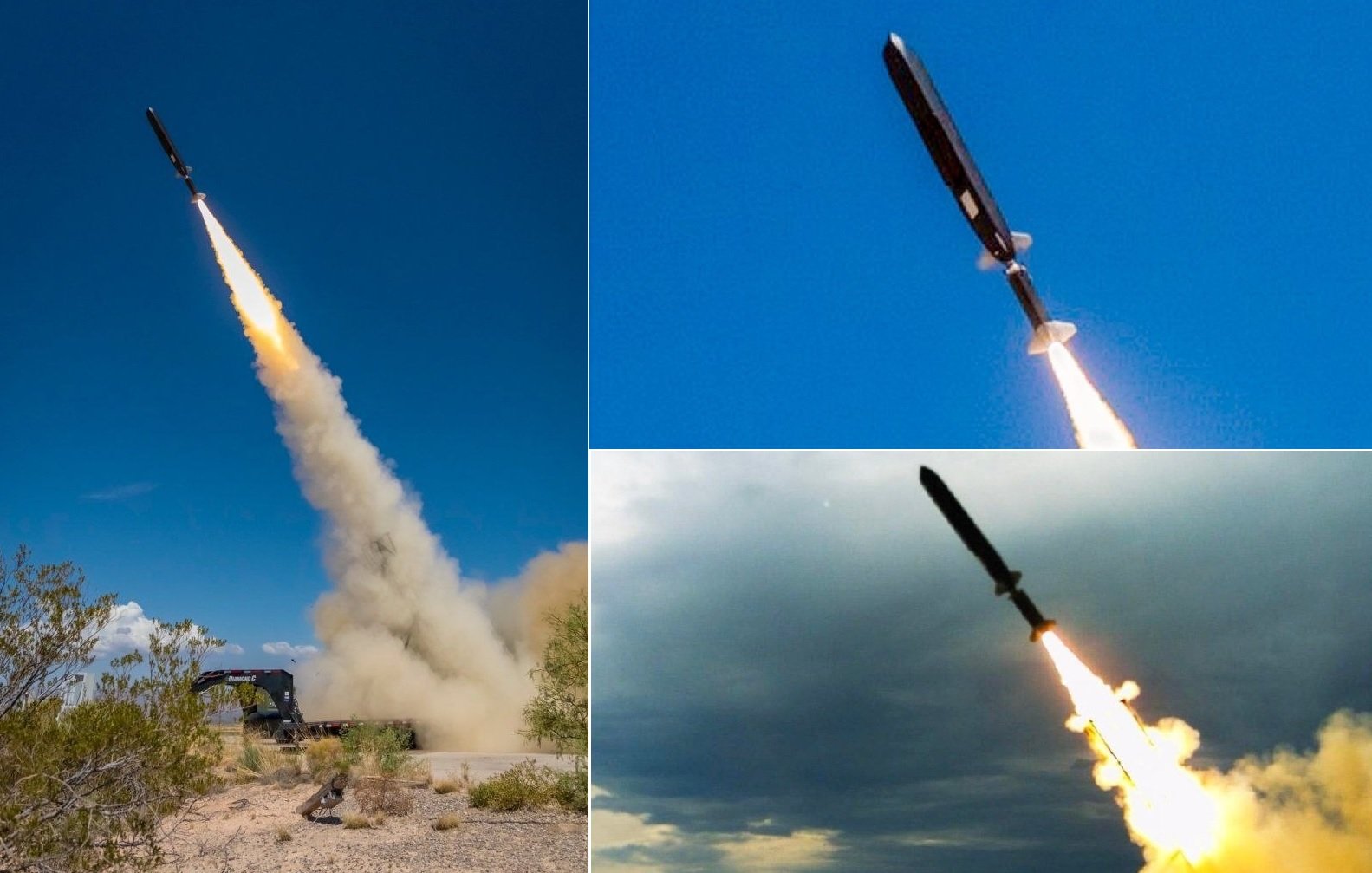
MBDA, Europe's leader in missile technology, has made a significant leap in air defence capabilities with the successful test firing of its groundbreaking Aster B1NT (New Technology) interceptor. This pivotal test, conducted on October 8, 2024, at the Biscarrosse DGA missile testing facility in France, represents a major advancement in European defence systems. The event was overseen by the French General Directorate of Armaments (DGA) and attended by high-ranking officials, including French Minister of Armed Forces and Veteran Affairs Sébastien Lecornu. Representatives from Italy and the UK, both key partners in the Principal Anti-Air Missile Systems (PAAMS) cooperation, were also present, underscoring the multinational collaboration driving the Aster programme.
A Complex Test in a Realistic Scenario
The Aster B1NT test was not just a routine missile firing; it simulated a highly complex air defence scenario. In this test, the missile had to differentiate between friendly and enemy aircraft, a critical ability in real-world defence operations. It successfully identified and neutralised the enemy target, demonstrating its agility, precision, and advanced technological edge. What sets the Aster B1NT apart from other air defence missiles is its remarkable manoeuvrability, thanks to its aerodynamic design and thrust vector control. This allows the missile to make rapid directional changes mid-flight, making it especially useful in high-stress, fast-evolving combat situations where split-second decisions can determine success or failure.
Aster B1NT: The Evolution of a Proven Missile Family
The Aster B1NT is the latest innovation in the Aster missile family, a missile system with a proven track record of success. With over 2,000 missiles delivered and more than 250 successful test firings, the Aster family has played a critical role in European defence for years. It has been used in various scenarios, including countering UAVs and ballistic missiles, and was recently employed in the Red Sea to defeat asymmetric threats, marking the first time the Aster system was used in such a context.
This new iteration, the Aster B1NT, is the product of French-Italian cooperation and is set to be a cornerstone of European defence well into the 2060s. One of its most significant upgrades is its state-of-the-art Ka-band radar seeker, which enhances its ability to track and engage high-speed and manoeuvrable targets, including hypersonic missiles. The missile also features upgraded electronics and advanced pyrotechnic systems that increase its effectiveness against emerging high-end threats.
Integration into Cutting-Edge Defence Systems
The Aster B1NT will be integrated into the SAMP/T NG (New Generation) ground-based air defence system, a flagship project for European military forces. Both the Italian and French armed forces are set to deploy this system, which offers a multi-layered defence approach. SAMP/T NG can handle a wide range of threats, from drones and aircraft to ballistic and cruise missiles. It is also designed with an open architecture, allowing it to seamlessly integrate with NATO’s air and missile defence systems, ensuring that it remains a key element of Europe’s defence strategy in the years to come.
In addition to its ground-based applications, the Aster B1NT will be used by the naval forces of France, Italy, and the UK under the PAAMS program. In the UK, it is known as Sea Viper and is already a critical component of the Royal Navy’s air defence system. This versatility makes the Aster B1NT not just a missile, but a linchpin in a broader, multi-domain European defence framework.
A Future-Proof Defence Solution
With its cutting-edge features, the Aster B1NT is designed to meet the challenges of modern warfare, including the growing threat of hypersonic weapons, which are capable of travelling at speeds exceeding Mach 5. As such, it represents not just an evolution of the Aster missile family, but a significant leap forward in air and missile defence technology. The system's ability to scale and adapt to new threats ensures that Europe remains well-defended against a wide range of adversaries, whether they are state actors or more unconventional forces.
The success of the Aster B1NT test underscores MBDA's commitment to pushing the boundaries of missile technology and enhancing Europe's defence posture. With continued development and integration into advanced systems like the SAMP/T NG, the Aster B1NT will serve as a vital part of Europe’s defence infrastructure for decades to come. As threats evolve, so too will the Aster missile family, ensuring that Europe remains at the forefront of global air defence innovation.
A Stronger Europe through Innovation
MBDA’s advancements with the Aster B1NT highlight the importance of collaboration in European defence, bringing together the expertise and resources of multiple nations. This multinational approach ensures that Europe can field cutting-edge technologies capable of meeting future challenges head-on. The successful Aster B1NT test is not just a milestone for MBDA, but a testament to the power of European cooperation in maintaining security and peace across the continent.
The Aster B1NT and systems like SAMP/T NG represent the future of integrated, multi-layered air defence, providing Europe with the tools it needs to counter the increasingly sophisticated and unpredictable threats of modern warfare.
——— End of Article ———