WASHINGTON, — April 10, 2026 : Lockheed Martin has been awarded a $4.76 billion firm-fixed-price contract by the United States Army for the production of Patriot Advanced Capability-3 Missile Segment Enhancement (PAC-3 MSE) interceptors, along with associated hardware, equipment, technical planning, management, and manufacturing activities. The contract is scheduled for completion by June 30, 2030.
The award was issued by the Army Contracting Command at Redstone Arsenal, Alabama, which will oversee execution across a distributed industrial network.
Funding Structure and Foreign Military Sales Contribution
Of the total contract value, $264.96 million has been obligated at the time of award using fiscal year 2026 Army missile procurement appropriations. The remaining $4.49604 billion—approximately 94 percent of the total—is funded through the U.S. government’s Foreign Military Sales (FMS) program.
This funding composition indicates that international partner demand is the primary driver behind the current production expansion. Under the FMS framework, allied nations procure defense systems through the U.S. Department of Defense acquisition process, enabling standardization, supply chain oversight, and interoperability with U.S. forces.
Production Scale-Up and Industrial Framework
The contract supports a broader seven-year framework agreement announced in January 2026 between Lockheed Martin and the U.S. government. The initiative aims to increase annual PAC-3 MSE production capacity from approximately 600 interceptors to about 2,000 by the end of 2030.
Lockheed Martin has already expanded output significantly, reporting a production increase of more than 60 percent over the previous two years. In 2025 alone, the company delivered 620 PAC-3 MSE interceptors.
Work under the new contract will be carried out across 15 locations in the United States, including Huntsville, Alabama; Clearwater, Lake Mary, Ocala, and Pinellas Park, Florida; East Aurora, New York; Rocket Center, West Virginia; Vergennes, Vermont; Hollister, California; Wichita, Kansas; Camden, Arkansas; Chelmsford, Massachusetts; Grand Prairie and Lufkin, Texas; and Archbald, Pennsylvania. The distributed production model is intended to reduce bottlenecks and improve throughput across the supply chain.
In parallel, Boeing is supporting increased production of PAC-3 MSE seekers under a separate framework agreement announced in April 2026. Additional supply chain contributions include international partners such as Diehl Defence, Tecnobit-Grupo Oesía, and Sener.
System Capabilities and Technical Characteristics
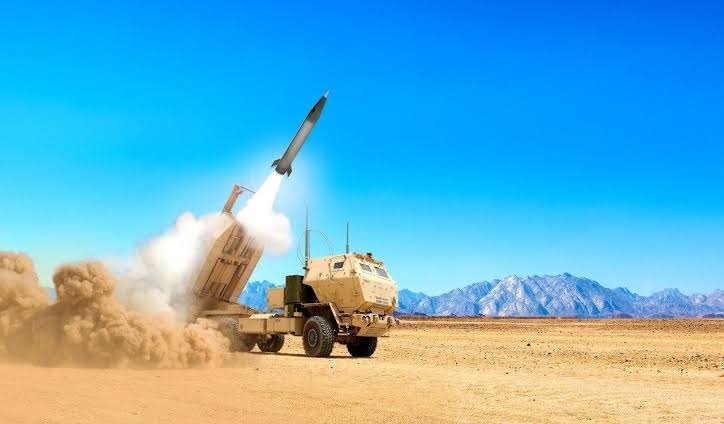
The PAC-3 MSE interceptor is designed as a hit-to-kill system that destroys incoming threats through direct body-to-body impact rather than using a blast-fragmentation warhead. It incorporates a two-pulse solid rocket motor, which provides improved altitude and range performance compared to earlier PAC-3 variants, including the Cost Reduction Initiative (CRI) model.
The interceptor is capable of engaging a range of threats, including tactical ballistic missiles, cruise missiles, and other advanced aerial systems. It is compatible with the M903 launcher, which can carry up to 12 PAC-3 MSE interceptors or a mixed loadout combining PAC-3 MSE and PAC-3 CRI missiles. This configuration increases engagement flexibility and enhances the system’s ability to manage multiple simultaneous threats.
Operationally, the PAC-3 MSE can reach speeds of approximately Mach 4.5, with an engagement range of up to 160 kilometers and a maximum altitude of approximately 24 kilometers, depending on mission parameters.
Integration with IBCS and Networked Operations
The interceptor is integrated with the U.S. Army’s Integrated Air and Missile Defense Battle Command System (IBCS), which enables operation within a distributed sensor-shooter architecture. This integration allows launchers to utilize targeting data from a wider network of sensors rather than relying solely on organic radar inputs.
The U.S. Army conducted its first successful PAC-3 MSE engagement using IBCS in 2021, demonstrating the system’s ability to operate within a networked battlespace and improve engagement flexibility.
International Demand and Recent FMS Cases
Recent Foreign Military Sales approvals highlight sustained global demand for the PAC-3 MSE system. In January 2026, the U.S. Department of State approved a potential $9.0 billion sale to Saudi Arabia, which includes 730 PAC-3 MSE interceptors.
In addition, Denmark’s Patriot acquisition program incorporated PAC-3 MSE interceptors as part of an IBCS-enabled configuration. Other operators of the system include Bahrain, Poland, and Ukraine, reflecting its adoption across a growing number of allied air and missile defense networks.
Industrial Base and Supply Chain Expansion
The production expansion aligns with broader U.S. efforts to strengthen the defense industrial base. The initiative includes investments in component-level manufacturing capacity and supply chain resilience to reduce lead times and increase overall missile availability.
By leveraging both domestic and allied funding, the program supports sustained production growth while maintaining interoperability across partner nations. The approach is intended to ensure that both U.S. forces and allied operators have access to sufficient interceptor inventories in response to evolving threat environments.
The current contract does not specify the exact number of PAC-3 MSE interceptors to be produced. The U.S. government will continue to monitor production progress as part of ongoing efforts to meet increasing demand for integrated air and missile defense capabilities.
——— End of Article ———