Mysterious News ,World :- In the heart of the Amazon rainforest, scientists have unveiled a remarkable discovery using advanced laser technology. A sprawling network of ancient structures and pathways, dating back 2,500 years, has been uncovered beneath the thick Amazonian canopy. This finding represents the earliest and largest agricultural civilization ever found in South America's dense rainforest.
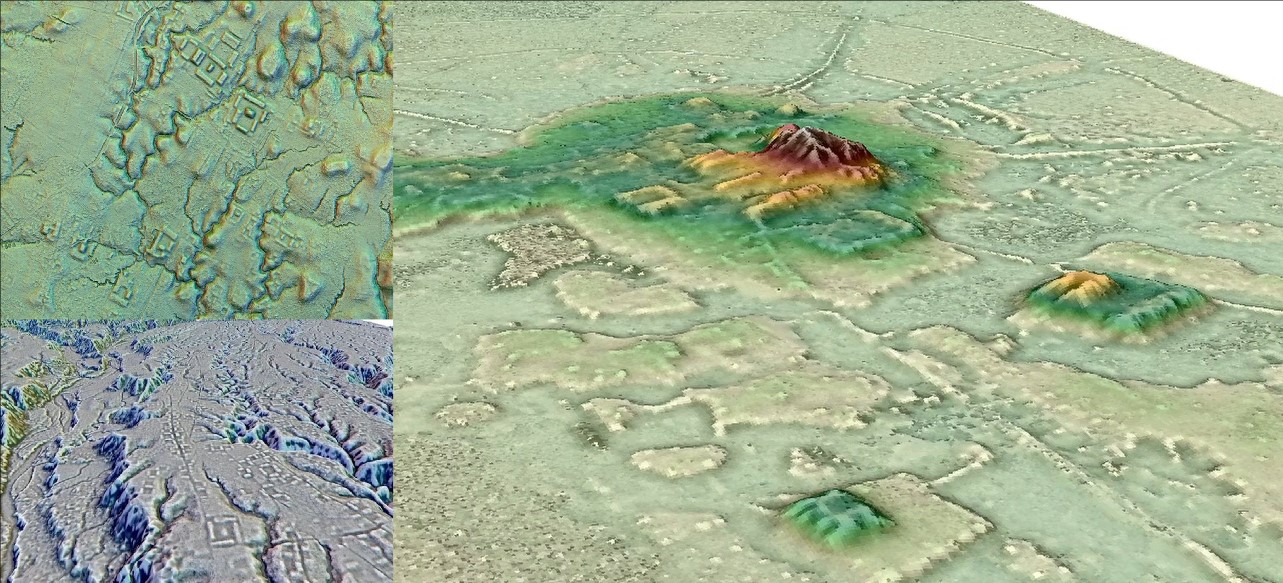
For decades, archaeologists have been studying the Upano Valley site, nestled in the eastern Andes. However, it wasn't until the use of airborne lidar (light detection and ranging) technology that the true extent of this ancient civilization came to light. Lidar, which involves bouncing thousands of infrared laser pulses off the landscape, revealed hidden structures beneath the vegetation.
Lead researcher Stéphen Rostain, an archaeologist and director of research at the French National Center for Scientific Research (CNRS), expressed how lidar provided a new perspective. "On foot, you have trees in the way, and it's difficult to see what's actually hidden there."
The site, spanning approximately 230 square miles, was occupied from around 500 B.C. to sometime between A.D. 300 and 600, as revealed by archaeological excavations. The pre-Hispanic Kilamope and Upano cultures, along with the later Huapula culture, created this intricate settlement in the Upano Valley.
Lidar images showcased over 6,000 rectangular earthen platforms, plazas, and interconnected mounds, all linked by an extensive grid of straight roadways and footpaths. These roadways served not only to connect various parts of the site but also extended beyond, connecting the entire community.
Researchers also identified nearly 15 distinct settlement sites, each varying in size and structure. Some featured massive mounds, reaching up to 492 feet long and standing 26 feet high, highlighting the complexity and grandeur of the site.
The site's size and complexity drew comparisons to similar Maya urban systems in Central America. The study authors emphasized the significance of this discovery, urging a reevaluation of preconceptions about the Amazonian world and advocating for an inclusive and participatory approach to understanding its environmental and cultural heritage.
——— End of Article ———