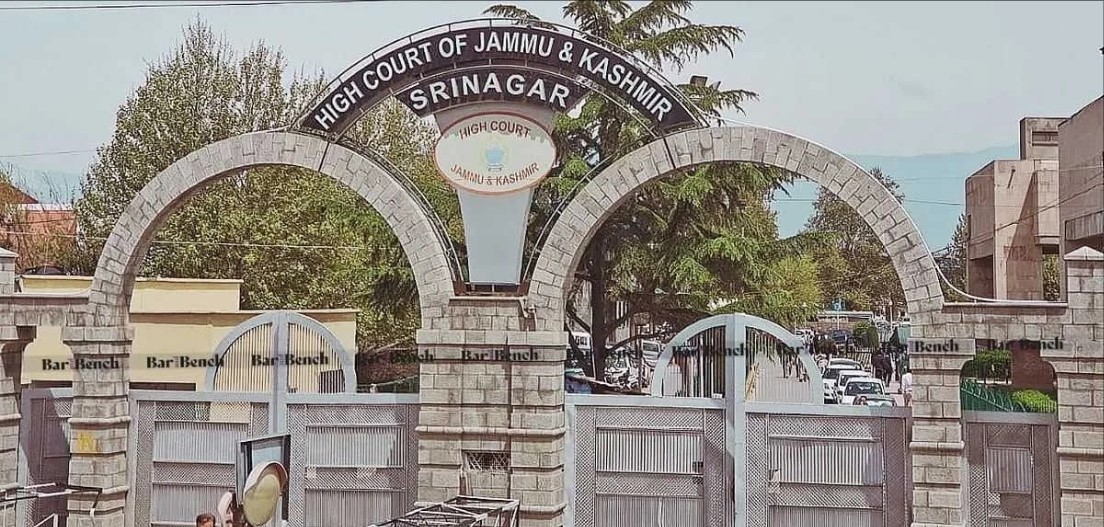
Defense News ,India :- In a landmark judgment, the Jammu and Kashmir (J&K) and Ladakh High Court have issued a significant directive to put an "end to the discrimination" against Pakistan-occupied Jammu and Kashmir (PoJK) refugees of 1947 who have settled outside the state of Jammu and Kashmir. The judgment, delivered by Justice Rahul Bharti, deemed the discrimination against these refugees as a result of "discretion engineered discrimination" by successive governments in the former state.
The High Court's ruling mandates the Central government to treat the 5,300 displaced families of PoJK from 1947, currently residing outside J&K, on par with the 26,319 displaced families settled within the erstwhile state. Furthermore, the court has urged the government to formulate a one-time settlement rehabilitation package for these families. The directive emphasizes the need for equal treatment and entitlements for both categories of displaced families, ensuring that justice is served.
Justice Rahul Bharti expressed poignant sentiments, stating, "Alike in pain and deprivation but disliked in relief and rehabilitation," highlighting the disparity in addressing the suffering and displacement experienced by these families. He underscored that while the natural course of time has eased the pain and deprivation faced by these families, lawmakers and authorities have failed to address their plight, compounding their suffering for generations.
The court acknowledged that the transformation of the constitutional status of Jammu and Kashmir, brought about by the Jammu and Kashmir Reorganization Act, 2019, has paved the way for the relief sought by the petitioners. It emphasized that the government's response has shifted from passive to active, showing willingness to correct past injustices by extending one-time settlement benefits equally to the 5,300 displaced families of PoJK from 1947.
Prior to the J&K Reorganization Act, the court noted, the constitutional relationship between the state and the Union of India limited the latter's involvement in decision-making. However, with the reorganization act, the government of India, through the Ministry of Home Affairs, has demonstrated a commitment to addressing the grievances of the PoJK refugees and rectifying historical injustices.
The High Court critically examined the Jammu and Kashmir Displaced Persons (Permanent Settlement) Act, 1971, which, by a mere textual definition, legally disqualified the 5,300 displaced families who settled outside J&K. The court suggested that this legislative exclusion reflected a deliberate intent by the then governments in J&K to keep these families out of relief and rehabilitation packages, asserting their decision-making autonomy.
Highlighting the political motive behind the exclusion, the court affirmed that there was no legal basis for keeping the displaced families settled outside J&K from the benefits of relief and rehabilitation packages. The court commended the current alignment of the Government of India and the Union Territory of Jammu and Kashmir in intending to extend benefits to these families and their successors.
Moreover, the court noted that out of the allocated Rs 2,000 crore, only Rs 1,457 crore had been utilized, leaving an unutilized amount within the prescribed cap. This remaining fund could be directed towards addressing the needs of the other displaced families of PoJK from 1947, further emphasizing the feasibility and urgency of extending support to these marginalized communities.
The High Court's historic ruling represents a significant step towards rectifying historical injustices faced by PoJK refugees of 1947 settled outside Jammu and Kashmir. The judgment underscores the importance of equal treatment, justice, and rehabilitation for all displaced families, irrespective of their current residence, marking a crucial milestone in the pursuit of a fair and inclusive society.
——— End of Article ———