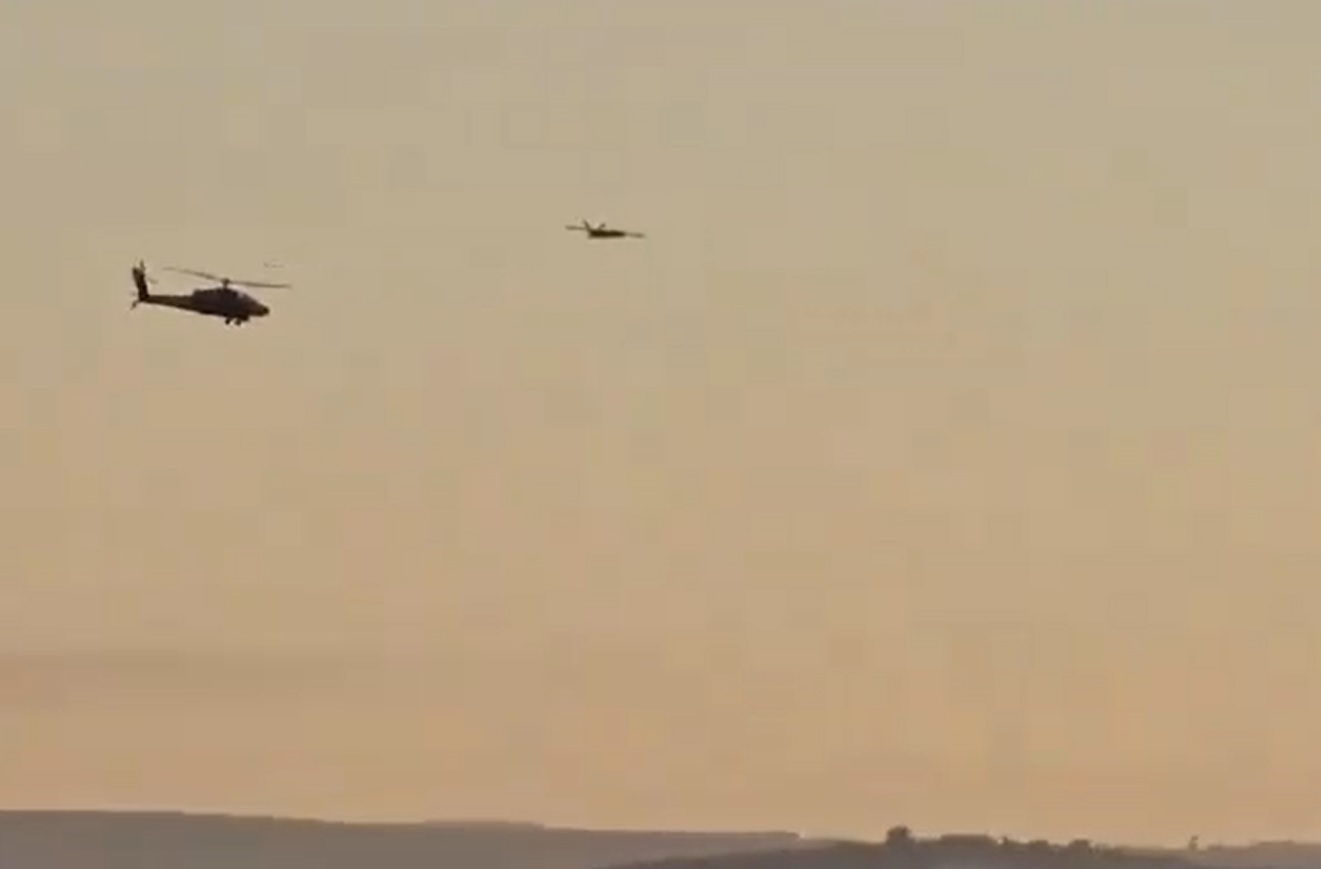
In a recent incident that has raised questions about the effectiveness of Israel’s air defense capabilities, an Israeli AH-64 Apache helicopter failed to intercept a kamikaze drone launched from Lebanon. The drone managed to breach Israeli airspace, evading the advanced military systems and reaching Caesarea, where it struck near the residence of Prime Minister Benjamin Netanyahu. Fortunately, no injuries were reported, but the event sent shockwaves through the Israeli security establishment.
The Israeli Defense Forces (IDF) revealed that the drone was one of three launched from Lebanon. The other two drones were successfully intercepted and destroyed before they could pose a threat. However, the third drone managed to slip past the Israeli Apache, despite footage showing the helicopter chasing the hostile drone over Akko, a city in northwestern Israel. The drone continued its path toward Caesarea and struck a structure in a largely symbolic area close to the prime minister’s home, sparking immediate security alerts.
The failed interception has brought into focus the challenges of dealing with small, agile drones. The drone in question was identified as a Sayyad 107, a type frequently linked to Hezbollah. This drone, despite its small size, has proven to be a formidable adversary in modern warfare. Its ability to fly low and evade radar detection makes it a difficult target for even advanced defense systems. The Sayyad 107 is equipped to change altitude and direction frequently, which complicates the targeting process for interceptor aircraft like the Apache.
While the IDF has had a strong track record in intercepting incoming threats, this failure has sparked concerns, especially considering the location of the strike. Caesarea is home to Israel’s political elite, and the proximity of the drone strike to Prime Minister Netanyahu’s residence only heightens the seriousness of the incident. Following the strike, the Glilot base near Herzliya, which houses intelligence services such as Mossad and cyber intelligence units, triggered alarms, though the Israeli military assured the public that there was no ongoing threat of further drone infiltrations at the time.
Security forces swiftly responded to the situation in Caesarea, deploying heavily around the area. Roads near the prime minister's residence were closed, security barriers were erected, and emergency services were placed on high alert. The Israeli police also searched the area thoroughly to ensure there were no remnants of explosive materials, while reinforcing guard posts as a preventive measure.
The increasing use of kamikaze drones by groups like Hezbollah is a growing concern for Israel. These drones are relatively inexpensive yet capable of causing significant damage. The Sayyad 107, in particular, has been involved in prior attacks, including a strike on a Golani Brigade training base in Binyamina, south of Haifa. With its ability to bypass even advanced systems like Israel’s Iron Dome or Apache helicopters, the Sayyad 107 represents a new kind of challenge in the battlefield.
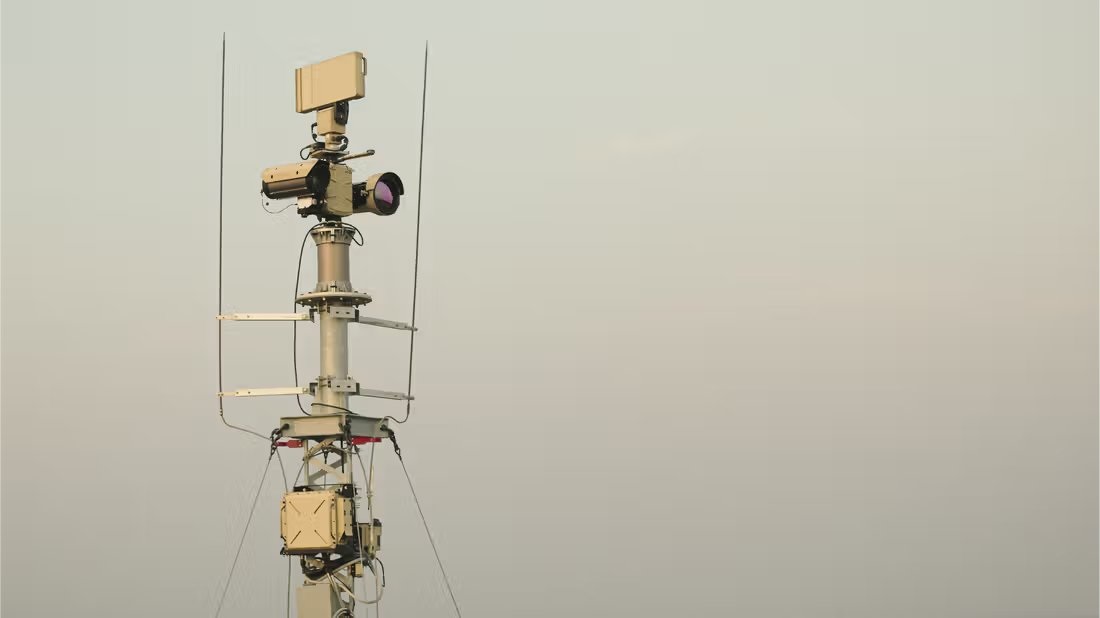
The AH-64 Apache helicopter, one of the world’s most powerful attack helicopters, is equipped with advanced radar systems and weaponry, including AGM-114 Hellfire missiles and Hydra 70 rockets. However, its failure to neutralize the drone points to the evolving nature of asymmetric warfare, where smaller, harder-to-detect drones can evade traditional defense systems.
This incident highlights the need for ongoing advancements in Israel's air defense infrastructure. The IDF may need to refine its approach to countering these smaller, more agile drones. Advanced radar systems and better-integrated aerial defenses will be crucial in ensuring that such incidents are prevented in the future.
The situation with Hezbollah’s increasing reliance on drones adds another layer of complexity to Israel's security challenges. As technology advances, so do the capabilities of non-state actors who now wield the power to disrupt security with cost-effective and precise unmanned aerial systems.
The event, though not resulting in casualties, has served as a stark reminder of the vulnerabilities even the most well-defended nations face in the modern age of warfare. It is clear that Israel, while already at the forefront of military technology, must adapt quickly to these emerging threats.
——— End of Article ———