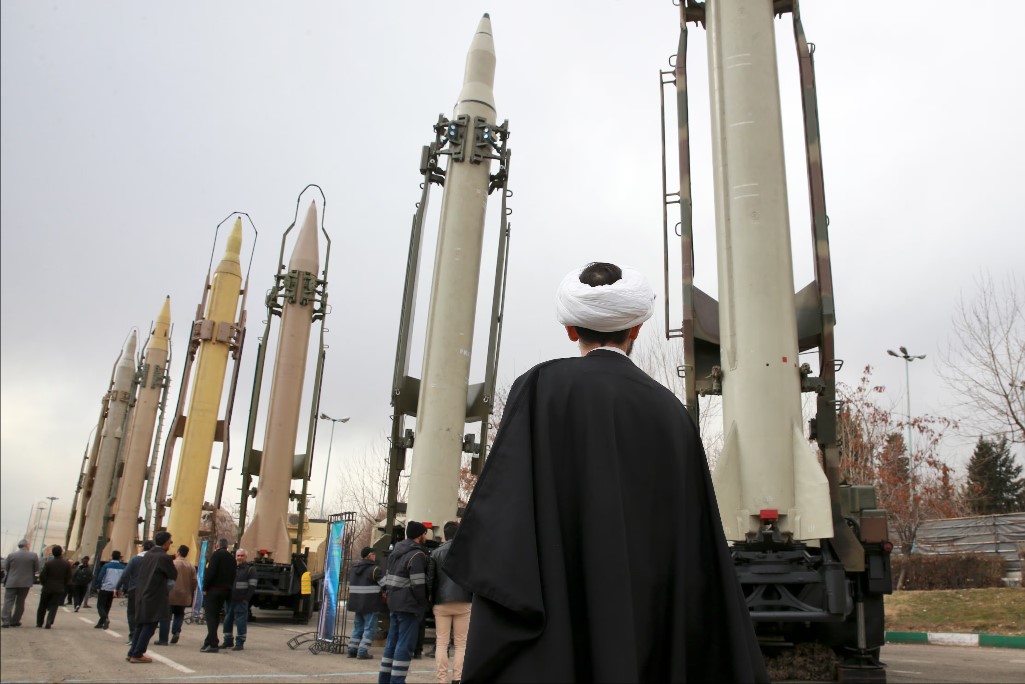
In a move that signals Iran’s growing military ambitions, the country’s government has announced plans to triple its defense budget, marking a dramatic increase of nearly 200%. This comes as tensions with Israel have reached unprecedented levels following a series of tit-for-tat missile strikes and escalating military confrontations.
The Iranian government's proposed defense budget expansion aims to bolster a wide array of military assets, including advanced missile technology and aerial defense systems. As it stands, Iran’s current defense allocation is approximately $10.3 billion, a stark contrast to regional adversaries like Saudi Arabia, whose budget is about $70 billion, and Turkey at $40 billion. Should the proposal pass parliament as anticipated, this would result in a substantial military infusion that could reshape Iran's strategic posture across the Middle East.
Military Might and Missile Capabilities
The Iranian military, one of the largest in the Middle East, boasts nearly 610,000 active personnel and 350,000 reserves, bringing the total to almost one million troops. Besides sheer manpower, Iran has poured resources into missile development and aerospace technology. The Islamic Republic’s arsenal includes an extensive range of precision-guided munitions, ballistic missiles, and drone systems. These capabilities have made the Iranian military a formidable player, even without matching the financial resources of its wealthier neighbors.
Iran’s missile technology is a particular point of pride and a cornerstone of its deterrence strategy. The country has developed a sophisticated system of long-range rockets and ballistic missiles, many of which can target key regional foes, including Israel and U.S. bases in the Persian Gulf.
Escalating Strikes and Retaliation with Israel
The announcement of the budget increase coincides with a dangerous cycle of conflict between Iran and Israel, highlighted by a series of missile exchanges over the past year. In October, Iran launched over 180 ballistic missiles at Israel following the assassination of Hezbollah leader Hassan Nasrallah and Hamas commander Ismail Haniyeh. Israel's defense systems managed to intercept most of these missiles, but the provocations did not go unanswered. Israel struck back with Operation Days of Repentance, targeting Iranian military installations and missile production sites, further deepening the crisis.
The April attacks also saw fierce retaliation, as Tehran fired rockets in response to an Israeli airstrike that damaged Iran’s consulate in Syria and killed several Iranian officials. The escalation has drawn sharp rhetoric from both sides, with Iranian officials vowing to respond to what they describe as continuous aggression.
Shifting Alliances and Defense Strategies
As Iran ramps up its defense spending, it is also looking to solidify alliances with regional partners. The Iranian parliament is working on a "Resistance Pact," a defensive coalition that could involve groups like Hezbollah in Lebanon, Hamas in Palestine, and the Houthis in Yemen. This alliance would commit members to mutual defense in the event of an external attack. The proposal emphasizes comprehensive military and economic support, hinting at Iran's broader strategy of establishing a united front against adversaries, notably Israel and the United States.
Iran's Supreme Leader Ayatollah Ali Khamenei has warned that any attack on Iranian soil would be met with a “tooth-breaking” response, underscoring the country’s readiness to leverage its growing military resources.
Global and Regional Implications
The budget hike and Iran’s increased militarization raise concerns about an arms race in the already volatile Middle East. U.S. officials have condemned Iran’s activities, including the provision of advanced weaponry to proxy forces in Yemen and Lebanon, while Israel continues to monitor and respond to threats along its northern and southern borders.
In the broader geopolitical landscape, Tehran's defense escalation could provoke a recalibration of alliances and military postures among Gulf nations and Israel. The United States, already a major supporter of Israel’s military capabilities, may see renewed pressure to counterbalance Iranian influence in the region.
As Iran's defense budget awaits parliamentary approval, the world watches closely, with the potential for a significantly militarized Iranian state altering the strategic balance in the Middle East.
——— End of Article ———