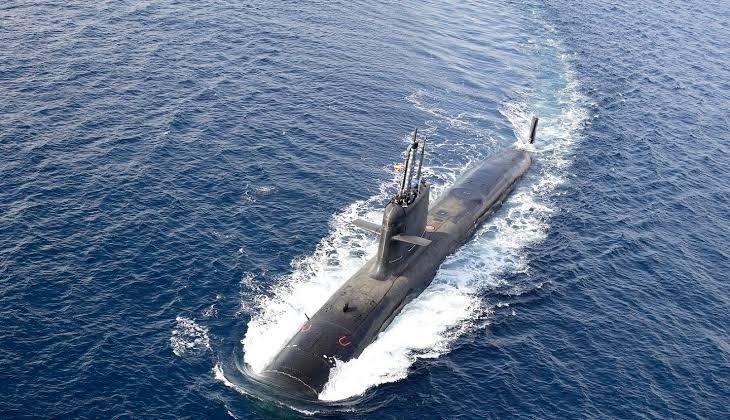
SURABAYA, Indonesia — Indonesia has begun physical construction of its first domestically built Scorpène Evolved submarine after PT PAL Indonesia cut the first steel plate at its Surabaya shipyard on August 7.
The ceremony marked the start of construction of the lead submarine under the Scorpène Republik Indonesia (SRI) programme, which covers two Scorpène Evolved submarines equipped with full lithium-ion battery systems. The first submarine is scheduled for delivery in 2032, followed by the second in 2033. Construction of each boat is expected to take about 96 months.
Programme Progress
Overall programme completion has reached about 20.5 percent. This figure includes infrastructure preparation, technical qualification, workforce training and supply-chain arrangements completed before the steel-cutting ceremony.
Indonesia selected Naval Group and PT PAL for the programme in March 2024, and the contract entered into force on July 23, 2025. The programme is valued at approximately €2.16 billion, or about US$2.49 billion.
PT PAL President Director Kaharuddin Djenod said the programme is progressing according to plan and is intended to establish long-term Indonesian submarine construction expertise through technology transfer.
Scorpène Evolved Specifications
The Scorpène Evolved is a conventional diesel-electric attack submarine using a full lithium-ion battery configuration.
The Indonesian variant is approximately 72 metres long and has a surfaced displacement of 1,600 to 2,000 tonnes. It has a submerged speed of more than 20 knots and a diving depth exceeding 300 metres.
The submarine has more than 12 days of submerged autonomy and more than 78 days of overall autonomy on an 80-day mission. It is designed for a crew of 31 and has six weapon tubes with a total payload of 18 weapons.
The submarine will use the SUBTICS combat management system.
Construction and Technology Transfer
Both submarines will be built entirely in Indonesia. PT PAL is responsible for hull construction, equipment integration, final assembly, testing and delivery.
Naval Group is providing the design, specialised components and engineering support. Its permanent team in Surabaya is expected to reach around 50 experts.
More than 400 Indonesian engineers are being trained in France in submarine construction, integration, certification and maintenance. Indonesian welders have also completed specialised training and qualification activities in France.
An Indonesian Navy task force is training in France with the French Navy and Naval Group. The programme includes crew training, maintenance preparation, operational doctrine and command integration.
Specialised support for the programme comes from Naval Group facilities in France. Cherbourg provides submarine hull and platform expertise, while Lorient and Nantes-Indret contribute propulsion and battery expertise. The SUBTICS combat management system is associated with Naval Group's centre in Ollioules.
Industrial Development
The programme represents a more demanding construction task for PT PAL than its previous Type 209-class submarine work. It requires qualified welding processes, submarine hull construction expertise and strict requirements for acoustic management and system integration.
PT PAL's facilities are being developed to support construction and future maintenance, repair and overhaul activities for Scorpène submarines.
The programme is expected to create around 2,250 jobs across construction, support and long-term maintenance.
It forms Phase II of Indonesia's National Submarine Technology Mastery Programme. Indonesia aims to develop greater domestic capability for major submarine overhauls by around 2030, while its longer-term objective is to develop the ability to design, build and potentially export its own submarines between 2042 and 2050.
Any future sale of the submarines or related services to third countries would require additional agreements and is not automatically covered by the current contract.
The August 7 steel-cutting ceremony moves the SRI programme from preparation and qualification activities into physical submarine construction, with hull fabrication, equipment integration, testing and further workforce development now forming the next stages before delivery of the first boat in 2032.
——— End of Article ———